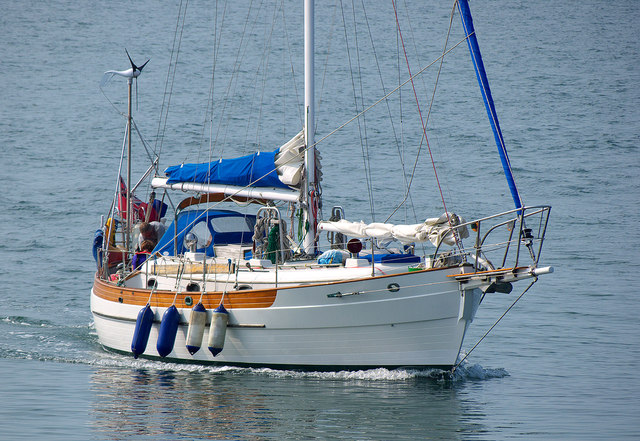
Sailors fitting out in Cairns face a power generation problem that bluewater guides written for the North Atlantic or the Pacific coast rarely address honestly. Solar panels work well at the dock and on a mooring, but the moment a sloop bears away onto a broad reach for a Coral Sea passage, the mainsail shadows the deck-mounted panels for hours at a time. Add a string of overcast days - which the Coral Sea delivers during tropical disturbances - and a solar-only system frequently cannot keep pace with navigation electronics, autopilot, watermaker, and refrigeration. A marine wind generator running in the trade winds fills that gap directly, but only if it is specified, wired, and maintained for the specific conditions and obligations that come with sailing out of Far North Queensland.
Why Cairns Is Particularly Well-Suited to Wind Generation
The south-east trade wind season runs roughly from April through October across Far North Queensland. Offshore, those trades average 15 to 20 knots and regularly reach 25 to 30 knots on Coral Sea passages. That is a consistent, predictable wind resource - not the fitful puffs of an inshore anchorage or the gusts-and-lulls pattern of a temperate coastal passage.
Three factors combine to make wind generation more reliable than solar on these routes. The mainsail on a typical sloop blocks a substantial portion of the solar array when sailing downwind or on a broad reach, which is precisely the point of sail for passages north or east out of Cairns. Solar output also drops sharply when cloud cover moves in, while wind generation often increases in the same conditions. And Coral Sea passages are offshore - there is no nearby headland to calm the wind or funnel it erratically.
At anchor on the Ribbon Reefs or at Lizard Island, the trades continue generating usable wind through most of the day. Solar panels win at the dock in calm weather. The combination of both sources creates a system that rarely falls short across a full passage cycle.
How Much Power a Wind Generator Actually Produces
The gap between a turbine's rated output and what it delivers in real conditions confuses many buyers. Wind power scales with the cube of wind speed. Doubling wind speed from 10 to 20 knots increases output eightfold. A turbine rated at 400W produces only around 40W in 10 knots of true wind. That same turbine produces 140W at 20 knots - a figure closer to what trade wind sailing actually delivers.
At 15 knots, a mid-range turbine running continuously for 24 hours might produce 50 to 70 amp-hours at 12V. At 20 knots, that climbs toward 150 to 200 amp-hours over the same period - enough to run a moderate coastal cruiser's load independently. These are daily yields you can plan around on a Coral Sea passage, unlike the intermittent bursts you get from solar when a squall rolls through.
When comparing turbines, ignore the rated wattage figure. It is typically measured at 30 to 35 knots of wind - conditions that exist on a fresh trade but not at a typical anchorage. Compare the output figures at 20 and 25 knots, the range you will actually be sailing in most of the time.
Choosing the Right Turbine for Your Boat
Four turbines appear consistently on cruising yachts laid up in Cairns and the Whitsundays. Each suits a different set of priorities.
The D400 cuts in at 7.5 knots and produces 140W at 20 knots, reaching its rated output at approximately 33 knots. It is the most widely fitted turbine on bluewater cruising yachts and has an extensive spares network - relevant when you are three days out of Cairns and need to source a part at the next port.
The Superwind 350 uses a three-blade carbon-fibre rotor and a fully sealed alternator housing. It produces 180W at 22 knots and 350W at 30 knots. Its noise rating of approximately 40 dB(A) makes it one of the quietest units in its class - a meaningful advantage on a passage where the turbine runs for 20 hours straight.
The Air Breeze Marine weighs under 6 kg and builds the charge controller and over-speed regulator into the nacelle. That eliminates separate dump resistors and significantly reduces installation complexity on boats where panel space is already tight.
The Rutland 914i uses a six-blade rotor 0.91 m across and cuts in at 8 knots. Its output at 25 knots is lower than the others, but its compact rotor diameter and light weight make it the right choice for smaller yachts where diameter aloft and weight on the stern pole are real constraints.
| Model | Output at 20-22 knots | Rotor | Noise level | Cyclone stowage |
|---|---|---|---|---|
| D400 | 140W at 20 kn | Larger diameter - see manufacturer spec | Moderate | Friction-fit hub - fast removal |
| Superwind 350 | 180W at 22 kn | Three-blade carbon-fibre - see manufacturer spec for diameter | Low (~40 dB(A)) | Confirm manufacturer procedure |
| Air Breeze Marine | See manufacturer spec - output at this range not independently cited here | Compact; integrated controller in nacelle - see manufacturer spec for diameter | Low-moderate | Light unit - straightforward stowage |
| Rutland 914i | Lower than D400 at comparable speeds - see manufacturer spec | 0.91 m - compact six-blade | Low | Small diameter - easy stowage |
Mounting Options and Structural Requirements
Stern poles and arch mounts
The stern pole is the most common mounting for offshore cruisers out of Cairns. It positions the turbine clear of people in the cockpit and clear of the boom. The pole needs lateral bracing - a single post bolted to the pushpit will flex and transmit vibration directly into the hull. A properly braced stern pole uses athwartships bracing to the aft quarter and is fabricated from tube stock heavy enough to resist the torque load from a spinning turbine in 25-plus knots of trade wind.
Stern arch integration is cleaner on boats already fitted with an arch for solar panels. The arch must be assessed by a rigger or fabricator before adding the turbine's weight and dynamic loads. A purpose-built arch handles both easily; a lightweight factory arch fitted for a solar panel may not.
Mizzen mast and hardware specifications
Mizzen mast mounts suit ketches and yawls and position the turbine high, improving the wind resource slightly. Servicing becomes difficult - every bearing inspection requires going aloft. That is worth weighing before choosing this option.
- Minimum blade clearance above deck is typically 2.5 m to prevent injury in the cockpit - confirm this against the specific turbine's rotor diameter
- Blade tips must clear standing rigging, bimini frames, and solar panel edges at all rotation angles
- All fasteners must be 316 stainless steel - standard A2 stainless corrodes quickly in continuous salt spray at this latitude
- Turbine housing and alternator must meet IP65 or higher ingress protection - land-turbine specifications are inadequate in continuous salt fog
Wiring, Controllers, and Dump Loads
Wiring runs from the turbine to the controller must use tinned marine-grade copper. For runs up to approximately 4.5 m, 10 AWG (6 mm²) keeps voltage drop below 3 percent. Longer runs require 8 AWG (10 mm²). The deck penetration needs a waterproof cable gland rated for continuous salt exposure, not a standard land-install entry fitting.
The turbine frame, controller chassis, and all metal mountings must be bonded to the vessel's common ground bus. Stray DC current from an unbonded system accelerates corrosion of your anodes, seacocks, and propeller shaft - damage that is expensive and not always obvious until something fails.
When integrating with an existing solar and shore-power system, the wind controller feeds the battery bus alongside the solar MPPT controllers. The dump load, typically a water heating element in the calorifier or a dedicated resistor bank, connects to the controller's dump terminals and must remain in circuit regardless of battery state.

Lithium Battery Compatibility
Upgrading to a LiFePO4 battery bank is increasingly common in Cairns, and it creates a compatibility problem that generic installation guides never address. LiFePO4 batteries use a Battery Management System that can go open circuit - completely disconnecting the battery - when a high-voltage protection event triggers. That protection event is exactly what happens when a wind turbine pushes full output into a nearly full battery bank in a good breeze.
When the BMS opens, the battery bus disappears from the turbine's perspective. If the dump load is wired across the battery bus rather than directly at the controller, it disappears too. The turbine is now unloaded and spinning freely - the same destructive overspeed scenario as using an on/off disconnect.
When a LiFePO4 BMS opens on a high-voltage protection event, any wind turbine without relay braking or a dedicated DC-DC converter is left unloaded and spinning - an overspeed risk that can destroy the alternator in minutes.
Two solutions exist. A wind charge controller with relay-braking functionality short-circuits the turbine output when it detects loss of load, creating an instant braking effect. A DC-DC converter wired between the turbine and the battery bus maintains its own input load independently of BMS state. Either solution works; the choice depends on the specific controller and battery system.
Tell your marine electrician which battery chemistry you have before discussing wind turbine installation. The wiring architecture for a lithium system differs from an AGM or gel system. Look for a marine electrician with hands-on experience in Victron Energy systems - Cerbo GX and MPPT integration in particular - since a system spanning wind, solar, and lithium requires integration-aware design rather than three separate installations treated as independent.
Noise and Vibration Management
A turbine running at anchorage is audible. The question is whether the noise is airborne - the whoosh of the blade tips - or structure-borne, the thrum conducted through the pole and deck into the hull. Structure-borne noise is worse because it resonates in the cabin and cannot be blocked.
Rubber bushings or neoprene pads between the turbine base and the mounting pole reduce structure-borne transmission by 5 to 10 dB(A). That is a significant reduction in perceived loudness, and it costs almost nothing relative to the full installation. It is the single most effective noise mitigation step available.
- Three-blade rotors are generally quieter than two-blade designs at the same wind speed
- Blade tip speed, not rotor diameter alone, determines airborne sound - a small rotor spinning fast is not necessarily quieter than a large one spinning slowly
Tropical Maintenance Schedule for Far North Queensland
Manufacturer maintenance schedules are written for temperate coastal conditions and typically specify annual inspection. At tropical latitudes within 5 km of open saltwater, that interval is insufficient. Salt fog infiltrates bearing seals faster, UV degrades composite blade materials faster, and stainless fasteners in a crevice joint corrode faster than manufacturers' land-based testing accounts for. The practical interval at Cairns or the Ribbon Reefs is every six months.
- Shut the turbine down using the manual brake or by furling into wind shadow, then verify the rotor is stationary before working at height
- Remove blades if the hub design allows, and inspect each blade root for cracking, UV crazing, or impact damage on the leading edge
- Flush the turbine body, blades, and pole with fresh water from a hose - salt crystal accumulation under blade clips and around fastener heads begins corrosion from the inside out
- Inspect the alternator housing seal for cracking or compression set; a housing rated IP65 or better was correct at installation, but the seal degrades with UV exposure in the tropics
- Remove and re-grease the bearing pack if the design permits, using a marine-grade grease compatible with the bearing manufacturer's specification
- Re-torque all stainless fasteners to specification - stainless bolts in a stainless joint relax over six months of continuous vibration
- Check all wiring connections at the terminal block for green corrosion or resistance increase with a multimeter; re-crimp or replace any terminals showing either
An annual inspection by a marine electrician adds a check of the dump load resistance, controller function, and bonding continuity from turbine frame to ground bus.
Cyclone Season Preparation in Cairns
Cairns Marina and most other facilities in Far North Queensland require a Cyclone Management Plan for yachts on a swing mooring or in the marina during cyclone season. That plan must address how onboard equipment likely to become a projectile or suffer wind damage is handled. A wind turbine with blades aloft is both a structural risk to the rig and a potential source of uncontrolled spinning in extreme winds.
The practical solution is blade removal and stowage below. Turbines using a friction-fit blade hub - rather than set screws - allow the full blade assembly to be removed in under ten minutes. That design is a meaningful advantage when a cyclone watch is issued and everyone at Marlin Marina is working simultaneously. Confirm before purchase whether the turbine you are considering has a friction-fit or fastener-locked hub, and practice the removal once before the season begins.
For turbines that cannot be quickly disassembled, a manual or electrical braking system holds the rotor stationary. Some units include a locking brake in the nacelle; others require a short-circuit bridge wired across the phase leads. Check the manufacturer's recommended cyclone preparation procedure before the season starts, not after a watch is issued.
- Record the blade removal and stowage procedure in your Cyclone Management Plan document with enough detail that another crew member can execute it
- Store blades in a padded bag in a secure locker - loose in a berth means impact damage from other gear shifting in the surge
- Note any braking or short-circuit wire procedure in the vessel log alongside the blade removal steps
- Check the pole and all bracing after any significant cyclone event, even if the turbine itself survived undamaged
Queensland Maritime Safety and Cairns Marina publish requirements for cyclone preparations - check their current documentation for what your Cyclone Management Plan must include, as requirements are reviewed each season.
Frequently Asked Questions
Can I use my existing solar charge controller for a wind turbine?
No. Solar MPPT controllers disconnect the source when the battery is full - harmless with solar panels, destructive with a wind turbine. Removing the load from a spinning turbine eliminates the magnetic braking effect and allows the rotor to accelerate to damaging speeds. Wind turbines require a dedicated wind charge controller with a dump load. The two systems can feed the same battery bus, but each needs its own controller type.
Is wind generation worth the cost on a liveaboard at anchor in the Cairns region?
At a sheltered anchorage in flat conditions, solar often wins in the tropics. The case for wind is stronger on passage - particularly Coral Sea passages under the trade winds, where the mainsail shades the solar array on a broad reach and the trades run consistently for days. For a sailor planning regular offshore passages, the combination of both sources is significantly more reliable than either alone. For a boat that rarely leaves the marina, solar alone may be sufficient.
Does the turbine's output change between being at anchor and sailing?
Yes, in a way that matters specifically for Coral Sea passages. At anchor, the turbine sees true wind. Under sail on a broad reach - the typical heading north or east out of Cairns - boat speed reduces apparent wind at the stern pole relative to the true wind the forecast describes, and output falls accordingly. The practical argument for wind generation on these passages is not peak output but sustained overnight and overcast generation: the turbine runs continuously through the night and through squalls that stop solar entirely. At anchor on the Ribbon Reefs or Lizard Island, apparent and true wind are equal and the turbine runs at the full trade wind figure.
Can the turbine run while the engine is on?
Yes. The turbine and engine alternator both feed the battery bus and do not conflict electrically when wired correctly through separate controllers. In practice, if wind is strong enough to generate usefully, you will generally not be motoring. Most controllers include a manual brake, and stopping a turbine that is barely turning in a calm reduces noise without meaningful power loss.
How do I verify the dump load is actually working?
The dump load operates without a visual indicator on most controllers. A simple check at the six-monthly maintenance interval: in a moderate breeze with a full battery, place your hand near the dump load resistor or calorifier element and confirm it is warm. If the battery is full, wind is running, and the dump load is cold, there is an open circuit in that path - a fault condition requiring immediate investigation. Depending on the controller design, the turbine is either stalling or the rotor is approaching overspeed. This check takes under a minute and requires no tools.
Can the turbine's alternator interfere with a compass or autopilot?
Rotating permanent magnets in the alternator generate a changing magnetic field. The turbine manufacturer's installation guide specifies a minimum separation distance from magnetic instruments. This is easy to overlook when planning a stern pole location, particularly on boats where the binnacle compass or fluxgate autopilot sensor is close to the stern. Confirm the mounting position clears the minimum separation before fabricating or buying pole hardware. If the boat's geometry makes separation difficult, raising the turbine height or repositioning the instrument are both worth pricing before committing to a mounting location.