Cairns sits at the edge of the world's largest coral reef system, in water that stays warm year-round and under the jurisdiction of one of Australia's most consequential environmental regulators. For boat owners berthed here, antifouling is not a matter of picking a colour from a shelf. It means matching paint chemistry to water temperature, vessel use, hull material, and a regulatory environment shaped by 344,400 square kilometres of protected marine park. Get it wrong and the consequences run from a fouled, sluggish hull to a compliance failure under federal biosecurity law.
Why FNQ Waters Demand a Different Antifouling Strategy
Sea surface temperature in Cairns ranges from around 23.8°C in mid-winter to 29.4°C at the height of summer - the warmest year-round coastal water temperatures recorded at any major Australian port. That matters because the organisms that foul a hull, from slime bacteria and algae to barnacles and tube worms, reproduce faster, colonise faster, and cement themselves more firmly as water temperature rises.
Compare that to Sydney Harbour, where summer peaks around 23°C and winter drops to 16°C, or Hobart, with an even larger seasonal swing and lower year-round average. In those ports a well-chosen ablative copper antifouling can hold for 18-24 months before a repaint is warranted. In Cairns, that same paint on the same hull may be substantially depleted within 12-14 months. Tropical warmth does not just accelerate biofouling growth - it accelerates the rate at which copper oxide biocide dissolves off the paint surface into the water column, meaning the paint runs out of active ingredient well before the season ends.
Hull cleanliness is also a legal matter for vessels arriving from overseas. Australia's biofouling management regulations, made under the Biosecurity Act 2015, require international vessel arrivals to manage and document hull biofouling on arrival - obligations differ between commercial vessels and non-commercial craft such as recreational yachts, and the rules have been progressively updated since 2022. Check current requirements with the Department of Agriculture, Fisheries and Forestry (DAFF) for the specific obligations that apply to your vessel type. Biofouling is a documented vector for non-native marine species, and the Great Barrier Reef sits at the top of what Australian biosecurity authorities want to protect. A fouled hull arriving in Cairns from an overseas port is not just a performance problem - it is a compliance risk with real consequences.
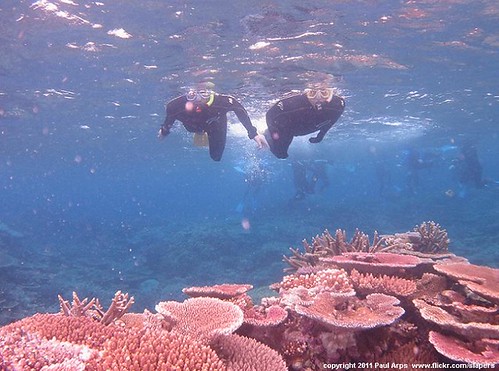
The Environmental Dimension: GBRMPA Guidance and the Great Barrier Reef
The Great Barrier Reef Marine Park was established under the Great Barrier Reef Marine Park Act 1975 and is administered by the Great Barrier Reef Marine Park Authority. GBRMPA publishes Responsible Reef Practices guidance for all vessel operators within the park's boundaries, and that guidance has direct implications for paint choice.
GBRMPA's Responsible Reef Practices guidance explicitly recommends using non-toxic antifouling alternatives where practical - naming silicon-based coatings and two-pack epoxy paint as preferred options over high-biocide copper-based paints. Great Barrier Reef Marine Park Authority - Responsible Reef Practices
That recommendation shifts antifouling choice from a pure performance question into a stewardship obligation. If a non-toxic alternative is practical for your vessel and use pattern, GBRMPA's position is that you should use it.
Approximately 33% of the marine park falls within Marine National Park (Green) Zones - strict no-take areas covering much of the inshore and mid-shelf reef accessible from Cairns. Anchoring near coral in these zones exposes a vessel to specific liability for seabed damage caused by the anchor or chain dragging across substrate. GBRMPA also sets minimum separation distances from public moorings and commercial pontoons in the Cairns Planning Area and designates specific anchorage areas to prevent coral damage - check GBRMPA's website for current figures, as zone boundaries and distance requirements are updated periodically. Managing anchor chain so it does not sweep coral is part of responsible reef stewardship, and it starts with keeping your running gear clean enough to manoeuvre accurately in confined anchorages.
Know Your Options: The Main Antifouling System Types
Ablative (self-polishing) copper antifouling remains the most common system on recreational vessels. The paint wears away gradually as the hull moves through water, exposing fresh biocide. In tropical conditions the wear rate is higher, meaning the paint depletes faster - this prevents copper build-up over successive haul-outs but shortens the repainting interval.
Hard modified epoxy antifouling holds copper biocide in a hard matrix that releases slowly. It builds up with each coat and can be burnished smooth before launch, making it attractive for performance vessels in temperate waters. In FNQ the matrix saturates and fouls rather than wearing clean, and it is incompatible with ablative systems - a critical point addressed in the compatibility callout below.
Copper-free biocide antifoulings - most commonly those based on the active ingredient tralopyril (marketed as Econea) - reduce copper loading and align better with GBRMPA's guidance without going fully non-toxic. Performance in high-fouling tropical conditions is somewhat less proven over extended periods than conventional copper ablatives.
Silicone foul-release coatings such as Intersleek and Hempasil work on a different principle entirely. Rather than killing fouling organisms they prevent adhesion through ultra-low surface energy, so fouling washes off at speed. The practical requirement is sustained vessel speeds - typically around 10 knots or more for most products in this category, though some newer silicone-hydrogel formulations are rated at lower speeds; always check the specific product data sheet. A displacement cruising yacht spending weeks at anchor in Cairns marina will accumulate slime and soft weed that never gets washed away. These systems suit high-speed power vessels or racing monohulls on regular offshore passages - not the typical liveaboard or cruising catamaran.
Coppercoat is an ultra-high-build epoxy loaded with 99% pure copper particles, claiming a service life measured in years rather than months. In FNQ that claim needs qualification: fouling pressure means in-water scrubbing every 4-8 weeks is still required to prevent slime from progressing to barnacles. It is a legitimate long-term investment for owners planning to remain in the region for several years, but not a set-and-forget solution in tropical waters.
| System | GBRMPA alignment | Speed requirement | FNQ service life | Best suited to |
|---|---|---|---|---|
| Ablative copper | Lower - high biocide | None | 12-14 months | Most GRP displacement hulls |
| Hard modified epoxy copper | Lower - high biocide | None | 12-14 months, builds up | Performance vessels, southern climates |
| Copper-free biocide (Econea) | Moderate - reduced biocide | None | Approx. 12 months | Environmentally aware owners |
| Silicone foul-release | High - non-toxic | Typically 10+ knots (product-dependent) | Multi-year with cleaning | High-speed power, racing monohulls |
| Coppercoat epoxy | Moderate - copper, long-life | None | Multi-year with scrubbing | Long-term regional owners |
Tropical Heat and Service Life: Why the Clock Runs Faster in Cairns
Copper oxide is the active biocide in most conventional antifouling paints, and its leach rate is directly linked to water temperature. At Cairns water temperatures the dissolution rate is substantially higher than in southern Australian ports - the paint works harder in the short term and exhausts its active ingredient earlier. A system built for an 18-24 month cycle in Sydney should be treated as a 12-14 month system in Cairns.
Planning your maintenance schedule around a national data sheet rather than local conditions will leave you with bare, exhausted paint matrix by month thirteen. The barnacles and tube worms that colonise an unprotected GRP hull in tropical water can impose powering penalties of up to 86% at cruising speed - a drag load far beyond what any minor performance interest justifies.
How you use the vessel changes the equation. A yacht completing regular offshore passages keeps the hull surface agitated and self-cleaning to some degree. A vessel sitting in a marina berth for months between trips provides a warm, static surface that biofouling colonises aggressively. Marina-berthed yachts in tropical FNQ typically need in-water hull cleaning every 4-8 weeks - compared with every 2-4 months for the same vessel in a southern Australian port. That difference belongs in your annual maintenance budget from day one.
Hull Condition First: Osmosis Assessment and Barrier Coating
Before any antifouling goes on, the hull needs to be assessed. GRP hulls absorb water through the gel coat over time, and the warm year-round water around Cairns accelerates this osmotic process. A hull that might take fifteen years to blister in Hobart can develop measurable moisture ingress in five to eight years in FNQ conditions.
At each tropical haul-out, hull moisture content should be checked with a calibrated moisture meter after pressure washing and allowing adequate drying time. What constitutes an acceptable reading depends on the specific meter model and its scale - different instruments use very different reference ranges, so consult the meter manufacturer's guidance and consider a qualified marine surveyor's assessment before deciding whether antifouling application can proceed. Signs that point to osmotic damage include:
- Scattered blistering at or below the waterline, indicating water penetration through gel coat pinhole defects
- Larger blisters with a sharp acidic smell when opened, indicating leached water-soluble chemicals creating osmotic pressure inside the laminate
- High moisture meter readings with no visible blistering, which may indicate deep water ingress requiring professional assessment rather than simply a longer drying window
- Extensive blistering requiring mechanical removal of damaged gel coat and laminate before any remediation coating can be applied
The standard treatment for a hull dried to an acceptable moisture level is a barrier coat of four to six coats of solvent-free epoxy - products such as Interprotect or specialist equivalents. Applied to a properly prepared substrate, this seals the hull against further moisture ingress and provides a chemically stable base compatible with the antifouling topcoat. Skipping this step to save time is a common false economy in tropical climates; the cost of full osmosis remediation later is substantially higher than preventive treatment at haul-out.
Running Gear, Anodes, and the Boot-Top Band
Propellers and Shafts
Antifouling paint stops at the hull. Propellers, shafts, rudder stocks, and trim tabs sit outside the protected area and need different treatment. Copper-based antifouling should not be applied to propeller blades - it fragments under rotation, can unbalance the prop, and releases biocide in a concentrated burst. The correct approach is a dedicated foul-release product such as Propspeed, which prevents barnacle adhesion through low surface energy rather than biocide. These coatings need careful application to avoid contamination and are typically refreshed at each haul-out cycle.
Galvanic Anodes
Warm tropical seawater carries higher electrolyte concentrations than cooler temperate water. Galvanic corrosion rates in Cairns can run two to three times those of southern Australian ports. An anode specification correct for Sydney may be substantially consumed within five to six months in FNQ. Inspect anodes at each haul-out and replace any that have depleted beyond roughly half their original mass. Do not apply antifouling paint over anodes - the coating insulates them and prevents galvanic protection from working.
The Boot-Top Band
The band of hull at and immediately below the waterline is disproportionately prone to fouling, and FNQ's substantial tidal range makes this worse. Cairns has a semi-diurnal tidal pattern with neap tidal ranges of around 0.9 metres and spring tidal ranges commonly reaching 2.5 to 3 metres, meaning the waterline strip cycles daily between wet and dry across a significant vertical band. UV exposure, abrasion from dock lines and fenders, and that repeated drying and rewetting cycle degrade antifouling paint faster than the fully submerged sections below. Standard paint coverage at this band is routinely insufficient.
- Apply additional coats of antifouling at the boot-top zone compared to the main hull bottom
- Some applicators specify a dedicated waterline-grade product at this band rather than the general hull antifouling
- Mark the tidal waterline carefully before haul-out - a wet-season waterline sits measurably higher than a dry-season line on a vessel carrying full stores and water
- Boot-top fouling, if left untreated, provides a colonisation platform for organisms that spread downward onto the hull proper
The Haul-Out and Application Process in Cairns
Preparation determines how long a paint system performs. A paint applied to a poorly prepared surface will fail on the surface's terms. The sequence below covers the process from lift-out to relaunch.
- Lift and pressure wash: Wash the hull immediately after haul-out while fouling and antifouling residue are still hydrated. Remove all marine growth and surface contamination before it dries and hardens against the substrate.
- Moisture test and drying: Take moisture meter readings across the hull in a systematic grid. Allow adequate drying time before readings stabilise - in Cairns humidity, particularly during the wet season, this window is longer than in southern Australian conditions.
- Surface preparation: Sand with appropriate abrasive to remove gloss, fair surface defects, and create mechanical key. For vessels changing antifouling systems, assess compatibility carefully - grit blasting back to bare substrate may be required if the existing coating type is incompatible with the intended new system.
- Barrier coat application if required: Apply four to six coats of solvent-free epoxy barrier coat to a hull that has been dried and assessed as needing osmosis protection. Allow each coat to cure to the manufacturer's specified window before the next.
- Tie-coat primer if changing systems: Moving between incompatible antifouling types requires a compatible tie-coat primer to ensure adhesion of the new system. Do not assume products from different families will bond without one.
- Antifouling application: Apply the specified coat count, adding extra passes at the boot-top band, keel edges, and rudder leading edges. Apply running gear foul-release coatings separately to propellers, shafts, and rudder stocks.
- Anode fitting and relaunch: Fit correctly specified anodes and confirm the manufacturer's relaunch timing for the antifouling used. Launch too soon and the paint has not cured; leave the vessel in the yard too long and the active surface oxidises or picks up contamination.
Between Haul-Outs: In-Water Cleaning in Tropical FNQ
No antifouling system keeps a hull completely clean in Cairns marina conditions. Slime forms on any submerged surface within days of launch in warm tropical water. Left to develop, it becomes soft weed, which becomes the settlement platform for barnacle larvae. Once barnacles are established they require real mechanical force to remove cleanly - and a barnacle-encrusted hull in FNQ can impose that 86% powering penalty long before the owner notices the boat feeling heavy.
Cleaning every four to eight weeks is the realistic maintenance rhythm for a Cairns-berthed cruising yacht. The method matters as much as the frequency. Hard brushes and aggressive scrubbing pads on ablative antifouling strip active paint with every pass, effectively shortening the interval before the next haul-out is needed. Soft brushes with light passes remove slime and early soft fouling without cutting into the paint. Professional dive crews who understand the specific characteristics of ablative versus hard antifouling systems are worth engaging rather than relying on rough manual scrubbing by inexperienced hands.
In-water cleaning also carries environmental and biosecurity dimensions. Methods that disperse paint particles or fouling organisms in an uncontrolled cloud may be subject to marina and local authority requirements. Check what cleaning methods are permitted at your berth before booking any service.
Matching System to Boat and Sailing Style
The right system depends on the specific vessel and how it is actually used. Work through these variables before committing to a paint.
- Displacement cruising monohull or catamaran, primarily marina-berthed: Ablative copper is the practical baseline. For better GBRMPA alignment, a copper-free biocide ablative or Coppercoat with a committed scrubbing schedule are the realistic alternatives. Silicone foul-release is not suitable - these hulls do not reach the sustained speeds required for self-cleaning.
- Performance monohull with regular offshore passages: Ablative copper with additional boot-top coats and a clean running gear treatment will serve well. Vessels that regularly exceed 10 knots have foul-release as a genuine option for the body sections, with conventional antifouling retained at the waterline band - check individual product data sheets for minimum speed ratings before specifying.
- High-speed power vessel in regular use: Silicone foul-release is appropriate and aligns well with GBRMPA's non-toxic preference. Note that silicone coatings require chemical cleaning rather than sanding at haul-out - a different surface preparation sequence from copper antifouling systems.
- Aluminium construction: Copper-based antifoulings must not contact aluminium - copper and aluminium form a galvanic couple that rapidly corrodes the base metal. A two-pack epoxy primer compatible with aluminium is required before any antifouling, and the antifouling itself must be copper-free. This is a non-negotiable requirement.
- Long-term liveaboard planning to remain in FNQ for several years: Coppercoat becomes more cost-effective over a multi-year horizon than successive annual copper ablative repaints. The upfront investment is higher, but ongoing maintenance reduces to in-water scrubbing costs rather than full haul-out and repaint cycles each year.
Frequently Asked Questions
How often does a Cairns-berthed yacht actually need to be hauled out for antifouling?
Most conventional copper ablative systems need repainting on a roughly 12-month cycle in Cairns - shorter than the 18-24 month intervals commonly achieved in Sydney or Hobart. Coppercoat and other long-life systems can extend this to several years, but they still require regular in-water scrubbing between haul-outs. Plan your schedule against local tropical conditions, not the national data sheet figures.
Are copper antifouling paints banned in the Great Barrier Reef Marine Park?
No - copper-based antifoulings are not currently prohibited inside the marine park. GBRMPA's Responsible Reef Practices guidance does explicitly recommend non-toxic alternatives where practical, naming silicone-based coatings and two-pack epoxy systems as preferred options. The guidance is a strong stewardship recommendation, not a legal prohibition, but it should inform your paint choice if you operate regularly within the park boundaries.
Can I apply new antifouling paint over the old coat myself?
You can, but only if the new product is compatible with what is already on the hull. Applying an ablative paint over hard modified epoxy - or the reverse - without a tie-coat primer will almost certainly cause adhesion failure. If you do not know what system is on the hull, carry out a patch test in an inconspicuous area before committing to a full application, or have it professionally assessed. Stripping back to bare substrate removes the uncertainty entirely.
Do propellers need antifouling paint as well as the hull?
Not antifouling paint - copper-based antifouling should not be applied to propeller blades, as it can fragment under rotation and cause balance issues. Propellers and shafts need a dedicated foul-release product such as Propspeed, which prevents hard fouling adhesion without biocide. These products are applied at haul-out and typically refreshed each haul-out cycle.
My hull has blisters below the waterline - can I paint straight over them?
No. Blistering indicates osmosis - water has penetrated the gel coat and is sitting inside the laminate. Painting over blisters traps the moisture and allows damage to continue developing unseen. Affected areas need to be opened, dried, and repaired before a barrier coat and antifouling are applied. In tropical Queensland humidity the drying process alone can take several weeks, and a vessel hauled during the wet season may need significantly longer than one hauled during the dry season.
Is in-water hull cleaning in Cairns restricted by environmental rules?
Cleaning methods that create a visible plume of paint particles or dispersed fouling material may be subject to local authority and marina guidelines, and Queensland's environmental legislation applies to discharges in marine waters. Requirements vary by location within the marine park. Check with your marina operator and the relevant local authority before booking in-water cleaning services, particularly for full hull scrubs that generate substantial debris.