Cairns sits at the top of Queensland's reef coast, far enough north that from the marina breakwater you can almost smell the straits. Most offshore passage planning guides treat it as a destination. For skippers heading out - to Indonesia, Papua New Guinea, the Torres Strait, or the Pacific - it is the last practical administrative stop before the world changes. Getting the departure clearance right here means you leave with clean paperwork, protected inventory, and no liability. Getting it wrong means a criminal offence under Australian law, potential vessel seizure, and a very difficult conversation with the Australian Border Force.
Clearing Out Is a Legal Obligation, Not a Courtesy
Australian departure clearance is not bureaucratic box-ticking. It carries the same legal weight as a customs entry. Under the Customs Act 1901, a vessel departing Australian waters without clearance is committing an offence - and not a minor one. The skipper faces heavy fines, criminal prosecution, and seizure of the vessel if it is intercepted by an Australian Border Force cutter after an unauthorised departure.
Two federal agencies must sign off before any offshore yacht can legally leave. The Australian Border Force (ABF) handles customs and immigration. The Department of Agriculture, Fisheries and Forestry (DAFF) handles biosecurity. Clearance from one does not substitute for clearance from the other. Both must be completed, in the right order, before lines are cast off.
Cairns as a First Point of Entry
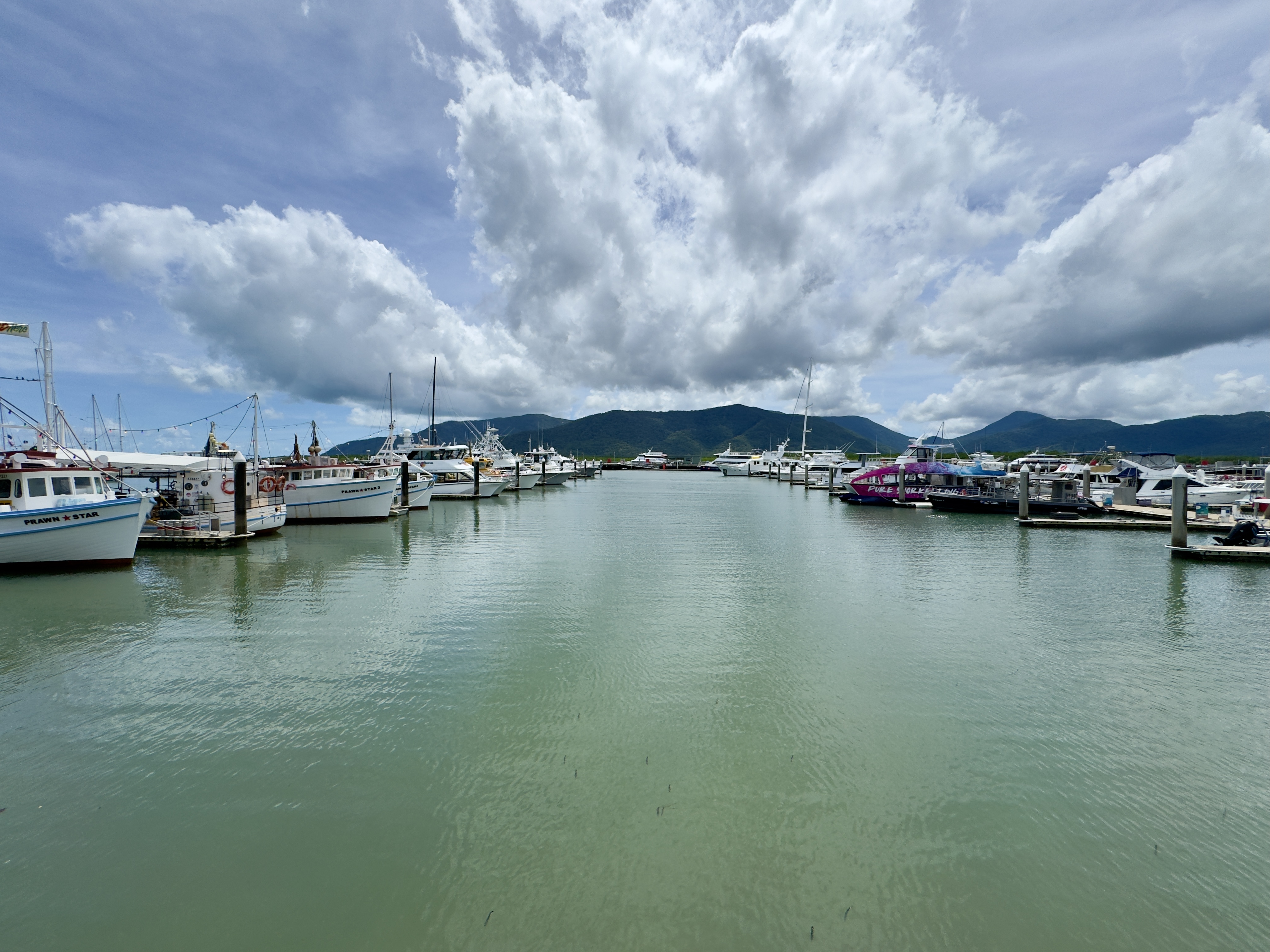
Queensland has nine official First Points of Entry for non-commercial vessels: Brisbane, Bundaberg, Coral Sea Marina at Airlie Beach, Gladstone, Gold Coast Broadwater, Mackay, Townsville, Cairns, and Port Kennedy on Thursday Island and Horn Island. First Point of Entry status is the designation that allows a port to process international arrivals and departures - vessels must depart from and arrive into these ports only.
Cairns is the northernmost mainland First Point of Entry. From here, the next one north is Port Kennedy on Thursday Island. Thursday Island is useful for passage planning but sits in a different logistical category - harder to provision, less equipped for the kind of pre-offshore preparation that Cairns makes straightforward. For most skippers heading to Indonesia or Papua New Guinea, Cairns is the last genuinely practical stop: full provisioning, engine and rigging services, good holding in Trinity Inlet, and an experienced marine services community.
There is a specific consequence to Cairns' position. Once you clear out, you can anchor at outer reef anchorages and proceed north through the Torres Strait - but you cannot go ashore at any non-First Point of Entry location. That includes outer Great Barrier Reef anchorages and uninhabited island stops. Anchoring overnight in a weather window is permitted. Landing is not, under the Biosecurity Act.
Two Agencies, Two Clearances
Skippers sometimes assume ABF and DAFF work together on a single clearance. They do not. Each runs its own inspection, its own appointment, and its own sign-off. You need to contact and satisfy both, independently.
| Agency | Function | What They Inspect | Cairns Contact |
|---|---|---|---|
| ABF - Australian Border Force | Customs and immigration | Passports, crew list, vessel registration, export declaration number | cairnsshipping@abf.gov.au |
| DAFF - Dept of Agriculture, Fisheries and Forestry | Biosecurity | Galley, food stores, cabins, deck areas, engine room, all lockers | Check agriculture.gov.au/about/contact/phone/vessel for the current Cairns email - DAFF contact details are updated periodically |
| Sequencing | DAFF first, then ABF | DAFF clearance is presented at the ABF appointment | Confirm when booking |
In practice, most skippers complete the DAFF inspection first, then attend the ABF appointment with the completed DAFF clearance in hand. Confirm the preferred sequence directly with both agencies when you book - scheduling can shift depending on officer availability at any given time.

The Export Declaration and EDN
This is the step most online guides skip entirely, and skipping it in real life will stop your departure cold.
Under Australian customs law, a departing yacht is treated as an exported vessel. That means a formal Export Declaration must be lodged with ABF before clearance can be granted. The declaration generates a nine-character alphanumeric Export Declaration Number - the EDN - and that number must be presented at your ABF appointment. Without it, the appointment cannot proceed and the vessel cannot legally depart.
A value threshold determines whether a formal declaration is required - check abf.gov.au for the current figure. Virtually every cruising yacht with its equipment, electronics, spares, and stores aboard will exceed this threshold by a significant margin. Assume you need a formal EDN and proceed accordingly.
- Prepare the declaration: list the vessel and its value, all equipment and stores of value, and the full details of every crew member including nationalities.
- Submit by email to mandexqld@abf.gov.au - this is the Queensland-specific manual submission address for export declarations. Include the vessel name, intended departure date, and destination port in the subject line.
- Allow processing time. Do not submit the morning of your planned departure - build in enough lead time for the EDN to come back before your ABF appointment is scheduled.
- Once you receive the nine-character EDN, keep it with your clearance documents. Present it at the ABF appointment alongside your other paperwork.
- If you are unsure about the declaration format or commodity codes, a clearance agent or customs broker in Cairns can lodge it on your behalf and confirm it is correctly structured.
Building the Stores and Valuables List
The stores and valuables list - sometimes called the Smallcraft Impending Departure declaration - is separate from the export declaration but equally important for the skipper's long-term interests. Its purpose is to document everything of value currently on board, so that when you return to Australia these items are demonstrably pre-existing property and not newly imported goods subject to duty.
Without this list, a customs officer at your return port has no way to distinguish a laptop you have owned for three years from one you bought in Singapore last month. The burden falls on you to prove the difference. A signed, dated list lodged at departure removes the ambiguity entirely.
What belongs on the list:
- Personal electronics: laptops, tablets, cameras, satellite communicators, handheld VHF radios
- Navigation equipment: chart plotters, AIS transponders, SSB radios, autopilot control heads, radar
- Deck equipment: outboard motor and dinghy (with serial numbers where possible), life raft with service date, dive gear
- Tools and spare parts: engine spares, rigging hardware, electrical tools, portable generator
- Onboard systems: watermaker, inverter, solar charge controllers, wind generator
- Crew personal valuables: watches, jewellery, musical instruments of significant value
Serial numbers are your best evidence. Photograph the list against the items where practical and store copies both digitally and in print. When you return to Australia and check in at a First Point of Entry, present this list proactively rather than waiting to be asked.
The DAFF Departure Biosecurity Inspection
The DAFF inspection for a departing vessel covers more of the boat than most skippers expect. Officers are not only looking at the galley fridge. The inspection scope includes the galley, all food storage areas, cabins, crew quarters, open deck areas, storage lockers, and the engine room. Any biosecurity risk material - fresh fruit, vegetables, plants, meat products, soil - must be declared or removed before clearance is granted.
How to Prepare the Boat
A boat that is tidy, accessible, and has visibly been thought through goes through inspection faster. Lockers that officers can open and check without moving gear, food stores organised in one location and clearly labelled, and a skipper who can describe what is stored where - these all reduce inspection time and avoid unnecessary queries.
Common issues that delay DAFF departure clearances:
- Fresh produce brought on board after provisioning that was not declared
- Honey, jams, or preserves in unsealed containers
- Soil in plant pots or seed packets stowed on deck
- Meat products from interstate provisioning that fall under movement biosecurity rules
- Fish or live bait kept in on-deck wells
- Vegetables from southern Queensland subject to intrastate pest movement restrictions
If you provisioned in southern Queensland and brought certain fruits, vegetables, or plant material north, DAFF may require those stores to be consumed or removed before departure. This is not arbitrary - it prevents the spread of horticultural pests across jurisdictions. Know what is in your stores before the inspection begins.
Booking Your ABF Clearance Appointment
ABF operates on appointment. There is no walk-up service for departure clearance. Darwin requires a minimum of five days notice, and Cairns operates under similar advance-notice requirements - contact cairnsshipping@abf.gov.au early and confirm the specific lead time currently in effect, because operational staffing affects availability and the figure can change.
Documents to Bring
- Passports for every person on board, valid for the full intended voyage duration
- Current vessel registration certificate - the vessel must be registered and the certificate valid
- Completed crew list with full names, nationalities, passport numbers, and roles on board
- Export Declaration Number - the nine-character code returned from your lodged declaration
- Stores and valuables list, signed and dated
- DAFF clearance documentation confirming biosecurity inspection has been completed
- For foreign-flagged vessels: ship's papers, flag registration, and any cruising permits issued
On the day, the ABF officer reviews documents, confirms crew against their passports, and issues the departure clearance. The vessel may not depart until this process is complete and clearance is formally in hand. Keep the clearance document accessible - Indonesian port officials and Papua New Guinean customs officers at standard entry points ask for Australian departure paperwork as part of the entry documentation package.
After Clearance: Passage Planning Through Torres Strait and the Reef
Once clearance is granted, the vessel should depart as planned. If weather holds you for several days after clearance is issued, contact ABF to confirm whether the clearance remains valid or needs to be reissued before departure.
The restriction on going ashore shapes every passage north. Anchoring at outer reef locations to wait for a weather window is permitted. Walking the beach is not. This matters most for skippers planning a careful reef traverse before committing to the strait.
Three Australian territories require specific attention because they are First Points of Entry and require formal re-clearance on arrival even though they are Australian territory:
- Thursday Island and Horn Island (Port Kennedy) - the Torres Strait First Point of Entry. Many skippers transit the strait and stop here; formal arrival and re-clearance are required. Plan time for this, particularly if continuing directly to Indonesia after.
- Cocos (Keeling) Islands - an Australian Indian Ocean territory and First Point of Entry. Skippers on the Indian Ocean circuit must formally arrive and re-clear here.
- Christmas Island - likewise a First Point of Entry requiring formal clearance on both arrival and departure.
The export declaration, the DAFF biosecurity inspection, and the ABF clearance appointment are three separate steps from two separate agencies. Each must be completed before departure. Treat the process as a sequence with dependencies, not a single checklist item.
Using a Clearance Agent in Cairns
Foreign-flagged vessels in particular often benefit from using a clearance agent. The export declaration format, commodity codes, and lodgement process are not intuitive for skippers unfamiliar with Australian customs systems, and errors in a lodged declaration can delay the EDN and push back the departure date by days.
A Cairns-based clearance agent or licensed customs broker can handle export declaration lodgement to mandexqld@abf.gov.au, schedule the DAFF inspection, coordinate the ABF appointment booking, and advise on stores list format. For a first-time departure from Australia, or for a vessel arriving in Cairns after a long offshore passage with limited local knowledge, this coordination takes significant administrative load off the skipper at exactly the point when there is already plenty else to manage.
Yacht Services Australasia's logistics team works alongside skippers in the weeks before departure to coordinate this process alongside refit work, provisioning, and safety gear servicing. The clearance process does not happen in isolation from the rest of departure preparation - a vessel that is not mechanically ready gains nothing from having clean paperwork, and a vessel with perfect engines but an unfiled export declaration cannot legally leave. Both sides need to be right, at the same time.
Frequently Asked Questions
Can I clear out of Cairns and sail north to Thursday Island without going ashore along the way?
Yes. After clearance you may proceed north through the outer reef and Torres Strait, anchoring en route for weather or rest, as long as you do not land ashore at any non-First Point of Entry location. Thursday Island (Port Kennedy) is a First Point of Entry, so you can formally arrive and re-clear there if your passage plan includes a stop. Confirm current operational status of Port Kennedy with ABF before your departure from Cairns.
Do I need a separate clearance for each crew member, or does the vessel clearance cover everyone?
The vessel clearance covers the vessel and all crew named on the crew list at the time of the ABF appointment. Every person on board must be listed, with valid passports presented. Adding crew after clearance has been issued is not permitted without contacting ABF again - finalise your crew list before booking the appointment to avoid having to restart the process.
How far in advance should I start the departure clearance process?
At minimum, allow a week from first contact with both agencies to departure. Two weeks is safer. Export declaration lodgement, DAFF inspection scheduling, and ABF appointment availability all have independent lead times that can stack against you if a weather window or repair delay forces a date change. Starting early gives you room to rebook without pressure.
Will Indonesian or Papua New Guinean ports actually ask to see my Australian clearance documents?
Yes, routinely. Indonesian port officials at standard entry points ask for the ship's papers package, which includes the departure clearance from the last port. Papua New Guinea customs at entry ports similarly treat the Australian clearance as part of the standard arrival documentation. Carry these documents in your ship's papers folder, accessible, not stored below with the bilge gear.
What happens to my stores and valuables list when I return to Australia?
Present it at your First Point of Entry on return alongside your customs arrival declaration. The list establishes that the items on it were already on board when you departed Australia - they are not imports, and they should not attract import duty. Without it, proving the provenance of high-value electronics or equipment at the customs counter on return day is your problem to solve, with no documentary support.
Is the export declaration the same document as the DAFF departure clearance?
No - they are completely separate documents from entirely separate agencies. The export declaration is lodged with ABF and generates the EDN required for your ABF clearance appointment. The DAFF departure clearance is issued by biosecurity officers after their physical inspection of the vessel's food stores and any biosecurity risk material on board. You need both before the vessel can legally depart, and neither substitutes for the other.