A haul-out is the single event that most pre-passage work depends on. Hull, anodes, propeller, seacocks, keel and rudder can only be properly inspected with the boat out of the water, and the yard slot you secure usually sets the date for everything else. This guide covers what to work out before you ask any yard for a lift in Far North Queensland.
Slings, cradle or hardstand: what the yard can actually lift
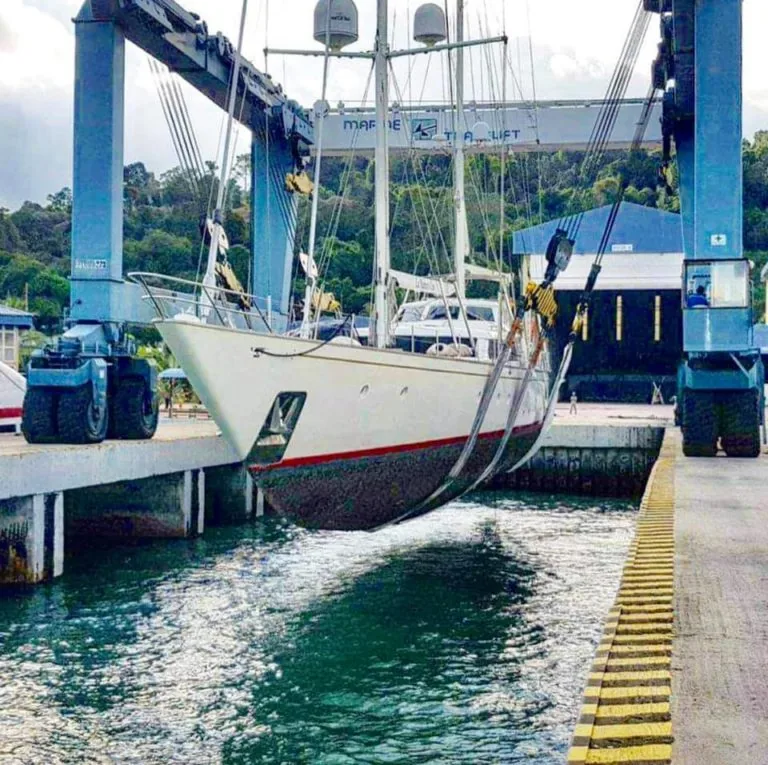
Facilities in the region use travel lifts, hydraulic trailers or slipways with cradles, and each has limits. Before you ring anyone, gather these figures for your boat: overall length, beam, loaded displacement, draft, keel type and the position of the lifting points shown in the builder's drawings. Multihulls, long fin keels, bulb keels and boats with a bowsprit or swim platform may need a particular lift or a custom cradle, and wide catamarans can exceed the beam of a standard lift well.
Ask the yard to confirm in writing that its equipment is rated for your displacement with margin, where the slings will sit, and whether your boat needs any gear removed beforehand, such as a radar arch, davits or a furled headsail. A yard that asks for your displacement figure and a photo of the underbody has thought about the job.
When to book
Demand follows the season. Cruisers arriving before the cyclone months and boats preparing for the dry-season departure window both want the same slots, so lift dates are finite, as the cyclone lay-up guide explains. For a pre-departure haul-out, count back from your planned departure and allow time for the findings: parts for rigging and stern gear can take weeks to arrive in Cairns. The pre-departure overview gives a typical order of work.
Questions worth asking every yard
- What is charged, and for how long? Lift in, lift out, daily or weekly hardstand charges, pressure wash, power and water, and what happens to the rate if the job overruns or a cyclone warning forces a lift.
- Can you do your own work? Some yards allow owner work, some restrict it to certain tasks, some require outside contractors to be pre-approved and insured. Ask for the policy before you plan a do-it-yourself antifouling.
- Which contractors work on site? A yard that sends in its own trades and one that lets you bring your own are very different arrangements for scheduling and warranty.
- What are the environmental rules? Wash-down water, sanding dust and paint waste are normally controlled on a hardstand, and the Great Barrier Reef catchment adds scrutiny. Ask where waste goes and what you must do, including how old antifouling is removed.
- What cover applies? Ask about the yard's insurance for lifting and storage, and check with your own insurer whether the policy covers the boat on the hard and while it is being lifted.
- What is the stand arrangement? How the boat is supported matters for long stays, particularly through the wet season and in wind. Ask how the boat is chocked or strapped and who is responsible for checking it.
Make the lift count
Every day on the hard costs money, so plan the inspection list before the boat goes up. A useful set for a tropical yacht: anodes, propeller, shaft and cutlass bearing, seacocks and through-hulls, keel and rudder, transducers, and the hull itself for osmosis. The antifouling decision belongs here too: see the antifouling guide. If the hull is being repainted, timing around humidity matters, covered in the guide to topsides painting.
After the lift
Keep the yard's invoice and any written condition notes. They support insurance conversations, and for boats arriving from overseas they can serve as evidence for biofouling rules: see the biofouling guide. If you are unsure about the hull's structural condition, a marine survey while the boat is out is the easiest time to have one done.
For larger jobs that involve several trades, see planning a refit.