Most guides to the Solomon Islands are written from the anchorage. They describe what you will find in Marovo Lagoon, what the check-in forms look like, and which anchorage has better holding. What they do not address is the several weeks before departure, when a Cairns-based yacht is either ready for a remote cruising ground or not. This guide is about that period: the survey decisions, the spares sourcing, the paperwork sequence, and the medical preparation that must happen before the lines come off the dock. The passage is roughly 850 to 900 nautical miles from Cairns to Noro in Western Province - a week or more at sea, bound for a country where the nearest professional rigger capable of handling a standing rigging failure is on the other side of that same passage.
Why the Solomon Islands Suit a Cairns Departure
The geometry of wind and season lines up unusually well from Cairns. The southeast trade wind season runs from April to November, and the optimal passage window falls between June and September, when trades blow 15 to 25 knots with consistency. That aligns the outbound trip with broad-reaching or beam-reaching conditions on the ENE heading - the most comfortable point of sail for an offshore passage, and the one that extracts the most miles from a moderate displacement cruiser without flogging the rig.
The cyclone season defines the edges. It runs November to April, with the highest activity concentrated December through March. A yacht that departs Cairns in June or July has four to five months in the islands before the return window closes. That is enough time for a thorough cruise of the Western Province, the Marovo Lagoon and the Shortland Islands before turning south in October ahead of the first cyclone activity. Yachts that linger face a difficult calculation: either rush the return under deteriorating seasonal conditions or find a lay-up berth in the islands - a significantly harder logistical problem than finding one in Cairns.
Compare this to the two other popular passages out of Cairns: PNG and Indonesia. The PNG route is shorter and allows staged passages with chandlery and mechanical support in Lae and Port Moresby. The Indonesia route runs northwest and involves a more complex permit structure. The Solomon Islands passage is the longest single-stage hop of the three, the most remote on arrival, and the most demanding in terms of pre-departure preparation - which is exactly why the Cairns-side planning deserves a dedicated treatment.
The Coral Sea Passage: Distance, Exit Point and Conditions
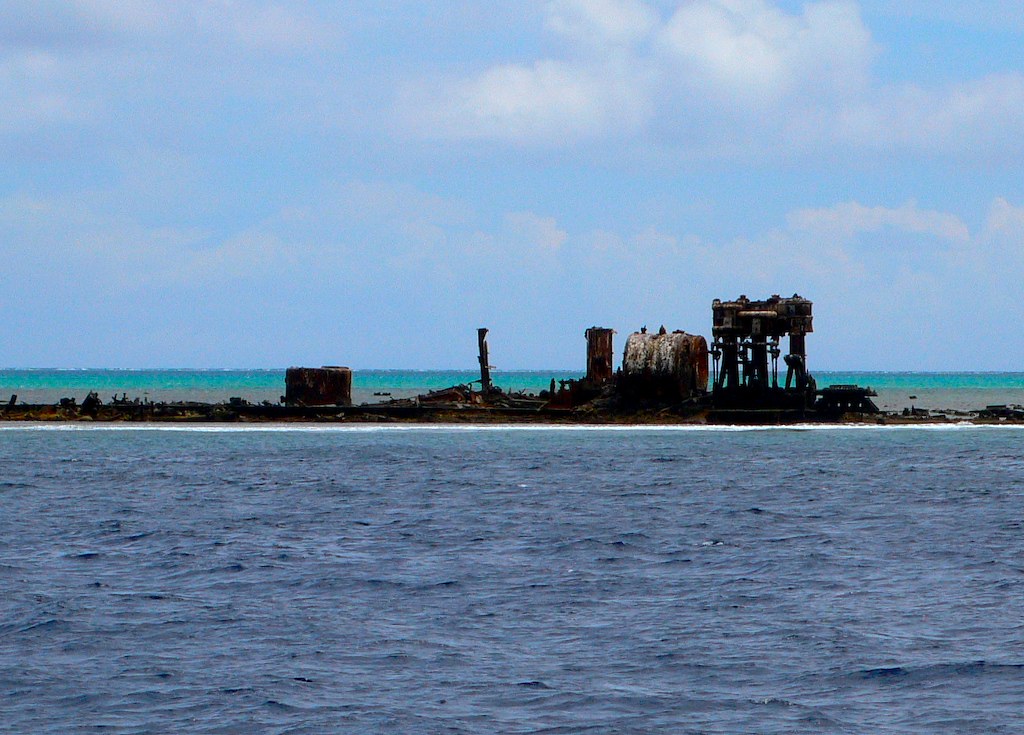
The direct sailing distance from Cairns to Noro in the Western Province is approximately 850 to 900 nautical miles on a heading roughly ENE. Honiara, the capital, is somewhat further at approximately 950 to 1,000 nautical miles. Under sustained SE trades, most cruising yachts make the Noro passage in seven to ten days. The passage begins with a navigational decision before anything else: how to exit the Great Barrier Reef.
Grafton Passage, located northeast of Cairns at approximately 15°57'S, 145°37'E, is the standard Barrier Reef exit for yachts taking the ENE heading toward the Solomon Islands. It is a deep-water passage with good markers and the most direct exit onto the Coral Sea for this routing. Once through the reef, the deep Coral Sea offers an uncomplicated fetch. Under June-September SE trades, the wind typically builds as the morning progresses and eases slightly at night - a comfortable rhythm for watch-keeping. Swell periods are long and seas organized under consistent trades. The South Equatorial Current runs generally westward at this latitude, adding a marginal adverse push on the ENE heading.
Vessel Preparation: Sailing to a Country with No Marine Services
The Practical Reality of Solomon Islands Chandlery
This is the section that existing guides skip. Outside Honiara, there is no professional rigger, no sailmaker and no haul-out facility anywhere in the Solomon Islands. Wing Sun and Yamaha hardware outlets in Gizo stock basic general hardware and outboard parts, but nothing suitable for standing rigging work, structural sail repair or running rigging replacement. A failure that would be a half-day job in Cairns becomes a multi-week problem in the outer islands.
The working assumption before departure should be that whatever breaks on passage will be fixed with what is on board. That changes the spares philosophy from "source it if needed" to "carry what cannot be improvised." A pre-departure survey should cover the entire rig under the assumption that no external repair support will be available for the duration of the cruise.
The Non-Negotiable Spares List
- Standing rigging: inspect every swage fitting, turnbuckle, pin and clevis; replace any item with visible cracking, corrosion or age-related fatigue
- Running rigging: replace halyards and sheets with significant core wear; carry at least two spare main halyards and a spare jib halyard of the correct length
- Sails: repair UV degradation, batten pocket wear and seam separation before departure; carry needles, waxed thread, Dacron patches and spinnaker cloth
- Engine raw water impeller: replace regardless of hours; carry at least two spares
- Autopilot drive unit: a functioning autopilot is not optional on a 900nm passage; carry a complete spare drive unit if the vessel is autopilot-dependent
- Watermaker membranes and pre-filters: carry pre-filters for a full service cycle and a spare membrane - fresh water is reliable only at Noro and Point Cruz Yacht Club in Honiara
- Outboard spares: spark plugs, impeller, shear pins, fuel filters; the tender outboard is the primary transport in an archipelago with no roads between anchorages
- Zincs and anodes: carry double the number needed for a full service cycle in tropical saltwater
The watermaker point is not incidental. A yacht cruising the outer islands that cannot make its own water is severely range-limited. If the watermaker has not been serviced recently, Cairns is the place to do it - Noro is not.
Fuel Planning for the Crossing and the Outer Islands
The Solomon Islands passage is predominantly a sailing passage under trade wind conditions, but realistic fuel planning accounts for calms, light patches in the SPCZ fringe and motoring in and out of reef anchorages throughout the cruise. Engine range planning should use actual consumption figures, not theoretical ones, and should account for a reasonable motoring fraction of the total passage mileage.
Duty-free diesel is available at Noro on the main wharf with a minimum bulk order - check with the wharf on arrival for the current minimum quantity. A fuel truck delivers directly alongside, which is both efficient and significantly cheaper than any other source in the islands. Noro is the right place to top up the main tank and fill every jerry can before heading into the outer islands circuit.
Jerry can capacity deserves specific thought before departure from Cairns. The outer islands - Marovo Lagoon, Vella La Vella, the Shortlands - have no reliable fuel supply. A yacht that arrives at Noro with a large jerry can fleet can exit fully fuelled with meaningful range for weeks of outer island cruising. Adding deck jerry can capacity in Cairns is straightforward; doing so in the Solomons is not.
Australian Departure Obligations
Departing Australian waters for a foreign port involves several formal steps that catch first-time offshore crews by surprise. Australian Border Force requires a valid Customs clearance before departure. This is handled via Form B921 - the outwards clearance application - submitted with crew details, vessel documentation and details of the intended foreign port.
The biosecurity requirement is less widely known but actively checked. Under the Biosecurity Act, vessels bound for a foreign port must hold a current Biofouling Management Record, and vessels presenting a biosecurity risk must have completed a hull inspection and clean before clearance is granted. This is not a paperwork formality - a yacht that has been sitting in Cairns Marina for several months on a fouled hull is a biosecurity risk. Have the hull cleaned and the management record current before lodging B921.
AMSA requires EPIRB and PLB registration to be current. An expired registration on a 406 MHz EPIRB means that if it activates mid-Coral Sea, the rescue coordination centre is working from outdated vessel information. Check the registration expiry before departure and renew it in Cairns if needed. These three steps - B921, biofouling management record, EPIRB registration - are all Cairns tasks, and all straightforward when done in advance rather than the day before departure.
The Yacht Person Visa: Apply Online Before You Leave Cairns
This is the step most guides omit entirely or treat as an arrival formality. The Solomon Islands Yacht Person Visa is an online application that must be completed and paid for before departure from Australia. It cannot be obtained on arrival at any port of entry. It applies to the master and to each individual crew member - there is no group or vessel application. A per-person visa fee applies, plus a separate online lodgement fee charged at the time of payment; check the current amounts at immigration.gov.sb before lodging, as these figures are set by the Solomon Islands Government and change independently of this guide.
The Yacht Person Visa grants an initial 60-day stay in Solomon Islands waters, extendable to a maximum of 180 days - but every separate re-entry into Solomon Islands requires a fresh online application and payment before that arrival.immigration.gov.sb
The sequence to follow from Cairns:
- Confirm the intended departure date and expected arrival date in Solomon Islands, allowing for passage variability
- Gather passport details and identity-page scans for every person on board
- Access the application portal at immigration.gov.sb
- Complete a separate application for the master and for each crew member
- Pay the per-person visa fee plus the online lodgement fee for each application
- Download and save the confirmation documents for each approved visa
- Print hard copies and carry them in the ship's papers alongside the passport for each person
The 60-day initial grant is adequate for a focused Western Province cruise. Yachts intending to reach Honiara and return to the outer islands should apply for the extension well before the 60 days expire, through Solomon Islands Immigration in-country. The key planning constraint is the return window: a June departure gives until October before the cyclone season considerations tighten the return timeline, so the 60-day initial grant often covers a well-planned cruise without the need for an extension.
Pre-Arrival Notification to Solomon Islands Authorities
Solomon Islands Customs requires advance notification before arrival at a port of entry, submitted at least three days before the anticipated arrival date. Sending incomplete or late notification can delay clearance, and in a port with limited official hours, a delayed clearance costs a full day on the customs anchor. Assemble the documentation package as a passage task in the final days before arrival, not on the morning of.
The required pre-arrival package includes:
- The clearance certificate from the last port - the Australian outwards clearance from Cairns
- A voyage memo covering the previous 21 days
- The crew list
- The passenger list
- Passport identity-page scans for every person on board
Beyond the minimum Customs requirement, Immigration Form 1 (Yacht and Crew Details) and Form 2 (Yacht Particulars) can be emailed directly to Solomon Islands Immigration ahead of arrival. Submitting these forms in advance is not mandatory but it materially accelerates the clearance process - officials have already processed the vessel details before the yacht arrives at the dock, which reduces the time spent on the customs anchor awaiting boarding.
Clearing In at Noro: Who Is There, What They Charge, and Why Not Honiara
Noro in the Western Province is the right choice for initial clearance, and that decision is worth making deliberately before departure rather than drifting into Honiara by default.
| Factor | Noro (Recommended) | Honiara (Avoid for Initial Clearance) |
|---|---|---|
| Officials present | Customs, Immigration, Biosecurity, Health - all on site weekdays | All officials present, plus SIMA office |
| Overtime fees | None, Monday-Friday 0830-1630 | Standard overtime charges outside hours |
| SIMA levy | Not applicable - no SIMA office | Levied on all visiting yachts; substantially higher total cost |
| Duty-free diesel | Available by truck, direct to yacht | Not available on equivalent terms |
| Onward chandlery | Basic supplies at Wing Sun and Yamaha, Gizo | Best availability in Solomon Islands |
Honiara is the only Port of Entry with a Shipping Industry Association (SIMA) office, which levies fees on visiting yachts that experienced cruisers consistently describe as the highest of any port of entry in the country. Unless Honiara is a planned destination for other reasons - provisioning, medical, crew change - clearing in there adds cost without benefit for a Western Province cruise.
At Noro, the clearance sequence is straightforward: arrive on the customs anchor and fly the Q flag; officials board or the vessel presents at the customs office; fees are paid to Immigration, Biosecurity and Health in turn; clearance is granted. With Forms 1 and 2 pre-submitted, the boarding is typically brief. Keep the full documentation package - passports, visa confirmations, Cairns outwards clearance, crew list, vessel papers - organized and immediately accessible when officials board. Disorganized paperwork at clearance does not make a good first impression and extends an already slow process.
Medical Preparation in Cairns: Malaria, Dengue and the Offshore Kit
The Tropical Medicine Clinic Visit
Malaria is endemic throughout the Solomon Islands, including the Western Province, and is rated high-risk year-round. This is not a marginal concern - the Solomons have among the highest malaria incidence rates in the Pacific. Prescribed antimalarial prophylaxis must be obtained from a tropical medicine clinic in Cairns before departure. This requires a clinic visit, a risk assessment and a prescription - it cannot be obtained without medical consultation, and general practitioners without tropical medicine training often underestimate the specific risk level for this cruising ground.
The two commonly prescribed options are atovaquone/proguanil and doxycycline, each with different dosing schedules, side-effect profiles and cost implications. The tropical medicine clinic can advise on the appropriate option for the duration of the cruise and any individual health considerations. This appointment should happen in Cairns, well before departure - at least six weeks out to allow time for any vaccinations with multi-dose schedules. Dengue fever is also present throughout the islands and has no prophylaxis - prevention is bite avoidance through DEET-based repellent, long sleeves at anchor in the evenings and treated bed nets.
Building the Remote Cruising Medical Kit
The offshore medical kit should be reviewed and updated before a Solomon Islands passage with specific additions for a remote cruising ground where the nearest hospital with reliable capability is in Honiara. Minimum additions beyond a standard offshore kit include:
- A full course of standby malaria treatment as directed by the treating doctor - standard for high-risk areas when extended cruising moves the vessel beyond fast medical access
- Oral rehydration salts - gastroenteritis and heat-related dehydration are common in tropical anchorages
- A broad-spectrum antibiotic suitable for tropical wound infections, as coral cuts infect readily in warm water
- Antifungal cream - humidity and heat make fungal skin infections common on extended tropical passages
- A thermometer and written fever management protocol for diagnosing and acting on a possible malaria breakthrough at sea
The tropical medicine clinic visit consolidates most of this planning into a single appointment. Book it early - the clinic can advise on the complete vaccination and prophylaxis picture for Solomon Islands in one consultation, covering hepatitis A, typhoid, tetanus and anything else relevant to the specific itinerary.
Frequently Asked Questions
Can the Yacht Person Visa be obtained on arrival at Noro?
No. The Yacht Person Visa must be applied for and paid for online at immigration.gov.sb before departing Australia. It is not available on arrival at any Solomon Islands port of entry. Each person on board requires a separate application, including the master. Apply with enough lead time to receive the confirmation documents before the departure date from Cairns - processing times can vary.
What is the best month to depart Cairns for the Solomon Islands?
June through August provides the most reliable SE trade conditions for the passage and leaves the maximum time in the islands before the October-November return window begins to tighten ahead of the cyclone season. July is the most popular month among experienced Coral Sea cruisers for a balance of settled winds and reasonable sea temperatures. Departing in September shortens the available cruise time significantly and compresses the return window uncomfortably.
How long does clearance at Noro typically take on a weekday?
With all documents prepared in advance and Forms 1 and 2 pre-submitted to Immigration by email, clearance at Noro on a weekday during office hours typically takes two to four hours from anchoring on the customs anchor to free pratique. Without pre-submitted forms, allow most of a day. Arriving on a weekend or public holiday means waiting until the next working day, so plan passage timing to arrive mid-week if possible.
Is a watermaker genuinely necessary or is it just convenient?
In practical terms it is necessary for any cruise beyond the two main ports. Fresh water by hose exists at Noro and at the Point Cruz Yacht Club in Honiara - outside those two locations, reliable water access is the exception throughout the archipelago. A yacht without a functioning watermaker is limited to anchorages near those supply points. Service the watermaker in Cairns, carry spare pre-filters and a membrane, and treat it as a critical system before departure rather than a comfort item.
What biofouling documentation does Australian Border Force require before departure?
Vessels departing Australian waters for a foreign port must hold a current Biofouling Management Record under the Biosecurity Act, and vessels presenting a biosecurity risk must have completed a hull inspection and clean before clearance is granted. The specific documentation requirements are confirmed through Australian Border Force at the time of outwards clearance application via Form B921. Present with the hull cleaned and the management record current - presenting with a fouled hull delays clearance and may require a dive inspection at short notice in Cairns before the application can proceed.
What communications equipment is required for the Coral Sea crossing?
The entire route from Grafton Passage to Noro lies well beyond VHF range, so HF/SSB radio or a satellite communicator is essential rather than optional. HF/SSB allows participation in the Pacific Seafarers Net on 14300 kHz USB, which provides weather, position reporting and emergency relay capability across the Coral Sea. Satellite communicators provide an alternative for vessels without HF/SSB, but HF also gives access to weather fax and offshore weather routing services that meaningfully improve passage planning and safety on a 900nm open-ocean trip.