When a vessel starts going down in the Coral Sea, the available time between "this is serious" and "abandon ship" can be measured in minutes. The life raft deploys. The EPIRB activates. But neither system carries your passport, your medication, a working radio, or enough water to survive a tropical day waiting for rescue. That gap is what the grab bag fills - and filling it correctly, for the specific conditions and regulatory requirements of a Cairns departure, requires more precision than any generic international checklist provides.
Why you need a grab bag - and what it has to do
Getting off the vessel is one problem. Surviving until rescue arrives is a different and harder one. JRCC Australia - the Joint Rescue Coordination Centre operated by AMSA in Canberra - coordinates all maritime SAR in Australian waters around the clock. AMSA bases Challenger rescue aircraft at Cairns, and in a May 2025 Coral Sea incident, the Cairns-based aircraft reached a distressed vessel within about an hour and a half of the distress signal being received. That is a capable response. It is also not instant. A vessel deep in the Torres Strait or the Arafura Sea involves a longer flight, and the crew has to be alive and findable when that aircraft arrives.
The 406 MHz EPIRB alert, routed through the Cospas-Sarsat low-earth-orbit satellite network, reaches JRCC within a few hours from anywhere in Australian waters. Then the aircraft has to fly. Plan for the raft being home for a significant period - possibly overnight, in direct tropical sun. The grab bag is what makes that survivable and what gives rescue craft a precise position to come to.
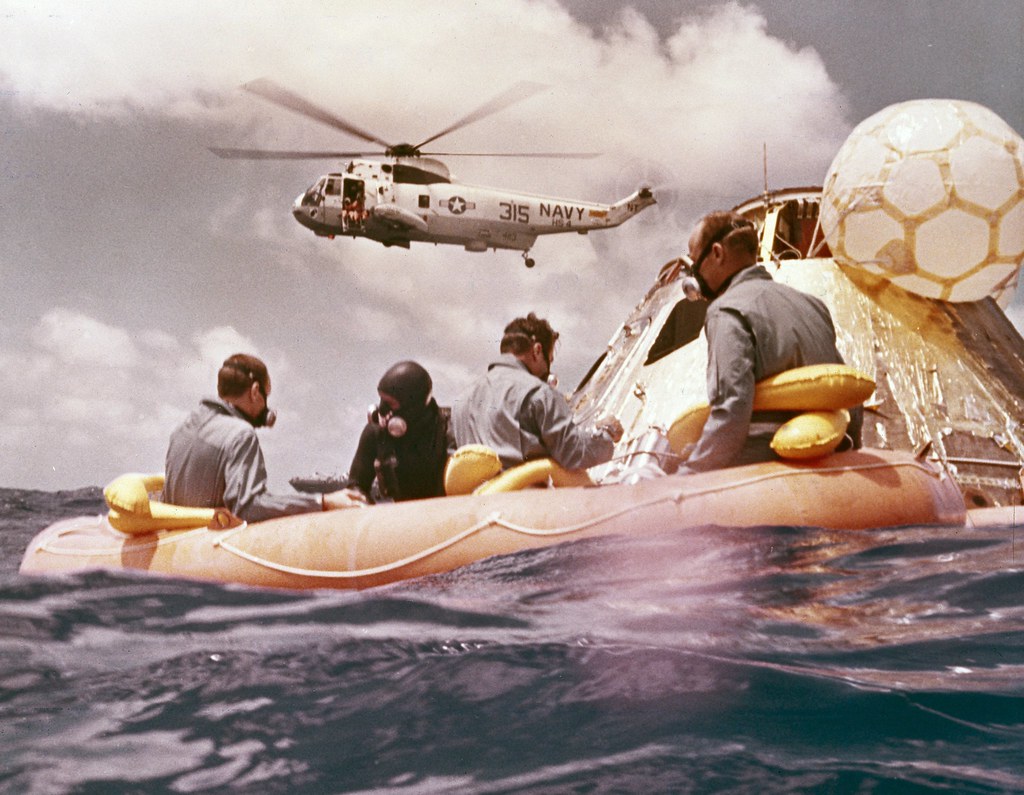
The bag itself
Three physical requirements are non-negotiable. The bag must float when fully loaded - check the manufacturer's rated load capacity against your actual packed weight before trusting it. The bag must be genuinely waterproof, not splash-resistant: documents, medication, and electronics cannot tolerate saltwater immersion, so a fully sealed waterproof closure is the minimum. The bag must be highly visible - bright orange or yellow - because it may need to be spotted from a low-flying aircraft in poor conditions.
Fit a tether long enough to attach to the life raft painter. If the bag goes over the side during a chaotic abandonment, the tether keeps it with the raft.
Stowage position matters as much as bag quality. The life raft hydrostatic release activates automatically when the vessel sinks below a certain depth, allowing the raft to float free. The grab bag has no such system - someone has to physically take it. That person will be moving fast, possibly in darkness, in rough conditions. Stow the bag immediately inside or alongside the companionway, clipped in place, accessible with one hand, within 30 seconds of the abandon-ship order. A bag buried in a stern locker is a bag that gets left behind.
The three-layer safety architecture
The grab bag functions as the third layer in a three-part system. Each layer handles a different failure mode; removing any one creates a gap the others cannot fill.
- Vessel EPIRB: A 406 MHz EPIRB bracket-mounted on deck, activating automatically via hydrostatic release if the vessel sinks or manually by crew. Its job is to alert JRCC and transmit the vessel's registered identity in every burst. Under Queensland requirements for offshore recreational vessels, a registered 406 MHz EPIRB is mandatory - check MSQ Form 312 for the current specification. AMSA EPIRB registration is free and must be renewed every two years via the AMSA Beacon Registration website. A correctly registered beacon encodes the vessel's details in every transmission, allowing JRCC to retrieve next-of-kin contacts without additional radio contact and dramatically reducing coordination time.
- Personal PLB: A 406 MHz PLB worn by each individual crew member, covering the scenario where someone ends up in the water separated from the raft - a scenario the vessel EPIRB cannot address. Each crew member carries their own.
- Grab bag: The raft-based communication and survival layer, equipping the survival craft with everything the raft pack does not provide: electronic signalling, documents, water, and medication. It operates at the raft level, not the vessel or person level.
An EPIRB alerts JRCC that a vessel is in distress. A PLB locates a crew member who has ended up in the water away from the raft. A grab bag keeps the survivors in the raft alive and findable until the aircraft arrives. The first two layers generate a rescue response; the third layer determines whether the crew survives long enough to benefit from it.
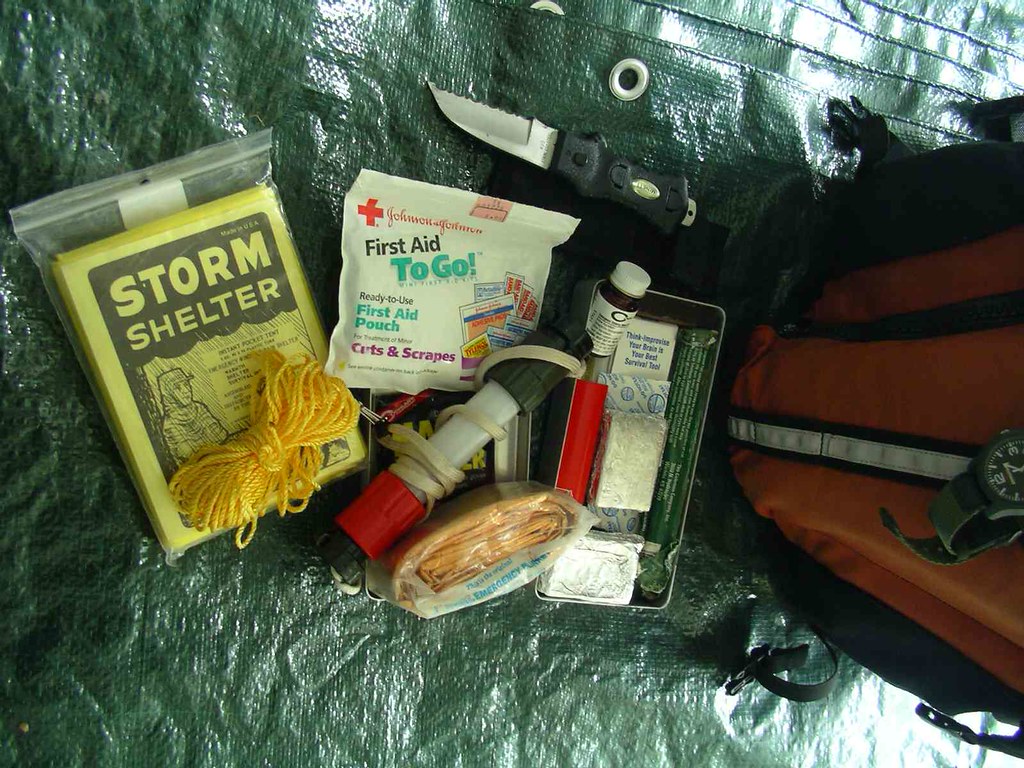
What the SOLAS A raft pack already provides - and what it does not
Category 1 offshore vessels carry a life raft fitted with a SOLAS A emergency pack. That pack is not empty, and understanding its contents prevents duplication - more importantly, it defines exactly what the grab bag must supply.
A standard SOLAS A raft pack includes:
- Basic water rations and food
- A basic first aid kit
- A bailer, sponge, and raft repair kit
- A signalling mirror
- A sea anchor
- Seasickness tablets
The grab bag supplies what the SOLAS A pack leaves out:
| Item category | SOLAS A raft pack | Grab bag requirement |
|---|---|---|
| Water | Minimum rations | Additional supply for tropical conditions and extended rescue timelines |
| Electronic signalling | Not included | Handheld VHF, spare PLB or EPIRB, AIS SART |
| Pyrotechnic signalling | Not in most recreational SOLAS A packs | Handheld red flares and orange smoke (MSQ Form 312) |
| Vessel and personal documents | Not included | Passports, clearance papers, cruising permits |
| Personal medication | Not included | All crew prescription medications, minimum several days' supply |
| Cash | Not included | Currencies relevant to passage countries |
Distress signalling contents
Handheld VHF radio
Australian Sailing Special Regulations for Category 1 offshore passages require at least two handheld VHF transceivers, one per grab bag, each meeting a minimum power output - check the current Special Regulations for the specific wattage requirement before your departure season. These are in addition to the fixed VHF already required on the vessel. A handheld VHF in the raft lets you call on Channel 16, talk directly to rescue aircraft and vessels, and relay position updates to JRCC via units overhead. Buy a genuinely waterproof unit or keep it in a waterproof case; carry a charged spare battery pack.
AIS SART
An AIS Search and Rescue Transponder broadcasts your position to any vessel or aircraft carrying an AIS receiver, appearing on chart plotters as a marked position rather than a radar blip requiring interpretation. Category 1 offshore vessels require an AIS SART or radar SART to help aircraft and ships locate the survival craft. AIS SARTs are increasingly preferred because they show on AIS displays directly. The AIS SART belongs in the grab bag, not fixed to the vessel that may be on its way to the bottom.
Pyrotechnic flares
MSQ Form 312 sets mandatory minimum quantities of handheld red flares and handheld orange smoke signals for Queensland recreational vessels operating offshore. Check the current Form 312 at the MSQ website - those numbers are precise and the regulation is authoritative. Store the required flares in the grab bag rather than scattered through deck lockers so they are accessible during and after abandonment.
Strobe and signal mirror
A personal strobe light gives rescuers a consistent reference at night and in low visibility. The SOLAS A raft pack includes a signal mirror, but carry a backup in the grab bag regardless - it weighs almost nothing and works over distances that surprise first-time users. Both are effective when electronic signalling has failed or run out of battery.
Water, food, and survival supplies for tropical conditions
Survival medicine places the minimum water requirement at approximately 0.5 litres per person per day - the absolute floor under cool, sedentary conditions. In a life raft in the Coral Sea in summer, with direct sun, salt exposure, and physical stress, the actual requirement is substantially higher. Pack for the conditions you will face, not the textbook minimum.
Emergency water pouches in 0.5-litre units are the right format for a grab bag. Contamination control is the reason: if one pouch is punctured, the others remain usable. A single large container means a single puncture may lose the entire supply. Calculate quantities per crew member against your expected rescue timeline, then add a margin for tropical conditions. When in doubt, carry more water than you think you need. Dehydration kills faster than hunger in a tropical raft situation - prioritise water weight over food rations when space and load are constrained.
Energy bars and concentrated rations compact well and have long shelf lives. Select low-salt options, since salt increases thirst, and check that the product tolerates tropical temperatures - some ration bars soften into a paste when stored in heat. Glucose tablets help with energy management if the wait extends past 24 hours.
Documents, money, and FNQ-specific items
A vessel departing Cairns for the Torres Strait, PNG, or Indonesia moves through layered jurisdictions. The grab bag for this passage is different from the one on a temperate coastal racer.
The waterproof document pouch inside the bag should contain:
- Original passports for all crew members
- Indonesian YachtERS documentation for vessels entering Indonesian waters
- PNG Yachtperson Visa and cruising permit for PNG waters, as applicable to your route
- Torres Strait transit documentation
- Vessel registration documents and offshore clearance papers
- AMSA EPIRB registration certificate with the beacon's 15-digit ID
- Insurance documents, vessel details, and next-of-kin contact sheet
If rescue comes via a foreign vessel or lands you at a foreign port, your ability to prove identity, demonstrate that the passage was legally authorised, and access consular assistance depends on those documents. The pouch must be rated for submersion, not just splash-resistance.
Cash is a practical necessity. Credit card infrastructure in the Torres Strait, PNG, and eastern Indonesian waters is unreliable. Carry Australian dollars and the currencies of your passage countries in amounts sufficient to cover emergency accommodation, communication, and transport to a point where banking is accessible. Specific amounts depend on route and current conditions - consult current sources before departure, since those figures change.
Personal items regularly forgotten: spare glasses or contact lens supplies for anyone who cannot function without them; prescription medications for all crew, labelled with dosage and in original packaging where possible; and a laminated medical card per crew member listing blood type, allergies, and any conditions relevant to emergency treatment.
Tropical FNQ considerations
Dehydration before the raft
The hydration problem begins on passage, not in the raft. Crew arriving at an abandonment scenario already dehydrated have shorter survival windows. Maintain aggressive hydration during offshore legs in FNQ summer conditions, and size the grab bag's water supply to account for the possibility that crew are already compromised when they board the raft. The tropical dehydration rate on passage is a planning variable, not an afterthought.
Sun protection
A life raft canopy provides partial protection, but tropical sun without additional cover causes rapid, serious sunburn that compounds heat stress and fluid loss. The grab bag should contain high-SPF sunscreen, lip balm, and a lightweight long-sleeve shirt or buff for each crew member. These are compact, light, and absent from virtually every generic grab bag checklist written outside Australia.
Marine hazards
Box jellyfish are present in Queensland coastal waters during the season. The SOLAS A first aid kit is not configured for tropical marine hazards. Carry vinegar sachets for jellyfish first aid. Any cut or abrasion combined with extended exposure to warm Queensland water carries infection risk - include antiseptic and waterproof dressings beyond what the raft kit supplies.
Maintaining the bag
AMSA EPIRB registrations expire every two years. Flares expire on a fixed schedule and may degrade earlier under Cairns conditions. Cruising permits go out of date as passage plans change. The bag requires systematic maintenance, not a one-time pack and forget.
Before every offshore departure, work through these steps in order:
- Check the inventory card against actual contents - confirm nothing has been borrowed and not returned to the bag.
- Inspect every flare for expiry date and physical condition; check for seal swelling, discolouration, or any sign of heat or moisture damage.
- Test or verify battery status on the handheld VHF, AIS SART, and any strobes; recharge or replace as needed before departure.
- Log in to the AMSA Beacon Registration website and confirm the EPIRB registration is current, with accurate vessel details and next-of-kin contacts.
- Check the document pouch against the upcoming passage - add or update YachtERS documentation, PNG visa, or Torres Strait clearance papers as the route requires.
- Verify water pouches are undamaged and within any date code; replenish food rations that have been consumed or are approaching expiry.
- Update the inventory card with today's inspection date and flag any item expiring within the next twelve months.
Run a full annual review even in years without an offshore passage planned. The applicable Australian standard sets the maximum service life for marine pyrotechnics - check the AMSA website for the current figure rather than relying on memory from a previous season. Keeping records of flare replacement dates is what allows you to catch the problem before the inspection, not during it.
Frequently Asked Questions
My flares look perfectly fine - can I keep using them past their printed expiry date?
No. Under Australian maritime safety regulations, expired flares cannot be counted as compliant safety equipment regardless of appearance. In Cairns, heat stored in a cockpit locker can cause significant internal degradation well before the printed date, making flares unreliable even when they look intact. Replace them on schedule - or earlier if they have been sitting in a hot locker through multiple tropical summers.
What is JRCC Australia and how do I contact them in an emergency?
JRCC Australia is the Joint Rescue Coordination Centre operated by AMSA in Canberra, coordinating all maritime SAR in Australian waters around the clock. Current contact details - including the 24-hour emergency line and international contact number - are published at amsa.gov.au. Store those details on a laminated card inside the grab bag and verify they are current before every offshore departure.
Can I use a regular dry bag instead of a purpose-built ditch bag?
A roll-top dry bag keeps water out but typically does not float when loaded with the weight of a complete grab bag kit. A purpose-built ditch bag is designed and rated to float under load - a critical difference in a chaotic abandonment where the bag may hit the water. If you use a dry bag as a temporary measure, weigh it when packed and physically test whether it floats before trusting it at sea. Bright colour and a tether to the raft painter are also requirements that most dry bags do not meet.