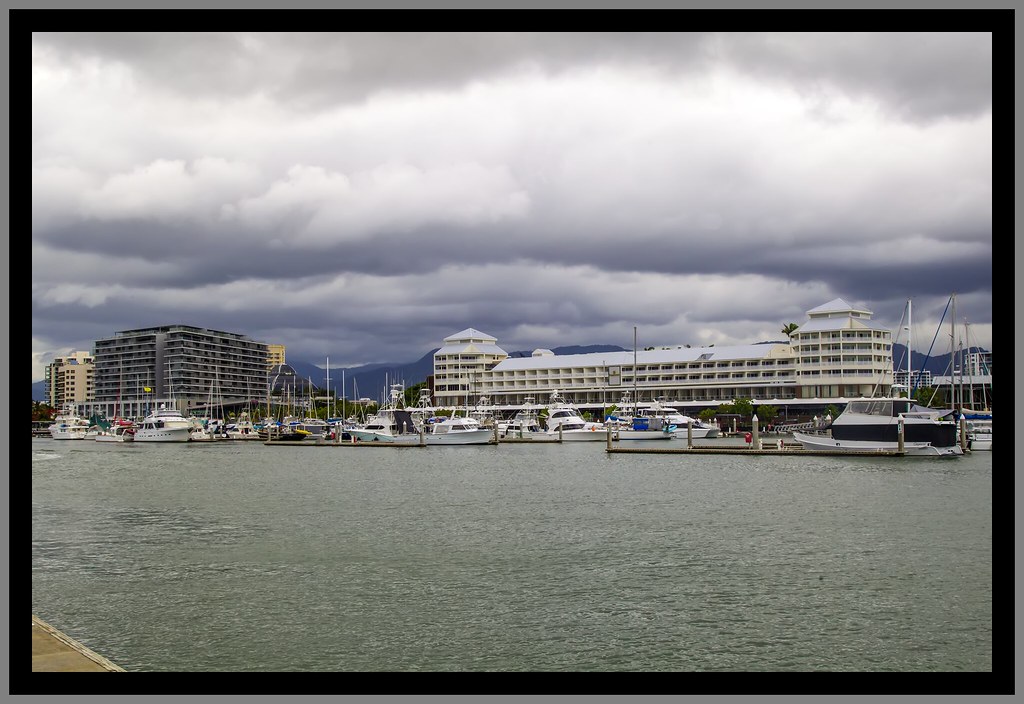
Cairns sits at a geographic pinch point. The routes north and northwest commit you to ocean distances where the nearest capable haulout facility is days away and rescue resources are genuinely thin. That reality reshapes how you think about a rig inspection. What reads as routine maintenance in a marina brochure becomes, beyond the reef, a question about survival margins.
Why Cairns Is a Rigging Decision Point
Three main corridors leave Cairns for offshore: northwest through the Torres Strait toward Darwin and Indonesia; north into the Coral Sea toward Papua New Guinea and Vanuatu; and outward through the reef passages into the Pacific. All three share a critical characteristic - once you pass the outer reef, there is no yard capable of re-rigging a bluewater yacht within any practical sailing distance.
The cyclone season deadline makes this urgent. The window for passage-making north from Cairns typically closes as tropical cyclone activity builds from November onward - the Australian tropical cyclone season officially opens on 1 November. A boat staging for Darwin or the Indonesian archipelago faces a hard calendar pressure. If an October inspection reveals swage fittings that need replacement, custom-swaged wire freighted from southern Australian chandleries or overseas suppliers can take two to four weeks to arrive. Add yard time and the departure window starts closing fast.
Generic rigging guides miss this entirely. For many cruisers, Cairns is the last realistic opportunity to pull the mast or haul the boat before committing to a passage that ends in a cyclone-active basin. The decision made here cannot be easily revisited.
What the Tropics Do to Standing Rigging That Temperate Climates Do Not
Rigging ages everywhere. It ages faster here. Four mechanisms combine in Far North Queensland that do not occur with the same intensity in temperate regions:
- Year-round salt deposition. Temperate rigs get salt exposure during sailing season and then a winter period that flushes chloride ions from surfaces and fittings. In Cairns, there is no such flush. Swage fittings, turnbuckle barrels, and chainplate penetrations accumulate chloride load continuously, twelve months a year.
- Elevated UV index. Far North Queensland UV intensity substantially exceeds that of Sydney or Melbourne. UV radiation degrades furler bearings, destroys polyester running rigging faster, and - critically for synthetic standing rigging - attacks Dyneema at the structural level.
- Continuous heat cycling. Temperature swings between direct-sun daytime peaks and overnight lows stress the junctions between dissimilar materials - stainless and aluminium at swage fittings particularly - and generate micro-cracking at interfaces not seen in cooler climates.
- No winter drying period. Cold, dry winters in temperate zones slow or halt the electrochemical reactions that drive crevice corrosion. In Cairns, those reactions run without pause.
This is why offshore passage underwriters and experienced blue-water sailors converge on a seven-to-eight year replacement interval for tropical standing rigging, rather than the ten-year benchmark applied on coastal routes in southern states. Boats kept in the tropics without regular freshwater rinsing can show advanced crevice corrosion well inside even that shortened window.
Age-Based Rules vs. Condition-Based Assessment
The seven-to-eight year tropical benchmark is a threshold, not a diagnosis. A five-year-old rig on a properly maintained, freshwater-rinsed boat may be in better condition than a four-year-old rig that has swung on a salt-water mooring with no attention paid to the swage fittings. Age alone is an incomplete guide.
Marine insurer requirements for standing rigging replacement vary considerably by underwriter - some cite 8 years for wire, others a broader 5-10 year range, and some apply condition-based exclusions rather than mandatory replacement intervals. Underwriters covering Torres Strait, Coral Sea, and Timor Sea passages often impose stricter thresholds as a condition of offshore cover - sometimes requiring a professional rig survey dated within a defined period before departure, sometimes mandating replacement regardless of visible condition once the rig reaches a certain age. Contact your offshore insurer before arriving in Cairns and get the requirements in writing. What they will not do is underwrite a dismasting in the Timor Sea and then help you recover the boat.
The Three Hidden Failure Points: Swage Fittings, Chainplates, and Turnbuckles
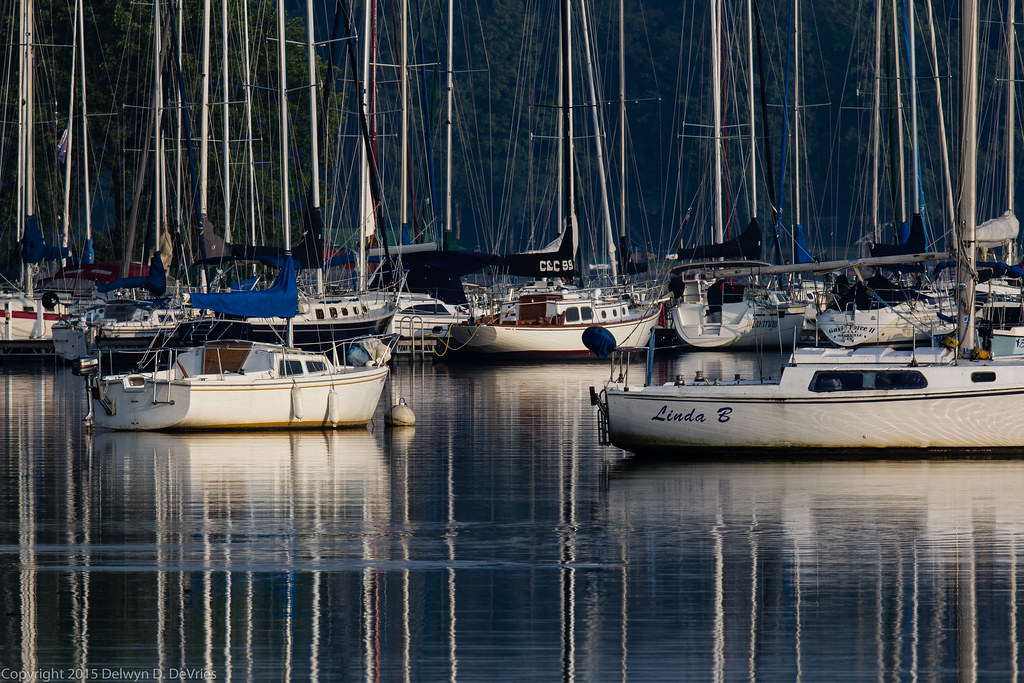
Offshore dismasting is not primarily caused by wire breaking mid-span. Structural failures happen at terminal junctions where the corrosion that kills the fitting is invisible from outside.
Swage Fittings
In a swaged terminal, wire is compressed into a stainless barrel and trapped in a near-zero-oxygen environment. Chloride ions and moisture diffuse inward while oxygen cannot enter. The resulting anaerobic conditions drive crevice corrosion - microscopic fissuring that progresses inward from the wire surface at the swage shoulder without any visible indication, until the fitting parts. A USCG review of casualty data for commercially inspected sailing vessels (passenger-carrying charter boats and similar) recorded nine dismastings attributable to mast, spar, or rigging component failure across a six-year period. Six of those nine involved sailing catamarans, where asymmetric rig loads compound the risk at shroud terminals and chainplate junctions.
Chainplates
Chainplates are consistently cited as the single most common structural cause of offshore dismasting. The mechanism is anaerobic crevice corrosion at the deck penetration - the deck seal excludes oxygen from the stainless at exactly the point where the fitting bears shroud load. The surrounding laminate or timber holds moisture that gets past the seal and locks out oxygen completely. The chainplate can be actively corroding in a hidden void while the visible upper section looks clean and bright.
Turnbuckles
Turnbuckle barrels collect standing salt water and are almost never opened. Internal corrosion develops on threads and barrel walls invisible without disassembly. The correct practice is to unscrew the barrel completely, flush with fresh water, inspect threads for pitting, and relubricate with lanolin or anti-seize compound before reassembly. Most boats arriving in Cairns for the first time have not had their turnbuckles opened in years.
Inspection Techniques and Tools
Meaningful inspection requires more than standing on the dock and looking up. Work through this sequence before declaring a rig passage-ready:
- Deck-level magnified visual inspection. A fifty-power pocket magnifier is the minimum tool for swage fittings and wire. The naked eye reliably misses the hairline ring-cracks at swage shoulders that precede failure. Inspect every stay and shroud from chainplate to masthead terminal, checking for broken strands, rust staining at swage entry points, and barrel deformation.
- Dye penetrant testing on swage shoulders. Apply coloured penetrant dye, allow it to dwell, wipe the surface clean, then apply a titanium-dioxide developer. Cracks draw the dye back to the surface as visible indications. This exposes surface cracks that magnification misses - but it cannot detect corrosion inside the swage bore. Internal bore corrosion requires fitting removal or radiographic inspection.
- Mast climb for spreader bases and masthead. Spreader-to-shroud junctions are high-fatigue failure points. Continuous cyclic loading from slack leeward shrouds working against a rigid spreader tip generates stress concentrations that crack spreader bases and chafe wire strands without obvious external signs. Check spreader end caps, wire at the spreader tip contact zone, and all masthead sheaves for cracking, wear groove depth, and bearing play.
- Chainplate inspection from below decks. Look for rust staining, discolouration of surrounding laminate, or soft spots in adjacent material. Remove the deck seal at the chainplate penetration if possible and probe for corrosion or moisture in the void.
- Turnbuckle disassembly and inspection. Unscrew each barrel, inspect threads and interior surfaces, flush with fresh water, and relube before reassembly. Do this as part of the inspection, not after you have already decided the rig is sound.
- Professional load testing when in doubt. A rigger with a load-testing rig can apply controlled tension to terminals and assess deflection behaviour. Use this as an addition to the visual and penetrant sequence above, not a replacement for it.
Wire, Rod, and Synthetic: Choosing the Right Material for Tropical Service
| Material | Corrosion resistance | Weight vs. wire | Failure visibility | Tropical service life |
|---|---|---|---|---|
| 1x19 type 316 stainless wire | Moderate - crevice corrosion at swages | Baseline | Low - internal failure hidden until parting | 7-8 years offshore tropical |
| Nitronic 50 / Aquamet 22 rod | High - nitrogen and vanadium alloys resist chloride attack | Similar to wire | Low - rod fails rapidly once cracked | Longer than 316 in tropical conditions |
| Dyneema SK75 / SK99 synthetic | None needed - does not corrode | Significantly lighter than equivalent-strength wire - check with supplier for specific product comparisons | High - sleeve fuzzes visibly before core fails | 5-7 years tropical (UV-limited) |
Standard 1x19 type 316 stainless wire, in diameters from 3.2 mm to 7.9 mm depending on displacement and rig design, remains the default for offshore cruisers because it is understood, widely serviceable, and available. Its weakness in the tropics is crevice corrosion at swaged terminals - the same mechanism that drives the shortened replacement interval.
Nitronic 50 and Aquamet 22 rod rigging substantially outperform 316 in crevice-corrosion resistance. The nitrogen and vanadium additions in these alloys resist chloride attack in hot, salt-laden conditions. The trade-offs are cost, limited local availability in Cairns, and a failure characteristic that provides less warning than fraying wire strands - rod initiates a fatigue crack and then goes quickly.
Dyneema SK75 and SK99 are corrosion-free and significantly lighter than equivalent-strength wire - manufacturer data typically shows weight savings of several times compared to steel wire rope of equivalent breaking load, though the exact figure varies by product and comparison method; check with your rigging supplier for specifics. Their visible failure mode is a genuine advantage offshore - the braided outer sleeve fuzzes and the inner core shows through before catastrophic failure. The tropical penalty is UV degradation. In temperate climates, Dyneema standing rigging can last ten years or more. In Far North Queensland, the practical service life is five to seven years. That is a shorter replacement cycle than 316 wire on the same routes, which surprises many cruisers who invested in synthetic rigging for longevity. There is also a direct heat hazard: Dyneema begins to lose strength at sustained temperatures above around 70 degrees Celsius, and frictional heat from a flogging sheet in sustained contact with a synthetic shroud can generate localised temperatures well beyond that threshold and sever it within seconds - a realistic scenario in tropical conditions where sheets flog more and ambient temperatures are already elevated.
Dyneema's visible failure mode is a genuine safety advantage offshore - but in the tropics its UV service life is shorter than most cruisers expect. Plan replacement on the five-to-seven year tropical cycle, not the temperate benchmark.
Running Rigging, Furler Bearings, and Deck Hardware
Standing rigging does not degrade in isolation. A haul-out or rig-down for standing rigging inspection is the right time to assess the components that age in parallel:
- Halyards and sheets. Polyester running rigging degrades significantly faster under tropical UV and elevated temperatures. UV-stabilised Dyneema or Vectran core halyards are preferred for offshore departures into the Coral Sea, Torres Strait, and Timor Sea. Inspect for sheath wear and internal strand slippage - a halyard that slips under load on a clean cleat is failing internally.
- Roller furler bearings. UV and salt grit degrade furler bearing races faster in the tropics. A furler that drags or fails to fully unfurl in a rising sea is a serious offshore hazard. Test smooth rotation through the full travel range and check foil sections for UV brittleness and hairline cracking.
- Clutches and turning blocks. Salt crystallises inside cam clutch mechanisms and can cause them to fail to release under load - a dangerous failure with a loaded sheet in a squall. Flush, cycle through full operation, and replace any showing cam wear or inconsistent grip.
- Masthead instruments. Wind vane bearings and anemometer cups seize in tropical conditions without warning. A non-functioning wind instrument on a night passage through the Torres Strait or into the Coral Sea is a meaningful navigation gap. Test instruments before departure, not on the way out the channel.
Scheduling Rig Work in Cairns: Lead Times, Local Expertise, and Fitting It Around Passage Windows
The practical minimum for booking any rig work beyond basic inspection is four to six weeks before your planned departure. Custom-swaged wire and speciality fittings freighted from southern Australian chandleries or overseas suppliers carry two-to-four week lead times under normal conditions. Fittings for less common rigs or rod rigging components can take longer. Arriving in October intending to leave in November, and then discovering shrouds need replacement, puts you immediately at risk of missing your weather window.
The cyclone lay-up inspection and the pre-passage rig assessment are natural complements that most cruisers treat as separate events at separate cost. Combining them into a single scheduled haul-out saves crane time and lets any replacement parts be ordered and fitted before the boat goes back in the water, well ahead of the departure window. If the boat is coming out for a cyclone lay-up antifoul anyway, pulling the mast at the same time adds relatively little to the operation and covers both objectives completely. You inspect the chainplates from below, open the turnbuckles, run dye penetrant on all the swage shoulders, and order anything that needs replacing - all in one yard visit.
Local rigging expertise in Cairns is oriented toward offshore and blue-water work, not coastal day sailing. Brief your rigger on the specific routes you intend to sail, the rig's age and full history, and any findings from your own initial inspection. A rigger who knows you are heading for the Torres Strait will assess the rig differently than one who assumes you are working the reef.
Pre-Departure Rig Sign-Off Checklist
Before casting off for an offshore passage, confirm and document each of the following:
- Standing rigging age recorded and within the applicable interval for offshore tropical routes
- All swage fittings inspected with a fifty-power magnifier and dye penetrant tested at shoulders
- Chainplates inspected at deck penetrations for corrosion, moisture, and seal integrity
- Turnbuckles disassembled, inspected, flushed, and relubricated
- Spreader bases and end caps inspected aloft for cracking and chafe damage
- Forestay and backstay terminals checked - these carry the full fore-and-aft rig load and fail without warning
- All clevis pins fitted with new split pins or locking rings; no pin retained by seized corrosion alone
- Rig tension checked with a calibrated tension gauge and set to the designer's specification
- Halyards and sheets inspected for sheath wear; UV-compromised lines replaced before departure
- Roller furler bearing tested through full travel under load in both directions
- Masthead wind instruments confirmed operational
- Insurer's offshore route requirements confirmed in writing and any required survey documentation carried aboard
The documentation point is not bureaucratic box-ticking. A dated survey report and parts receipts carried aboard are the difference between a covered claim and a protracted dispute about whether the rig was seaworthy at departure.
Frequently Asked Questions
How often should I replace standing rigging before offshore passages through the Torres Strait or Timor Sea?
Offshore passage underwriters and experienced blue-water sailors use a seven-to-eight year replacement interval for tropical standing rigging - not the ten-year coastal benchmark. Boats kept in the tropics without regular freshwater rinsing can show advanced crevice corrosion well inside even that window, so condition assessment matters as much as calendar age. Contact your insurer directly for their route-specific requirements before arriving in Cairns.
Can I inspect my own swage fittings, or do I need a professional?
You can and should do the initial inspection yourself using a fifty-power pocket magnifier and dye penetrant testing materials available through marine chandleries. A magnified visual check and dye penetrant test on swage shoulders will catch most surface cracking. Internal corrosion inside the swage bore requires fitting removal or radiographic inspection, which needs professional equipment - and if age or history leaves any doubt, add a professional load test to the sequence.
Is Dyneema a practical choice for a boat sailing in Far North Queensland?
Dyneema's non-corrosive nature and visible failure mode are genuine advantages offshore. The tropical penalty is UV degradation: the practical service life in Far North Queensland is five to seven years, against ten or more years in temperate climates. Plan replacement on that shorter cycle, and account for the heat risk - Dyneema begins to lose strength at sustained temperatures above around 70 degrees Celsius, and frictional heat from a flogging sheet in sustained contact with a synthetic shroud can sever it rapidly in the conditions you will encounter on a Coral Sea or Torres Strait passage.
What if I miss the lead time for replacement rigging before my departure window?
If inspection reveals parts that need replacement and you are inside the four-to-six week minimum, you face a direct choice between delaying the passage or departing with rigging you have assessed as marginal. The offshore routes from Cairns offer no short-notice rescue resources. A dismasting in the Torres Strait or the Coral Sea is a survival event, not an inconvenience - weight that decision accordingly.
Should I haul out specifically for rig inspection, or can it be done in the water?
Most inspection steps work afloat - magnified visual checks, dye penetrant testing, a mast climb, turnbuckle disassembly, and below-deck chainplate inspection all require no haul-out. The case for combining a haul-out with rig work is economic: if the boat is coming out for a cyclone lay-up antifoul anyway, pulling the mast at the same time avoids a second crane booking and lets you address any findings before the boat goes back in the water.
Do I need a professional rig survey for offshore passage insurance from Cairns?
Requirements vary by insurer and route. Underwriters covering Coral Sea, Torres Strait, and Timor Sea passages often impose specific rig age or condition requirements as a condition of cover, and some require a professional survey report dated within a defined period before departure. Get those requirements in writing from your insurer before you arrive - that determines what documentation you need on board, not just what physical work to carry out.