Cairns sits at the top of Australia's main offshore sailing corridor. Most bluewater yachts heading to Indonesia, Papua New Guinea, or the Pacific islands clear from here, and that geography has consequences. It means Australian underwriters are paying close attention, Great Barrier Reef biofouling rules apply from the moment you leave the marina, and the warm tropical water has already been working on your hull in ways that temperate-zone owners rarely face. A marine survey is the document that pulls every system assessment together into a single formal record - and it is what your insurer, finance company, or passage plan requires before anything else proceeds.
Why Cairns Is a Survey Checkpoint
Three pressures converge in Far North Queensland that do not converge the same way in Sydney or Hobart. The first is offshore passage planning. Indonesian and PNG officials may not ask for a survey, but Australian underwriters writing the voyage almost certainly will. Club Marine, the largest recreational marine insurer in Australia and underwritten by Allianz Australia, specifies in its policy schedules that vessels past a set age threshold require a current condition and valuation survey before an offshore or extended coastal endorsement is granted - confirm the current threshold directly with Club Marine or your broker, as schedules are revised.
The second pressure is the Reef itself. Australia has national biofouling management guidelines for vessels, and the Great Barrier Reef Marine Park Authority has issued vessel management guidance relevant to operating within the Marine Park. Surveyors engaged for offshore-passage endorsements increasingly ask to see evidence of biofouling management practices as part of their review - check current obligations directly with GBRMPA, as requirements for recreational craft continue to evolve. This is a consideration that simply does not come up in temperate waters.
The third is the environment. Tropical Queensland's warm water is harder on hulls, fittings, and rigging than southern conditions. Osmotic blistering, crevice corrosion in stainless steel, and galvanic deterioration all run faster here. A survey done in Cairns will often produce findings that surprise owners who previously kept their boats in cooler water.
Types of Marine Survey and When Each Is Needed
Not every survey serves the same purpose. Ordering the wrong one wastes time and money.
| Survey type | Who commissions it | Primary output | Typical trigger |
|---|---|---|---|
| Condition and valuation | Owner or buyer | Structure, machinery, safety gear, market value | Offshore endorsement, finance, renewal |
| Pre-purchase | Buyer only | Defects and structural condition | Buying a used vessel |
| Damage survey | Insurer or owner | Extent and cause of specific damage | Grounding, collision, storm claim |
| Insurance renewal survey | Owner | Condition against prior report | Policy renewal on older offshore vessel |
| AMSA safety inspection | Operator | Statutory safety equipment compliance | Commercial use, regulatory requirement |
The condition and valuation survey is what Australian marine insurers and finance companies actually require. It records structural condition, machinery state, safety equipment compliance, and current market value in a single report. For most Cairns owners going offshore, this is the document they need.
A pre-purchase survey differs in one legally important way: the surveyor's duty of care runs entirely to the buyer. The vendor is not entitled to a copy and findings cannot be shared without the buyer's explicit consent. The buyer - not the vendor - pays the fee and directs the work.
Choosing an Accredited Surveyor in Far North Queensland
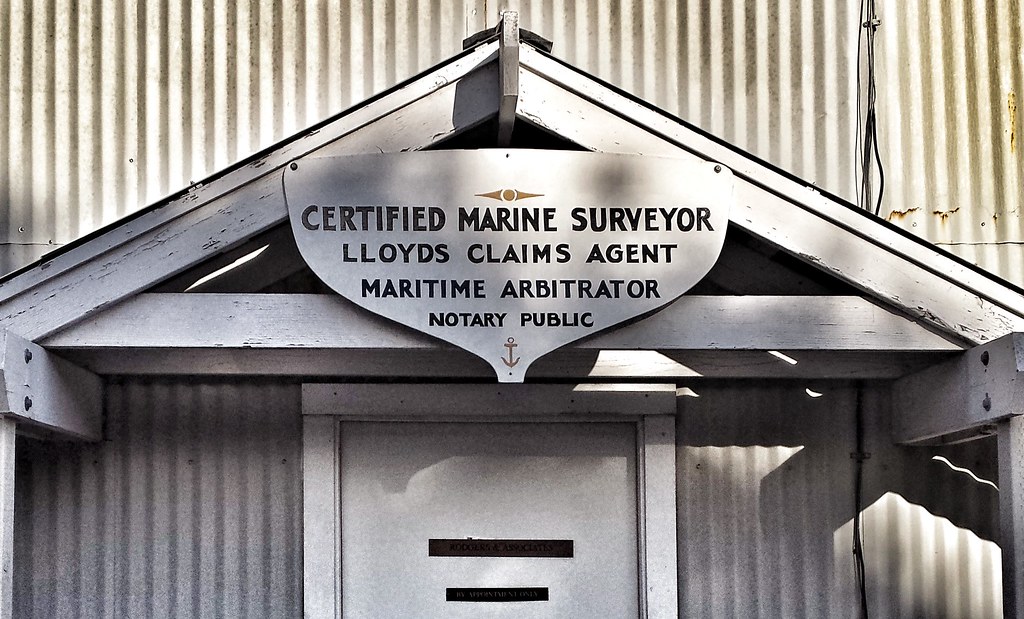
Accreditation matters because insurers will only accept reports from surveyors they recognize. The International Institute of Marine Surveying, formed in 1991 and operating internationally, is one of the primary bodies whose Fellows and Members are accepted by Australian marine insurers as qualified to produce reports that bind cover. IIMS membership is publicly verifiable - confirm it before engaging anyone. Other recognized bodies exist; always check with your insurer that a specific surveyor's credentials are acceptable before booking.
Local versus fly-in surveyors
Surveyors charge either per metre of vessel length or as a daily rate - contact local operators for current pricing. The significant variable in Far North Queensland is mobilization cost. A surveyor flying from Brisbane or Sydney adds travel and accommodation expenses that can equal the survey fee itself. A surveyor based in, or regularly visiting, Cairns removes that cost entirely. For owners coordinating a haul-out, antifouling, rigging inspection, and safety gear servicing in one yard visit, a local surveyor who can work within that schedule is the practical choice. Unaccredited operators do offer inspection services in the region; their reports will not satisfy an offshore underwriter.
The Haul-Out Process
A haul-out is mandatory for a complete condition survey. The surveyor must physically access the entire underwater hull, keel, rudder, through-hull fittings, and stern gear with the vessel dry. An in-water inspection alone will not satisfy most Australian offshore underwriters - not as a technicality, but because a large proportion of structurally critical findings sit below the waterline.
Tropical-formula ablative antifouling paint needs annual replacement in Far North Queensland conditions, so a survey haul-out is the logical moment to reset that schedule. Doing it in the right order avoids handling the boat twice:
- Book the haul-out and confirm the surveyor's availability for the same day or the day after pressure-washing - the hull must be clean but dry enough that moisture-meter readings are reliable.
- Arrange cradling with stands positioned so the surveyor can walk the entire hull without obstruction. Blocked areas do not get assessed.
- Complete the underwater hull survey before any painting begins. Blister assessment through fresh antifouling is unreliable.
- After the underwater inspection, proceed with osmotic treatment, fairing, priming, and antifouling as needed.
- Complete the topsides, deck, rig, machinery, and safety equipment checks - these can happen afloat or ashore depending on the surveyor's preference.
What Surveyors Inspect
Hull and structure
Fiberglass laminate is assessed visually and with a moisture meter across the full hull surface. Osmotic blistering, delamination, repairs, and impact damage are all documented. The keel-to-hull junction is assessed, and surveyors often call for moisture readings or removal of inspection plates to evaluate keel bolt condition. Internal corrosion on iron or mild-steel bolts can be severe while the exposed nut shows little sign - keel bolt findings are among the most structurally serious a surveyor can make.
Deck, topsides, and chainplates
Teak deck fasteners are checked by tapping the surrounding gelcoat with a coin - the hollow sound reveals delamination caused by corroded screws wicking seawater into the deck core. Caulking seams are probed for voids. Hatches and ports are assessed for seal condition. Chainplate slots get close attention because standing saltwater there - invisible from outside - is the entry point for structural damage that can develop undetected over years.
Underwater gear and machinery
Every through-hull fitting and seacock is operated. Stern tube, shaft alignment, cutlass bearing, and propeller condition are assessed. Engine hours and a running check form part of the machinery evaluation.
Rig and safety equipment
Standing rigging is inspected for broken strands and swage cracks. Mast step and spreader roots are examined for corrosion and cracking. Safety equipment inspection includes EPIRB registration - surveyors verify current registration against the Australian Beacon Registry at beacons.amsa.gov.au, because every EPIRB fitted to an Australian-registered vessel must be registered there. Life raft service dates, flare expiry, and fire suppression condition are all documented.
Tropical-Specific Defects
Far North Queensland produces survey findings at a rate and severity that surprises owners coming from southern states. Four defect types dominate:
- Osmotic blistering: Warm tropical water accelerates osmotic uptake in fiberglass. Blisters have been documented in hulls as young as five years old in Far North Queensland conditions - a timeline that would be unusual in cooler water. Owners keeping boats permanently in Cairns should treat osmosis as ongoing management, not evidence of a badly built hull.
- Crevice corrosion in stainless steel: 316-grade stainless fails in low-oxygen crevices. Stanchion bases, chainplate slots, and deck fittings sitting in pooled saltwater under tropical sun can pit internally while looking sound externally. Experienced surveyors probe these areas specifically in tropical Queensland because the failure mode is invisible until it is catastrophic.
- Keel bolt degradation: Internal corrosion on iron or mild-steel bolts accelerates with tropical immersion. The exposed nut may look unremarkable while the shank cross-section has been substantially reduced. Surveyors working in this region are more likely to call for a detailed keel bolt assessment than their southern counterparts would be for the same vessel age.
- Galvanic corrosion between dissimilar metals: Bronze seacocks adjacent to aluminum fittings, stainless keel bolts in iron castings - these combinations are common on production yachts and manageable in temperate water. In warm, year-round tropical conditions, the galvanic differential drives corrosion faster and experienced surveyors adjust their defect grading to reflect regional conditions.
Australian Insurance Requirements and the Defect Classification System
Pantaenius Australia, a specialist marine insurance agency distributing policies underwritten by Chubb Insurance Australia and HDI Global Specialty SE, offers agreed-value offshore cover and assesses bluewater yachts on individual risk rather than applying blanket vessel-age rules. For owners of older but well-maintained offshore cruising yachts, this approach can produce better outcomes than a standard policy that penalizes age regardless of actual condition. QBE Marine is another underwriter active in Australian recreational marine with comparable offshore endorsement requirements.
The defect classification system in a condition and valuation report has direct consequences for insurance binding:
- Category 1: Immediate safety hazard. The vessel must not operate until rectified. Australian insurers require written confirmation of rectification before binding offshore cover.
- Category 2: Defect to be rectified within a defined timeframe. Offshore cover will not typically be bound until the insurer has written confirmation of rectification or has accepted a formal remediation schedule.
- Category 3: Maintenance item to monitor. Cover is generally not conditional on immediate action, but Category 3 items left unaddressed tend to become Category 2 findings at the next survey.
A survey with open Category 1 defects is a document describing a problem, not permission to go offshore. Rectification confirmation in writing is a separate step - and it is the one that actually binds the cover.
Preparing Your Yacht Before the Surveyor Arrives
Preparation is within every owner's control and has a direct effect on both survey duration and outcome:
- Have current vessel registration papers accessible aboard.
- Confirm EPIRB registration at beacons.amsa.gov.au and print the confirmation - an unregistered beacon is an automatic deficiency.
- Check all safety equipment expiry dates before the surveyor does: flares, life raft service certificate, fire extinguisher inspection tags.
- Open every access panel - engine room, bilge hatches, under-bunk storage, keel inspection plates if fitted. Surveyors cannot assess what they cannot reach.
- Clean the bilge. A dry, clean bilge allows the surveyor to see laminate and assess weeping through-hulls. Standing oily water slows the inspection and raises questions in itself.
- Gather service records for the engine, rigging, and safety equipment if available.
- Have your biofouling management documentation ready if you operate within the Great Barrier Reef Marine Park - check with GBRMPA for current guidance on what is expected.
After the Report: Reading Findings and Acting on Them
Read Category 1 and 2 findings first. Cost them out with local repairers before doing anything else. A structural defect - keel bolt corrosion, significant osmotic delamination, compromised chainplates - is a quantifiable number. For a pre-purchase buyer, that number belongs in the negotiation. For an existing owner preparing an offshore departure, it is the priority work list before anything else on the schedule.
Using findings to negotiate a purchase price
The pre-purchase survey report belongs entirely to the buyer. Get repair quotes for every Category 1 and 2 item from Cairns-based repairers, then use those quotes to renegotiate the purchase price or request vendor rectification before settlement. Buyers who skip the survey to save the fee and discover keel problems at their first haul-out are not saving money - they are deferring a much larger bill.
Communicating with your insurer
When Category 1 and 2 defects are rectified, get written confirmation from the repairer - a detailed invoice or sign-off identifying items by their survey reference. Submit it to your insurer or broker, confirm receipt, and ask explicitly when offshore cover is bound. The departure date follows the cover confirmation, not the repair completion alone. Assuming the insurer has received and processed the survey report is a mistake that has delayed more than a few departures.
Frequently Asked Questions
How long is a condition and valuation survey valid for insurance purposes?
Australian insurers specify validity periods in their policy schedules, and these can differ between Club Marine, Pantaenius, QBE Marine, and other underwriters. Check directly with your insurer or broker for the current requirement before commissioning a survey - relying on figures from other owners can lead to needing a fresh survey sooner than expected.
Can the vendor refuse a surveyor access for a pre-purchase inspection?
Technically yes, but a vendor who blocks physical access to a surveyor is blocking the buyer's due diligence. Any purchase contract for a used vessel should be made conditional on a satisfactory survey outcome, which protects the buyer if access is restricted or significant defects are found. A refusal is a serious commercial signal worth taking seriously before committing to settlement.
Do I need a survey if I am only sailing the Queensland coast, not going offshore?
It depends on your insurer's current policy schedule and your vessel's age. Some underwriters require a survey for extended coastal endorsements on older vessels even without an offshore passage. The GBR biofouling compliance question is also separate from insurance survey requirements but is increasingly handled at the same time. Check your policy schedule specifically rather than assuming coastal operation is exempt.
What should I do if the report contains Category 1 findings I cannot afford to fix before departure?
Contact your insurer before proceeding - operating with open Category 1 defects without disclosure can void cover entirely. If the finding is on a purchased vessel, the repair cost may be recoverable through the negotiated purchase price. For structural defects that appear alarming in a survey report, getting a quote from a qualified marine contractor in Cairns often produces a more precise cost estimate than the report itself conveys.
Is an EPIRB registration check part of the survey, or do I handle that separately?
Surveyors conducting condition and valuation surveys for Australian offshore insurance routinely verify EPIRB registration through the Australian Beacon Registry as part of the safety equipment inspection. An unregistered beacon is typically noted as a Category 1 or 2 deficiency. Registration through beacons.amsa.gov.au is free and takes minutes - do it before the surveyor arrives, not after the report lands.