Fire is the emergency that ends passages permanently. A collision, a knockdown, a medical crisis - all leave the boat intact as a platform. Fire takes that platform away. Research drawn from marine insurance claims data shows that a fully developed engine-room fire on an unattended vessel can render the boat unsalvageable in under four minutes. Offshore in the Coral Sea or approaching the Torres Strait, the nearest Coast Guard or water police vessel may be many hours away. That gap between the speed of a fire and the speed of any possible rescue is the central fact that shapes every decision in this guide.
Why Fire Is the Most Dangerous Emergency Offshore
Coastal sailors develop habits calibrated to coastal risks. Help is relatively close. A mayday on a busy channel gets a fast response. Those habits are inadequate offshore, and fire is the emergency where the gap is widest.
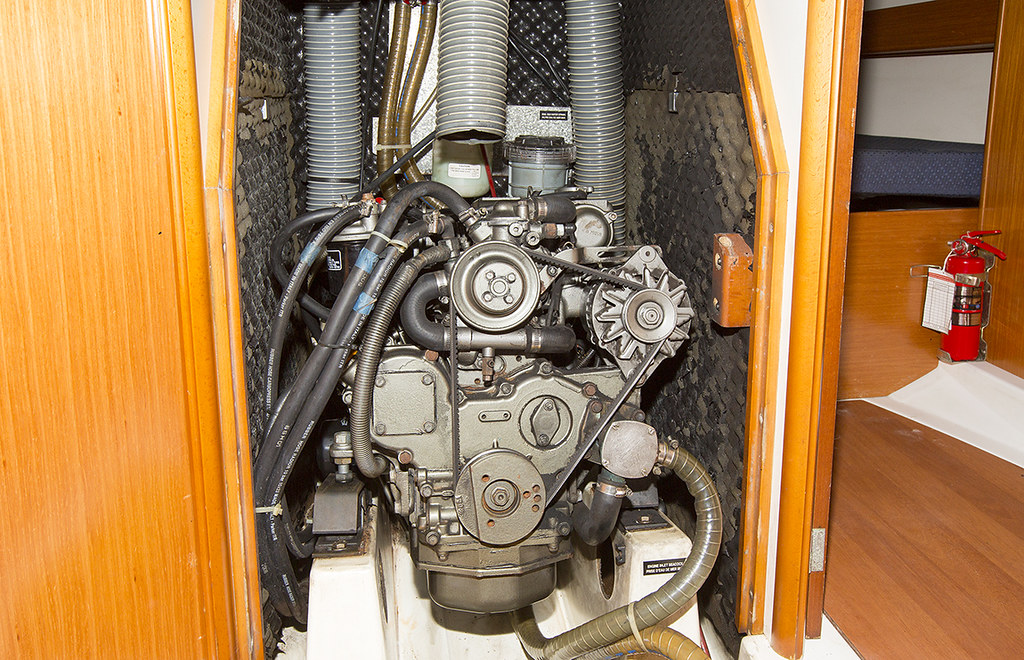
The four-minute figure is not an exaggeration. A fire that starts in an engine room, feeds on diesel, oil mist and rubber hose, and encounters the oxygen supply of an open bilge compartment can progress from ignition to structural compromise faster than a crew can respond if they are asleep, occupied on deck, or simply slow to identify the source. Electrical system failures - battery connections, chafed wiring, alternator faults - account for more than half of all boat fires according to marine insurance claims data. Inside the engine room specifically, the leading cause is fuel or lubricating oil contacting a hot exhaust surface, not electrical faults. That means two separate ignition pathways need attention before departure.
The Coral Sea and Torres Strait passages out of Cairns add specific pressures. Weather windows are narrow. Crews push through the night. The engine runs for extended hours. Heat in a Cairns summer engine room under way can reach 55 to 65 degrees Celsius. Those conditions create the highest possible risk environment for fire, at the same time as the vessel is furthest from assistance.
The Queensland and AMSA Regulatory Framework
Queensland's marine safety legislation requires all recreational ships above a minimum length to carry firefighting equipment capable of extinguishing a fire quickly and effectively. Critically, the legislation is performance-based - it deliberately sets no fixed quantity or specific type. Compliance is assessed against the applicable Australian Standard for small craft fire-extinguishing systems (available through Standards Australia).
That standard is risk-based, not a length-based checklist. Required extinguisher quantity and type depend on factors including total fuel tank volume, whether LPG or other flammable gases are stored aboard, accommodation configuration, and whether the vessel has an enclosed engine space. A 12-metre sloop with a small diesel and an open bilge sits in a different risk category than a 12-metre motorsailer with a large enclosed engine room and a full LPG galley. For the current figures and category thresholds, consult Maritime Safety Queensland directly at msq.qld.gov.au or access the standard through Standards Australia.
AMSA's vessel equipment guide distinguishes between smooth waters, partially smooth waters, and open waters categories. Any offshore passage beyond the coastal limit places the yacht under the most demanding equipment tier. The gap between what is required for inshore passages and what is prudent offshore is substantial for fire protection. The Australian National Annex to the Red Ensign Group Yacht Code addresses fire protection for offshore passage and racing yachts that fall outside the domestic recreational class, including requirements for fixed fire detection and suppression in engine spaces on vessels above a threshold length. Skippers planning extended offshore passages should check their vessel against both the AMSA open-waters requirements and the Red Ensign Group Yacht Code where applicable.
Portable Fire Extinguishers
Compliance and Risk-Based Quantity
All portable extinguishers must comply with the applicable Australian/New Zealand Standard for portable fire extinguishers. The number and type required aboard your specific vessel comes from the risk calculation in the small craft fire-extinguishing systems standard described above - there is no single answer that applies to all yachts. A vessel with a large enclosed engine space, significant fuel capacity, and LPG aboard will require more extinguisher capacity than a small day-sailer.
Placement
Placement is as important as quantity. Extinguishers must be accessible from outside the compartment where a fire is most likely to start. An extinguisher mounted inside an engine room is useless if the fire prevents access. Recommended positions include:
- Companionway, accessible from the cockpit without entering the saloon
- Galley area, separately from any fire blanket
- Helm station, for cockpit fires or fuel deck spills
- Forward cabin access, for accommodation fires
Service and Expiry
Extinguishers must be replaced or serviced by an authorised agent before the expiry date stamped on the unit. The tropical Cairns climate accelerates pressure loss in extinguisher cylinders. Propellant pressure in a cylinder sitting in an engine room that cycles repeatedly to 55-65 degrees Celsius degrades faster than manufacturers' temperate-climate service intervals assume. Annual professional inspection is more important here than it would be in Hobart or Fremantle.
Any extinguisher that has reached the age threshold specified under Australian Standards must undergo hydrostatic pressure testing, regardless of how much service life appears to remain. This is a physical safety requirement - a cylinder that has never been discharged still ages, and pressure testing verifies structural integrity after years of thermal cycling and vibration. Check with your service provider or the applicable standard for the current testing interval.
The Fire Blanket
The small craft fire-extinguishing systems standard singles out one item separately from portable extinguishers: a fire blanket is mandated in each galley space. It is the only piece of firefighting equipment the standard requires by name rather than by risk calculation.
Mount the blanket beside the galley, not above the stove. A blanket stored directly above a cooking fire cannot be retrieved safely when the fire starts. It should be reachable from the side, at a height between shoulder and waist level, with a pull-tab or fold-out opening that works with one hand.
Use is different depending on what is burning. For a contained cooking fire - a pan fire, burning oil, a flaming cloth - drape the blanket smoothly over the top of the vessel, cutting off the oxygen supply, and leave it in place for at least ten minutes. Do not lift it to check. For an LPG flare-up at the burner, the first action is to close the gas at the cylinder or the isolation valve if the burner control cannot safely be reached. Using the blanket on an LPG flare without shutting the gas is a temporary measure only - the blanket suppresses the fire but gas continues to flow and can re-ignite or accumulate dangerously.
Fixed Automatic Engine-Room Suppression Systems
How They Work
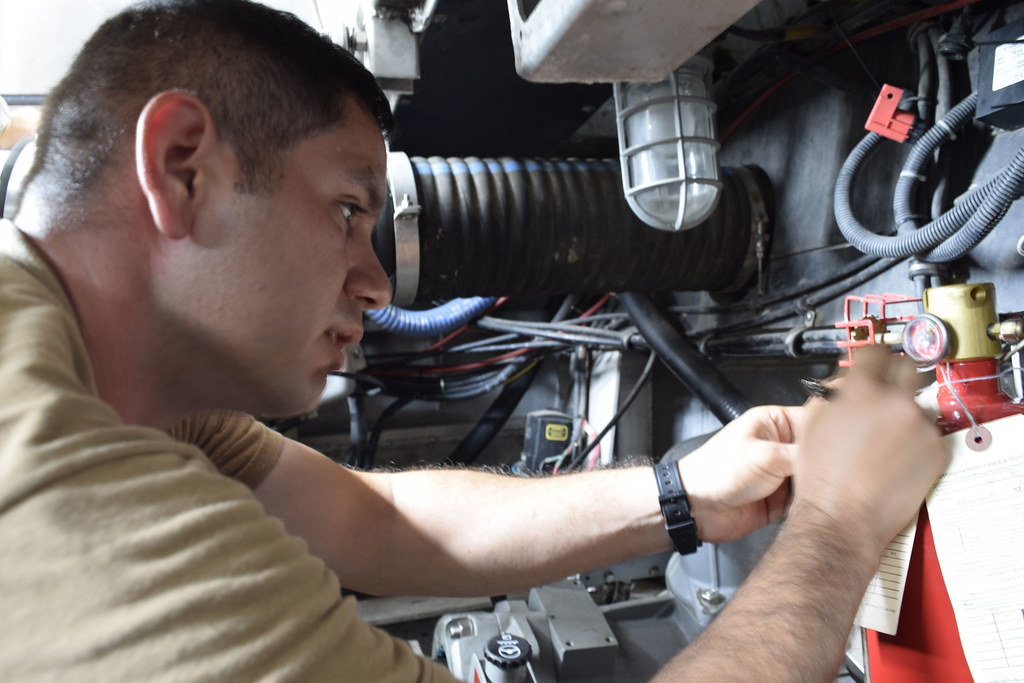
A fixed suppression system floods the engine room with a suppression agent when a heat or smoke detector trips a threshold. On a system with automatic triggering, this happens without any crew action. The crew is typically warned by an alarm before discharge. The system then discharges the agent, which must reach a minimum design concentration throughout the enclosed volume to extinguish the fire.
For a gaseous agent to hold concentration long enough to suppress a deep-seated fire, all ventilation into the engine room must be closed at discharge - hatches, intake vents, blower ducting. Systems with integrated auto-closure dampers that seal the compartment as part of the discharge sequence are significantly more reliable offshore than systems that depend on a crew member physically closing vents under emergency conditions. On a vessel running short-handed through the night, that distinction can determine whether the system works.
Agent Comparison
| Agent | Crew safety if discharged in occupied space | Environmental profile | Recharge availability in Cairns | Relative system cost |
|---|---|---|---|---|
| FM-200 (HFC-227ea) | Safe at design concentration | Non-ozone-depleting; moderate global warming potential | Available from accredited marine fire service providers in Cairns | Mid-range |
| Novec 1230 (FK-5-1-12) | Safe at design concentration | Very low global warming potential; preferred for new installs | Less common in the region; may require sourcing from south-east Queensland or interstate | Higher |
| CO2 | Dangerous - displaces oxygen; hazardous in combined engine-and-accommodation layouts | Inert; no ozone impact | Available from accredited marine fire service providers in Cairns | Lower |
| Aerosol (Stat-X, Pyrogen) | Irritant particulate on discharge; not suitable for occupied spaces | No pressurised cylinder; low environmental impact | Varies by brand; check with Cairns-area marine fire equipment suppliers | Lower to mid-range |
CO2 is effective and long-established, but on a yacht where the engine space shares a bulkhead with sleeping accommodation, the risk of CO2 migrating into occupied areas during or after discharge is a genuine safety concern. FM-200 and Novec 1230 are the preferred options for vessels where crew may be near the engine space at discharge time.
Fixed systems must be sized to the enclosure volume by a certified installer. Undersizing is a common error on retrofits - an agent quantity specified for one engine-room layout may be inadequate after a refit that changes the compartment geometry or ventilation.
PFOS Restriction on Legacy AFFF
Yachts carrying older AFFF (aqueous film-forming foam) extinguishers should verify that the agent is PFOS-free before departing internationally. SOLAS amendments now restrict use, storage and disposal of perfluorooctane sulfonic acid. If your vessel carries a legacy AFFF system, have the agent verified by a marine fire specialist before clearing out of Cairns for international destinations.
Fire Detection in the Engine Room and Accommodation
Detection is what creates the response time. A fixed suppression system that triggers automatically is only as fast as its detector. Heat detectors and smoke detectors serve different purposes and have different failure modes.
Smoke detectors respond to combustion products at low concentrations. They are well-suited to accommodation spaces, where a smouldering fire can produce smoke before significant heat develops. In an engine room, smoke detectors are prone to false alarms from exhaust fumes, oil vapour, and bilge gases - particularly in the humid tropical conditions common in Cairns. A heat detector set to a temperature threshold appropriate for engine-room conditions is more reliable in that location and far less likely to produce nuisance trips that lead crews to disable the alarm.
The most capable configuration integrates a dedicated engine-room heat detector with the fixed suppression trigger, while installing smoke detectors in accommodation areas. Where the suppression system supports it, a pre-discharge alarm gives crew ten to thirty seconds to confirm and clear before the agent releases.
Electrical System Fire Prevention as a Pre-Departure Task
Given that electrical faults account for more than half of all boat fires, a systematic electrical inspection before offshore departure is the highest-value fire prevention task available. It requires no specialist tool beyond a multimeter, a torch and a keen eye for heat damage.
Work through the following before departure:
- Inspect all visible wiring runs in the engine room for chafe marks, particularly where cables pass through bulkheads or lie against metal edges. Chafed insulation in a wet bilge environment is a direct ignition risk.
- Check battery terminals for corrosion, looseness and heat discolouration. A warm or discoloured terminal under normal operation indicates resistance and arcing potential.
- Inspect the alternator connections and the alternator-to-battery cable for the full run. Undersized or damaged cables on high-current circuits are a common fire source.
- Check all circuit breakers and fuse holders for signs of heat damage or corrosion. A breaker that has cycled repeatedly may no longer trip at its rated current.
- Verify that the bilge blower operates correctly on the engine-room circuit and that the intake and exhaust vents are unobstructed. The blower clears fuel vapour before engine start - its failure removes a critical safety step from the start sequence.
- Test any high-current connections to bow thrusters, windlasses or inverters. These circuits carry large currents infrequently and connections corrode between uses.
- Confirm that oil and fuel fittings on the engine show no weeping or staining. A slow fuel drip onto a hot exhaust manifold is the specific failure mode behind most engine-room fires, separate from electrical causes.
Getting Certified in Cairns Before Departure
Cairns has marine fire equipment service providers capable of handling portable extinguisher inspection, cylinder recharge and fixed suppression system recertification. When selecting a provider for pre-departure certification work, the following qualifications matter.
Look for a marine-specific focus rather than a general building fire equipment background. The service intervals and test procedures for marine gaseous suppression systems differ from commercial building installations, and a technician unfamiliar with marine applications may not check the right things. Confirm that the provider holds accreditation for FM-200 and CO2 cylinder recharge before booking - not all fire equipment companies hold the approvals needed to handle pressurised gaseous agents. The provider should also be able to specify exactly which inspection interval under the applicable maintenance standard they are completing and provide documentation for each interval. Maritime Safety Queensland at msq.qld.gov.au can direct you to certified marine fire equipment service providers operating in the region.
What Documentation to Request
After any service, request the following documents and keep them aboard:
- Service certificate for each fixed suppression system, including the maintenance interval completed (weekly, monthly, six-monthly or annual) under the applicable standard
- Test and inspection certificate for each portable extinguisher, noting the service date and next due date
- Hydrostatic test certificate for any cylinder that has reached the testing age threshold under Australian Standards
- Agent compliance documentation for any AFFF extinguisher confirming the agent is PFOS-free, if applicable
Lead Time
Book fixed suppression system work at least two to three weeks before intended departure. Recharging FM-200 or CO2 cylinders requires the agent to be on hand, and scheduling around superyacht and commercial vessel priorities means last-minute bookings are frequently unavailable during the northern dry-season passage window from May through September.
Spares, Procedures, and Fire at Sea
What to Carry
Even with a fixed suppression system installed, carry at least one hand-held extinguisher accessible from outside the engine room, in addition to the standard minimum complement. A fixed system that has discharged has no second shot. The backup extinguisher is the reserve if the fire reignites after the initial suppression.
- Spare extinguisher with matching agent type to the fixed system, or dry powder as a secondary option
- Replacement fire blanket sealed in original packaging if the aboard blanket has ever been fully deployed
- Spare fusible links or detector heads if the fixed system uses replaceable components
Engine-Room Fire Procedure
Post this sequence at the helm and companionway. It assumes a fixed automatic suppression system is installed.
When the fire alarm sounds:
- Identify the source compartment from the alarm panel or by smell and heat. Do not open an engine room door to look.
- Shut down the engine immediately using the engine stop at the helm or the saloon panel.
- Close the engine-room seacocks and fuel isolation valve if accessible without opening the compartment.
- Shut all engine-room vents and blower hatches manually if the system does not have auto-closure dampers.
- Confirm the suppression system has discharged or trigger it manually if the auto-trigger has not fired.
- Transmit a mayday or pan-pan to Cairns Coastwatch or the nearest coast radio station with position and nature of emergency.
- Wait a minimum of fifteen minutes after discharge before opening the engine room. Reopening too early admits oxygen and can reignite a smouldering fire.
- If smoke or heat continues after fifteen minutes, do not open. Begin abandon-ship preparation.
The abandon-ship decision point offshore is earlier than many skippers plan for. If the suppression system has discharged and the fire has not been confirmed out within thirty minutes, the vessel may become unsalvageable before conditions allow recovery. The liferaft, grab bag, EPIRB and flares must be ready before you open any engine-room hatch.
A fixed automatic suppression system that triggers without crew intervention is the only realistic first-line response to an engine-room fire offshore - but only if the engine room is properly sealed, the agent is correctly sized for the compartment volume, and the system has been serviced to the applicable maintenance standard before departure.
Frequently Asked Questions
How often does a fixed gaseous suppression system need to be inspected?
The applicable Australian Standard for fire protection system maintenance specifies four inspection intervals: weekly, monthly, six-monthly and annual. Each interval has its own defined checks. For a yacht preparing for an offshore passage, the annual service - which includes a full physical inspection of cylinders, pipework, nozzles and detection components - is the minimum standard to meet before departure. Contact a certified marine fire service provider for the specific tasks required at each interval.
Does the hydrostatic testing requirement apply to the cylinder inside a fixed suppression system as well as to portable extinguishers?
Yes. The hydrostatic pressure testing requirement under Australian Standards applies to pressurised cylinders regardless of whether they are portable units or part of a fixed installation. A fixed FM-200 or CO2 cylinder that has been in place beyond the standard's testing age threshold without hydrostatic testing is non-compliant. A certified recharge facility will check this during a service.
Can I carry a CO2 fixed system on a yacht where the engine room is directly adjacent to the aft cabin?
CO2 displaces oxygen and is dangerous if it migrates into an occupied space. On a yacht where the engine room shares a bulkhead with accommodation - which is common in production vessels under about 14 metres - CO2 as a fixed suppression agent carries a meaningful safety risk to sleeping crew. FM-200 or Novec 1230 are safer choices in that configuration. If an existing CO2 system cannot be replaced before departure, ensure that all crew understand the risk and that the CO2 discharge alarm is audible in every sleeping area.
What does AMSA's open-waters equipment tier require for fire protection that inshore rules do not?
The open-waters category requires a larger total complement of portable fire extinguishers than smooth-water or partially-smooth-water categories. This is not simply a matter of carrying one more extinguisher in the same location - the standard specifies coverage at additional points throughout the vessel, so the increase applies to both quantity and placement. An accessible extinguisher at the helm and at least one point accessible from outside the engine compartment are elements the open-waters tier addresses more prescriptively than inshore rules require.
For vessels above a threshold length, the open-waters category adds a requirement for fixed fire detection in engine spaces. That requirement has no equivalent in the coastal and inshore tiers, and it is the specific gap most likely to catch a vessel that is inshore-compliant but not offshore-ready. Skippers moving from inshore to offshore passages need to treat the detection requirement, not just the extinguisher count, as the critical difference between the two tiers.
For current specifics - extinguisher quantities, length thresholds, and equipment capacity ratings - check the AMSA vessel equipment guide at amsa.gov.au. The guide is periodically updated and applies different thresholds based on vessel length and operational category.
What is the PFOS issue with older AFFF extinguishers and why does it matter for a Cairns departure?
PFOS (perfluorooctane sulfonic acid) was used as an ingredient in some older AFFF foam extinguisher agents. SOLAS amendments now restrict its use, storage and disposal. If your vessel carries AFFF extinguishers manufactured before the phase-out period, you need written confirmation from the manufacturer or a certified agent that the agent is PFOS-free before the vessel clears Australian Customs for international destinations. Carry that documentation aboard with your fire equipment records.
How do Cairns tropical temperatures affect extinguisher service intervals?
Beyond the annual inspection that the tropical environment makes necessary, heat exposure varies significantly depending on where each extinguisher is mounted. An extinguisher at the companionway has a different thermal history from one stored in a cockpit locker or mounted near the engine room. When booking a service, tell the technician where each unit has been stored. That information allows a proper condition assessment - a cylinder that has been through repeated high-heat cycles may show gauge pressure while having compromised internal components, and a technician who knows the storage location can judge whether the gauge reading is reliable or potentially misleading after heat stress. Where possible, relocate extinguishers that have been stored near heat sources to cooler, ventilated positions after servicing, to reduce thermal exposure between services.