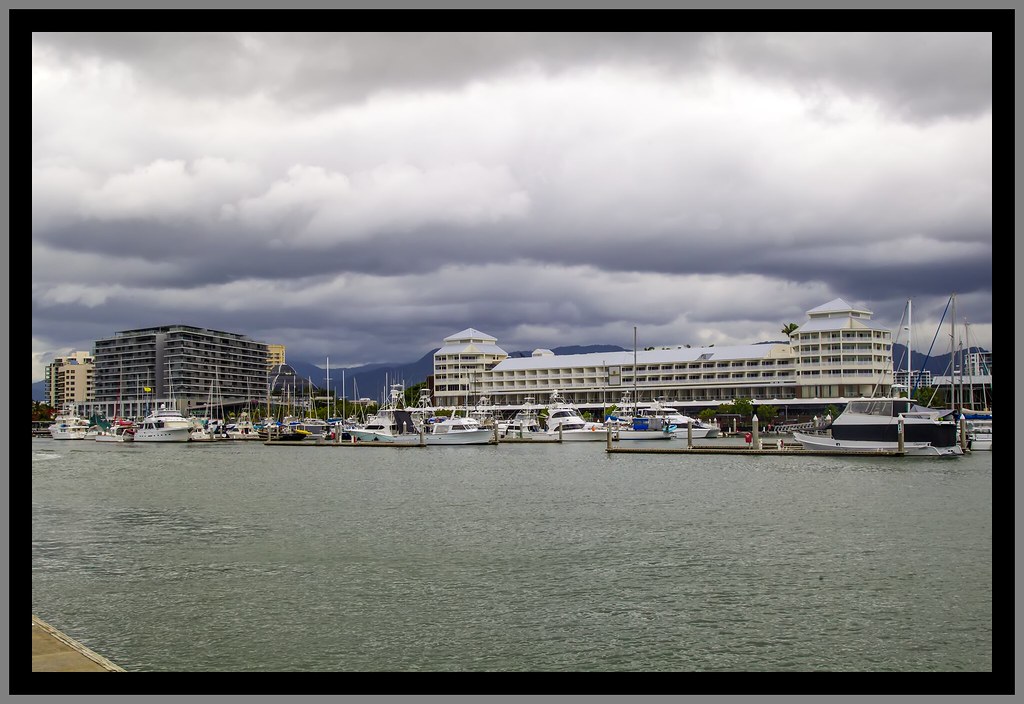
Cairns is the northernmost full-service marine yard in Australia. Once you leave Trinity Inlet and point north, the infrastructure disappears - no haulout facilities, no chandleries, no floating pontoon berths until you reach foreign waters. For cruisers departing Australian waters toward Indonesia, Papua New Guinea, and the Pacific, everything that can go wrong and everything that should have been fixed needs to be addressed here. That reality shapes a pre-departure checklist that looks quite different from anything a generic offshore guide will give you, and it demands a discipline - and a timeline - that catches a surprising number of first-time FNQ departure crews off guard.
Why Cairns Is the Last Full-Service Stop
The marine infrastructure corridor along Australia's east coast ends at Cairns. South of here, yards and chandleries are accessible through the Whitsundays, Townsville, and beyond. North of here, the Great Barrier Reef coastline thins into Cape York Peninsula - remote, spectacular, and largely devoid of anything a cruising yacht actually needs.
Lizard Island makes this concrete. Sitting roughly 240 nautical miles north of Cairns at approximately 14°40'S, this is where the reef's outer passages begin narrowing toward the Torres Strait. There is no fuel, no provisioning, and no marine services available to cruising vessels at Lizard Island. If you discover a weeping chainplate or a failing raw water pump there, you either turn back to Cairns or continue with a problem across open ocean. Most passage plans for Indonesia or PNG run through the Torres Strait and depart from Thursday Island, which means Lizard Island is the practical point of no return for any yard-level work. The decision to press on past it should be made consciously, with a prepared boat.
This geography is why Cairns Marlin Marina and the city's haulout facilities matter disproportionately to offshore passage-makers. The marina offers floating pontoon berths in substantial depth with full swell protection - a genuine rarity this far north. The Port of Cairns maintains pile moorings inside Trinity Inlet for vessels up to 18 metres. No comparable alongside-berth or lift-out option exists between the Whitsundays and Papua New Guinea. The people who need to understand this are a specific group: entrants in the annual Sail 2 Indonesia rally, independent cruisers on direct passages to Kupang or Bali, PNG-bound yachts transiting the Torres Strait, and anyone heading to the Solomons or Vanuatu via a northern departure. For all of them, Cairns is not a convenient stop - it is the only stop where serious work can be done.
The Pre-Departure Window: Cyclone Season, Insurance, and Rally Timing
The useful preparation window is shorter than most first-timers expect. Queensland's official cyclone season runs from 1 November through 30 April. Australian marine insurers typically require cruising yachts to be south of latitude 26°S during that period - a condition written into most offshore cruising policies. That pushes any vessel wintering in tropical waters back south before the season begins, which in turn means the northbound return to Cairns starts in late April or May at the earliest.
The Sail 2 Indonesia rally provides a useful calendar anchor. The rally musters at Cairns Cruising Yacht Squadron from early June each year, with yachts departing from Thursday Island targeting Indonesian clearance dates in the second half of July. That leaves a window of four to eight weeks between a yacht arriving from southern waters and the rally muster - almost no time if significant work is needed. Rally rules require all offshore safety equipment to be in date and compliant before departure from Australian waters, and the organisers mean it.
The sequence of work matters as much as the timeline. A haulout should come first, because it may reveal problems that cascade into rigging, electrical, or engine decisions. Rig inspection follows the haulout so the mast can be pulled if needed while the boat is still on the hard. Safety gear compliance checks run in parallel once the boat is back in the water and berth space is available for technicians. ABF clearance requirements lock in a hard deadline at the end of the sequence. Trying to compress all of this into a fortnight is possible but leaves no margin. Arriving in Cairns in early May, or better still completing some work before heading north, is the practical approach for anyone who wants to leave with confidence rather than crossed fingers.
Haulout and Antifouling for Tropical Waters
The antifouling product on a hull arriving from Sydney or the Whitsundays is almost certainly wrong for what comes next. Hard fouling organisms - barnacles, tube worms, encrusting bryozoans - colonise unprotected hulls within weeks in Far North Queensland's warm coastal water. Antifouling paints formulated for temperate southern Australian conditions routinely underperform north of the Tropic of Capricorn. Cairns sits well north of that line. If you intend to anchor through the Torres Strait, sit at Thursday Island for pre-departure checks, and then sail across the Arafura Sea, you need antifouling chemistry rated for tropical growth rates, not products engineered for Port Phillip Bay.
The practical consequence of getting this wrong plays out over weeks. A barnacled hull slows boat speed, increases fuel consumption, strains the engine under motoring load, and degrades light-air sailing performance in the variable conditions between Thursday Island and Kupang. A haulout before departure is not deferred maintenance - it is part of the passage plan itself.
While the boat is on the hard, inspect running gear thoroughly. The propeller shaft seal, cutless bearing, and stern tube all warrant attention before a 680-nautical-mile crossing with no intermediate stop. Sacrificial anodes corrode faster in tropical water than in temperate conditions - check both hull anodes and shaft anodes, and fit new ones rather than leaving worn ones in place and hoping they last. Check the propeller for blade damage or pitch deformation. Inspect the rudder bearing and every through-hull below the waterline. Replacing a seacock is a ten-minute job on the hard and a diving emergency in the Arafura Sea.
Rig Inspection and Standing Rigging
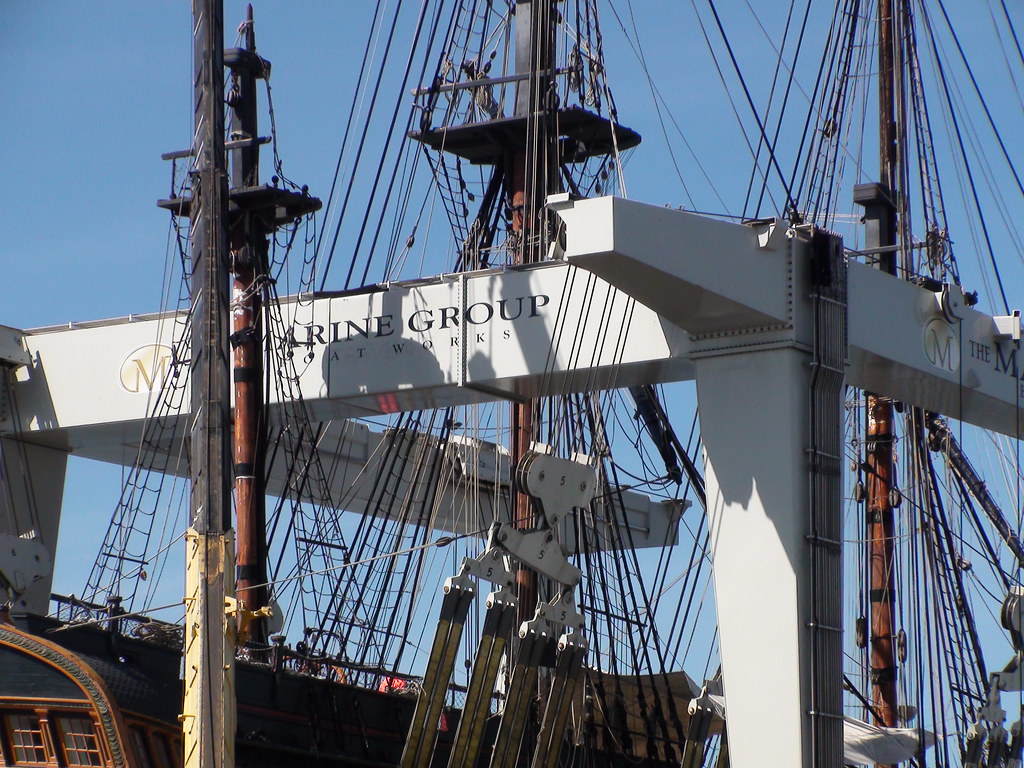
Standing rigging on cruising sailboats has a service life of 10 to 15 years under normal conditions. Tropical offshore use - cyclic load in seaways, sustained UV exposure, salt-air humidity - compresses that timeline. A rig that looked fine in the Whitsundays two seasons ago may have swage fittings beginning to crystallise at the fitting-to-wire junction, which is the failure point you cannot see from the deck and cannot assess without going aloft with a rigger.
Most Australian marine insurers now require documented evidence of a professional rig inspection before granting coverage for offshore passages. That documentation needs to be in hand before you clear Australian waters - an insurer who asks for it after a dismasting in the Timor Sea is no help at all. The inspection should be conducted mast-up, meaning a rigger goes aloft and physically examines every swage fitting, toggle, clevis pin, chainplate, and compression fitting. Chainplates deserve particular attention: they are often the last component to receive a proper look and the first to cause structural damage when they fail, because water tracking down a chainplate bolt can compromise the surrounding deck structure over years without obvious external signs.
Running rigging assessment is more straightforward - sheets, halyards, and furling lines either have usable life remaining or they do not - but work through blocks and clutches carefully. Reef lines that jam offshore at two in the morning in a squall create genuine problems. The vang, backstay, and any runners need to perform under real load. For a passage that may include significant squalls and variable wind angles across 700 miles of open water, every rigging system needs to function without persuasion.
Safety Equipment Compliance: AMSA Offshore Requirements
Australia's offshore safety equipment regulations are not suggestions, and port state control inspectors in the Torres Strait have encountered every version of the expired-certificate excuse. Understand exactly what compliance requires before you arrive at Thursday Island.
Life raft service intervals are set at a maximum of 12 months between inspections at an AMSA-approved service station. The certificate in the raft's valise shows the next service due date - if that date falls during your crossing or before your return to Australia, service it in Cairns. What many owners miss is the hydrostatic release unit. The HRU carries its own independent expiry date, separate from the raft service certificate. Port state control inspectors check both dates separately. An expired HRU renders the raft non-compliant regardless of how recent the raft's own certificate is. Replace the HRU if it expires before your return; this is not an edge case - it is a failure mode that catches experienced sailors.
EPIRB registration is mandatory for any vessel travelling more than 2 nautical miles offshore in Australian waters. Registration through beacons.amsa.gov.au is free but must be renewed on a two-year cycle. An unregistered EPIRB slows search-and-rescue response because no vessel record is attached to the distress signal - rescuers receive a position but no information about the vessel, crew size, or name. Check your registration date and your battery expiry date separately; they are different things. Flare expiry dates should be checked individually rather than assumed to match across a batch purchased together. Offshore-rated life jackets and harness tethers need a bladder inspection and a manual inflation trigger check before a passage of this length.
Electrical and Navigation Systems for a Remote Passage
The Arafura Sea between Thursday Island and Indonesia is not a quiet stretch of water. Indonesian and PNG fishing fleets operate throughout this crossing, and their nets can extend several nautical miles from the vessel. Those nets are commonly unlit. A Class B AIS transponder is the minimum practical requirement - it allows you to identify vessels on approach, assess their movement, and make decisions before you are in visual range. Radar overlaid with the AIS picture adds another layer, particularly at night when a radar return and a corresponding AIS target can be cross-referenced. On this passage, redundant collision-avoidance systems and a disciplined night-watch schedule are essential rather than optional.
SSB radio or a satellite communication system is your access to offshore weather routing and to emergency communications outside VHF range. The Torres Strait routing forecast and Arafura sea state are not served by coastal VHF coverage - you need genuine offshore reach. AMSA requires a Radio Operator Certificate of Proficiency and a registered MMSI number for lawful use of offshore VHF DSC and satellite communications. If either is missing or lapsed, address it in Cairns. There is no radio licensing office in the Torres Strait.
Autopilot is the crew member who never sleeps on a long passage, and it will carry more than its share of the load on a 680-nautical-mile crossing. Service the drive unit, check the feedback potentiometer and course computer connection, and verify performance across a range of sea states before you leave. Carry the manufacturer's spare parts kit. A failed autopilot on a short-handed crew in the Arafura is exhausting at best.
Engine, Fuel Capacity, and Mechanical Self-Sufficiency
The Arafura Sea can be glassy. A realistic passage plan for Thursday Island to Kupang - the nearest Indonesian port of formal entry - needs to account for extended periods of motoring, and your engine needs to be in demonstrably good condition, not approximately fine.
Service the raw water impeller before departure. Impeller failure is the most common engine-cooling emergency on offshore passages and among the easiest to prevent. Replace the water pump belt at the same time, check the raw water pump housing, and service the heat exchanger. Injectors and fuel filters should be fresh. If the boat has sat on a mooring through a Queensland wet season, the diesel in the tanks may have water contamination or microbial growth - fuel polishing is not overcautious preparation here, it is standard practice.
Calculate fuel carrying capacity against a conservative motoring scenario for the full crossing. With no fuel stop between Thursday Island and Kupang, you need genuine range built into the numbers, not optimistic range. Beyond fuel, carry the critical spares that cannot be sourced along the way: belts, impellers, filter elements, injector seals, spare alternator or voltage regulator, hose clamps in multiple sizes, underwater epoxy, and enough engine oil for a full change. The nearest well-stocked chandlery to Thursday Island is in Cairns, more than 1,000 nautical miles south of where offshore mechanical problems tend to emerge.
Provisioning and Passage Stores at the Last Stocked Port
Cairns has full supermarket provisioning, bonded duty-free chandlery stores, and the last fuel dock before Indonesia. This is the place to stock the boat for the passage and for the early weeks in Indonesian waters, not Thursday Island, which has limited provisioning by comparison.
On bonded stores: dutiable goods can be purchased duty-free from a licensed bonded stores supplier in Cairns and loaded under customs seal for use after clearing Australian waters. Arrange this before your ABF clearance appointment, not after - it requires coordination with the supplier and needs to align with your departure schedule.
Several items are specific to Indonesia-bound passages and are not available after you leave Australian waters. USD cash is widely preferred over card payment in smaller Indonesian anchorages. Indonesian LPG fitting adaptors are incompatible with Australian fittings and cannot be improvised at sea. Country courtesy flags for Indonesia and any intermediate nations need to be aboard before departure. Health inoculations appropriate for tropical disease zones, and repellents for malaria and dengue risk areas, should be addressed well before departure - inoculation schedules often require multiple doses across several weeks. The S2I rally guidance specifically calls out all of these items, and none of them can be sourced after you clear Australian waters.
Service the watermaker before departure. On a 680-nautical-mile crossing and in Indonesian anchorages where shore water quality is variable, a functional watermaker becomes your primary water supply rather than a backup. Check the high-pressure pump, membranes, and pre-filters. Carry spare membrane flush solution and filter cartridges.
Formal Clearance: ABF Outward Clearance and Thursday Island Departure
Departing Australian waters without formal outward clearance is a criminal offence. The process has two distinct steps that must happen in the correct order, and many first-time international departures confuse them.
First, you must lodge an Export Declaration Number before your ABF clearance appointment can proceed. The EDN is lodged separately through the ABF system and covers the vessel as a departing asset - it is not the same as the clearance appointment itself. Lodge it first, then book the appointment.
Second, schedule the ABF outward clearance appointment with sufficient notice before your intended departure - the minimum notice period required differs by port, and Darwin's requirement is longer than Cairns'. Check the current requirements at abf.gov.au when planning your timeline, as these can change. Have all crew documentation ready: passports, any visa documentation for Indonesia, and complete boat papers. The ABF will check vessel registration, crew manifests, and customs documentation. For S2I rally yachts departing from Thursday Island, this means arranging clearance to cover Thursday Island as your formal departure port.
Separately, confirm that your vessel is registered on the Australian General Shipping Register before taking it overseas - this is an AMSA requirement distinct from ABF clearance, and it catches some owners by surprise. Check it well in advance of departure, not on the eve of it. Verify your Radio Operator Certificate of Proficiency and MMSI registration status at the same time.
At Thursday Island, S2I rally yachts complete safety gear compliance checks, the fleet gathers, and passage groups are organised before the Arafura crossing begins. The Indonesian clearance dates in late July set a hard endpoint to the whole preparation sequence. Once the paperwork is complete and the timing window aligns, the crossing is a genuine offshore passage - one for which Cairns, and specifically the work done there, will either have prepared the crew or not.