Cairns sits closer to Papua New Guinea than most Australian sailors stop to consider. The Coral Sea crossing to the Louisiade Archipelago covers roughly 510 nautical miles - under favourable southeast trade winds, a well-found cruising yacht can expect to make landfall in around four days. No other Australian port puts PNG that close. Yet that relative proximity conceals the real challenge: not the crossing itself, but everything that follows it. PNG has no chandleries waiting at the outer islands, no emergency mechanics on call, and medical facilities that end at the provincial capital. The preparation you do in Cairns is, in practical terms, the preparation you take with you for the entire voyage.
Why PNG Stands Apart from Every Other Cairns Passage
The comparison with other routes is worth making plainly. A Cairns-to-Bali run passes through Indonesian waters with increasingly established facilities at major stops; Bali itself has a functioning yacht services industry. A Coral Sea run to New Caledonia or Vanuatu lands a vessel near French-administered ports with reliable marinas, consistent fuel, and nearby air connections for crew changes. PNG offers none of that outside its two or three developed hubs.
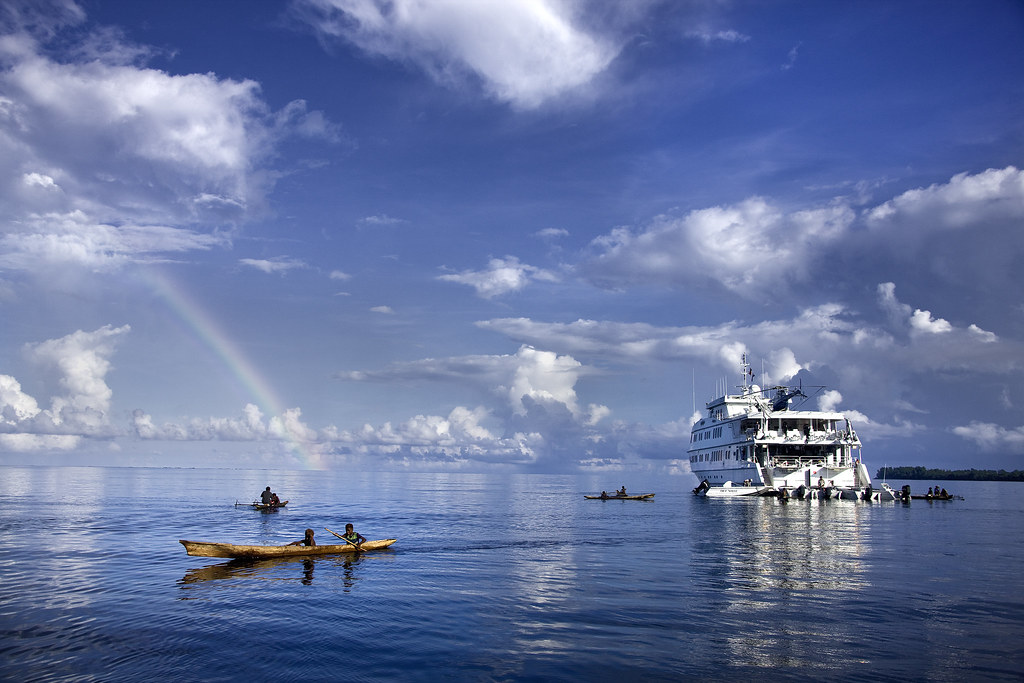
The Louisiade Archipelago - PNG's southernmost cruising ground and the natural first stop from Cairns - extends through hundreds of coral-fringed islands where the outer anchorages are visited by dozens of foreign yachts each year, not hundreds. Sudest Island, Rossel, the Engineer Group: these are places that look roughly as they did before satellite charts existed. The appeal is exactly that remoteness. But it cuts both ways. A watermaker failure while exploring the outer Louisiades is not an inconvenience - it is a genuine emergency. A medical situation that would be managed with a 20-minute drive in most sailing destinations becomes a satellite phone call and a multi-day wait for evacuation.
That infrastructure gap falls squarely on the skipper's preparation window in Cairns. Far North Queensland's marine services are well-suited to close it - but only if the work is planned and prioritised, not treated as a routine pre-departure check.
Picking Your Weather Window: When to Leave Cairns
The departure calendar for a PNG passage is determined almost entirely by the southeast trade wind cycle. The trades establish reliably from around May and hold through October, creating a crossing window that is also, not coincidentally, cyclone-free: PNG's cyclone season runs November through April, and the May-to-October corridor sits cleanly outside it.
Within that window, July through September is considered peak Coral Sea sailing season. Winds are consistent and sustained, visibility is excellent, and conditions across the Coral Sea settle into predictable trade patterns. Experienced PNG cruisers book their Cairns haul-out and service work to finish in May or June, targeting a June or July departure. Leaving later in October is possible but compresses the cruising season before the return window starts to close ahead of the cyclone season.
Reading the Forecast, Not Just the Season
Knowing the season is not the same as picking a departure date. The Coral Sea under established trades can produce sustained winds in the mid-to-upper range of the trade band - conditions that reward a yacht with properly tensioned rigging and a crew briefed on what an offshore trade wind passage actually feels like: often fast and bumpy, with consistent sea spray and waves on or near the beam for extended periods. Monitor forecast gribs for a settled window of at least five to seven days before committing to a departure date. A thorough rigging inspection before departure is non-negotiable: a broken stay 300 miles from Cairns puts you in open water with no assistance nearby.
Routing the Coral Sea: Making Easting and Managing the Current
The Coral Sea crossing from Cairns to the Louisiade Archipelago carries one routing nuance that separates experienced PNG hands from first-timers. As the trades push you northeast, a northwest-setting current builds strength in the final 100 miles of the approach to PNG. Vessels that hold too direct a line from Cairns routinely find themselves set west of their intended waypoint on approach - arriving at the wrong end of the Louisiades or pushed wide of the Milne Bay entrance.
The consistent advice from sailors who have done the crossing multiple times: make maximum easting as early in the passage as conditions allow. In practice this means sailing closer to the wind in the first two days, accepting some discomfort in exchange for a comfortable approach angle and a straightforward final run to the port of entry. Attempting to correct significant westward set in the final miles means motoring into wind and current, burning fuel reserves that should stay for the outer islands.
Two routing approaches dominate among Cairns-departing cruisers. The first aims for the outer Louisiades as a first landfall - typically arriving near Rossel Island or the Engineer Group before working west toward Alotau. All crew must remain aboard and no landings are made until clearance is complete, but this approach allows sailors to transit the outer archipelago before formalising entry. The second routes directly to Alotau for a clean clearance first. Both are valid; the outer island approach rewards easting discipline more than the direct route.
Documentation and Clearance: The Paperwork You Prepare in Cairns
PNG's entry requirements are specific and not forgiving of last-minute attention. Getting everything in order before you leave Cairns is far easier than resolving gaps from an anchorage with intermittent satellite coverage.
- Apply for e-visas before departure. Every crew member needs an e-visa, obtained online through the PNG Immigration and Citizenship Authority before leaving Australian waters. A per-person fee applies - check the ICA PNG website for the current amount. A visa on arrival may be available for some nationalities at designated ports of entry, but pre-departure e-visas are strongly recommended to avoid delays that hold up the entire vessel clearance process.
- Complete the M9 pre-arrival form. The Small Craft Pre Arrival Information M9 form must be submitted to PNG Customs, Quarantine, and Immigration no later than 48 hours before arrival - check the current PNG Customs website to confirm this deadline, as some sources indicate a longer notice period may apply, and build this into your passage plan well before your arrival day.
- Assemble your vessel documentation file. Have your Certificate of Registry or equivalent, insurance papers, ship's papers, and crew lists with passport copies ready in a clear, organised file. Officials at Alotau will want originals or certified copies of everything.
- Hoist the Q-flag on approach. The International Pratique yellow flag must be flown on approach to PNG and kept flying until Customs, Quarantine, and Immigration formally grant pratique. This is required procedure, not optional signalling.
- Arrive at Alotau and report in. Alotau in Milne Bay Province is the designated port of entry for vessels arriving via the Louisiades and the standard first clearance point for this approach. The anchorage at Alotau can be exposed in trade conditions; many cruisers anchor in protected waters within Milne Bay near Alotau while completing clearance formalities ashore - consult current cruising guides for recommended anchorage locations in the area.
Brief your crew on no-contact rules before departure. No one goes ashore and no contact with local communities is made until clearance is formally complete.
Vessel Systems: What PNG Actually Demands of Your Boat
The outer island cruising grounds of PNG are not forgiving of deferred maintenance. These systems are not optional for an extended PNG passage - they are the baseline a skipper should be able to verify before leaving Cairns.
- Watermaker: Fresh water from shore in the outer Louisiades is unreliable or simply unavailable. The watermaker is not a convenience - it is the primary water source for the entire offshore period. Service it completely before departure: replace membranes and filters if they are due, test at full output under load, and carry at least one full set of spare membranes and filters. A watermaker that fails at the Engineer Group cannot be repaired from local resources.
- Communications suite: VHF handles marina and near-coastal contacts. SSB radio picks up weather forecasts and connects you to the active PNG cruising nets that carry daily security and anchorage information. A satellite phone or two-way satellite messenger provides the emergency and routine communication layer that SSB cannot guarantee in all conditions. Confirm AIS transponder operation before departure; traffic in outer PNG waters is sparse, but it matters when approaching commercial shipping lanes near Milne Bay.
- Dinghy security: Dinghy theft is a documented risk in some PNG anchorages. Lock the outboard to the transom with a rated cable or chain, and pull the dinghy aboard overnight when anchored in areas where security is uncertain. This is standard practice among experienced PNG cruisers, not overcaution.
- Anchor systems: PNG outer islands present varied holding - sand, coral rubble, and hard coral ledges. Carry a primary anchor sized for offshore conditions and a second anchor ready to deploy. A snubber or chain hook is essential for open roadstead anchorages where trade winds produce persistent surge on the rode.
- Fuel capacity: Reliable fuel in PNG is concentrated at Alotau and Madang on the north coast. Between and beyond those points, supply is variable and comes in jerry cans at best. Carry your maximum practical fuel load out of Cairns and plan consumption conservatively for the outer island period.
Safety and Security: An Honest Region-by-Region Assessment
PNG's security reputation puts off some skippers who would otherwise be strong candidates for the passage. The reality is more nuanced than either dismissing the risk or avoiding PNG altogether. Where you go within PNG matters as much as the fact that you are going.
| Region | Security Risk | Infrastructure | Chart Reliability |
|---|---|---|---|
| Louisiade Archipelago outer islands | Low - widely reported as welcoming | Minimal - full self-sufficiency required | Generally reliable |
| Alotau and Milne Bay approaches | Moderate - theft documented; vigilance needed | Basic yacht club, fuel, water available | Reliable |
| Mainland anchorages north of Alotau | Higher - armed boardings historically documented | Very limited outside Madang | Variable |
| Trobriand Islands | Low to moderate | Minimal | Known inaccuracies - extreme caution required |
| Madang, north coast | Moderate - research current cruiser reports | Small but functional marina | Generally good |
Practical Security Measures That Actually Work
The security measures experienced PNG cruisers use are not elaborate. Maintain an anchor watch in unfamiliar anchorages. Lock hatches at night. Keep valuables below and out of sight. Move in company wherever possible: dozens of Australian yachts make the Cairns-to-Louisiades passage annually, and group departures have been a feature of PNG cruising for years. A buddy boat does not eliminate risk, but it changes the calculus at every level - passage monitoring, mutual assistance capacity, and collective security in anchorages.
Brief your crew on security protocols before departure. Establish what conditions trigger moving to a different anchorage, who keeps watch and at what intervals, and how you contact assistance if something develops. SSB cruising nets in PNG waters carry current security and anchorage information from other cruisers - make contact on the net as soon as you are within reliable range after leaving Cairns.
Medical Readiness and Provisioning for Extended Self-Sufficiency
PNG's outer islands have no medical facilities. The nearest hospital capable of handling serious trauma is in Alotau or Port Moresby. A medical situation developing at Rossel Island or in the Engineer Group means a satellite phone call and a wait for evacuation that could span many hours or longer. That reality defines the medical kit standard for a PNG cruise - not a coastal first-aid kit upgraded with a few extras, but a genuine offshore medical system.
- Prescription antibiotics covering wound infection, respiratory illness, and gastrointestinal illness
- Trauma supplies: suturing kit, haemostatic dressings, wound irrigation equipment
- Dental emergency kit including temporary filling materials and the means to manage a serious toothache remotely
- Rehydration salts in meaningful quantity
- Prescription pain management appropriate for serious injury pending evacuation
- Malaria prophylaxis for all crew - PNG is an active malaria transmission zone
- A current remote medicine reference, such as the Ship Captain's Medical Guide or equivalent, and the ability to consult a remote medical service by satellite
Every vessel heading to PNG should carry both an EPIRB registered to the vessel and personal PLBs for each crew member. Confirm EPIRB registration with the Australian Maritime Safety Authority and check the hydrostatic release and battery status before departure.
Provisioning Out of Cairns
Provision out of Cairns as though you will find nothing in PNG's outer islands - because largely you will not. Fresh produce is available in villages but cannot be relied upon for variety or consistent supply. Tinned and dry goods in island stores are limited in range. Plan provisioning for your full expected offshore period plus a meaningful reserve. Cairns has full supermarket access, specialty provisioning options, and fuel bunkering facilities - use all of them before departure, because the next equivalent opportunity is Alotau or Madang.
Australia Biosecurity on Return: Why the Pre-Departure Decision in Cairns Matters Later
A yard period in Cairns before a PNG departure does not only prepare the vessel for the passage. It directly protects you at re-entry to Australia. The Department of Agriculture, Fisheries and Forestry applies biofouling biosecurity requirements to all non-commercial vessels returning to Australian territory. A yacht that has spent weeks or months in PNG's warm tropical waters - conditions that accelerate hull growth - may face mandatory diver inspection or haul-out on return to Cairns.
The key is documentation. Vessels that can demonstrate recent antifouling application with product and date recorded, scheduled hull cleaning, and diver inspection results are in a far stronger position to clear the biosecurity declaration process without mandatory haul-out costs imposed by DAFF. The Pre-Arrival Report submitted to DAFF before re-entering Australian territory includes a biofouling management declaration - if you have the paperwork to support your declaration, the process is straightforward. If you cannot demonstrate a documented hull management history, DAFF may require inspection at the vessel owner's expense. Check the current DAFF requirements for what constitutes an acceptable biofouling management record before you depart, as requirements are updated periodically.
For a PNG passage from Cairns, preparation is not about the crossing itself - it is about supporting yourself, your crew, and your vessel for every day that comes after landfall.
How Yacht Services Australasia Prepares PNG-Bound Vessels
The Cairns service scope for a PNG-bound yacht covers considerably more ground than a standard annual haul-out. Yacht Services Australasia's position on the Far North Queensland coast makes that scope directly accessible to skippers staging a PNG departure from the region's principal port.
A pre-PNG service period begins with haul-out and full hull inspection, with antifouling specification chosen for tropical offshore exposure and extended time in warm water - not the lighter application appropriate for coastal marina use. Standing rigging inspection covers swage fittings, furler bearings, and spreader boots: the items that fail offshore where no replacement is possible. Running rigging is assessed for internal wear that does not show in marina use but reveals itself under sustained load in trade wind conditions.
Watermaker service is treated as a discrete, standalone item in PNG preparation, not bundled into a general systems check. That means membrane condition testing, pre-filter and post-filter replacement, pump pressure confirmation under operating load, and a full-output test run before the vessel is signed off. Spare membrane and filter sets are specified and sourced before departure, not left as a shopping task for the skipper.
Electrical and communications work covers AIS transponder verification, SSB aerial and tuner condition, VHF and handheld backup confirmation, and satellite communication integration with vessel power systems. EPIRB hydrostatic release and battery status is checked as part of the pre-departure schedule. For skippers who want to work through a structured pre-PNG programme from a single point of contact, the consolidated approach handles coordination across haul-out, rigging, systems, and provisioning logistics - and generates the dated documentation at each stage that supports a clean DAFF biofouling declaration on return.
Frequently Asked Questions
Do I need a cruising permit in addition to a visa for PNG?
Yes. PNG Customs requires all foreign-flagged vessels to obtain a Cruising Permit, which is issued at the time of formal clearance once all vessel clearance documents have been received. The permit is typically issued for the duration of the master's visa, and specific conditions attach to it - including a requirement to notify Customs if the circumstances of the vessel's presence in PNG change. Entry is formalised through the Customs, Quarantine, and Immigration clearance process at Alotau. Check directly with PNG Customs before departure, as the regulatory framework for foreign small craft can change and information on third-party cruising sites is not always current.
Which electronic chart sources are most reliable for PNG waters?
No single chart source covers all PNG waters with equal accuracy. Charts for the main Louisiade Archipelago routing are generally reliable across the major electronic chart platforms. The Trobriand Islands have documented inaccuracies that are not fully corrected in any currently available official chart suite - source recent cruiser passage notes and pilot information before approaching. Regardless of chart source, treat any coral-dense approach with eyes-on caution: an unlit reef that is not in a database is still a reef.
Can I get fuel and water in the outer Louisiades?
Not reliably. Some villages have diesel available in limited quantities, but supply is inconsistent and cannot be planned around. Water from shore in the outer Louisiades is similarly unreliable, which is why a fully serviced watermaker is a critical system rather than a backup convenience. Carry your maximum practical fuel load out of Cairns and treat the Alotau fuel dock as your first dependable re-supply point for both fuel and water.
Is sailing in company genuinely necessary for a first PNG passage?
For a first-time PNG passage, travelling with at least one other vessel is the single most effective risk reduction measure available - more practical in many situations than any individual piece of equipment. The security, medical, and mechanical risk picture changes meaningfully when two or more boats are within VHF or SSB range of each other. Solo first-time PNG passages are done, but they carry a materially higher risk profile, and most experienced PNG cruisers are direct about this.
What do I do about the SSB cruising nets in PNG waters?
Active net schedules and frequencies for PNG and Coral Sea waters are published through offshore cruising associations and maintained on sites including Noonsite - confirm which nets are operating in your specific cruising season, as schedules shift. Program frequencies before departure and make contact on the net as soon as you are within reliable range after leaving Cairns. Net controllers are a primary source of current anchorage conditions, security reports, and other cruiser positions.
What happens if DAFF is not satisfied with my biofouling declaration on return?
If DAFF determines your hull presents an unacceptable biosecurity risk based on your Pre-Arrival Report, they can direct haul-out and cleaning at a specified facility at the vessel owner's cost. The process can take days and disrupts return plans significantly. Carrying a complete biofouling management record - antifouling application date and product, any in-water cleaning done during the PNG cruise, diver inspection results - gives you the documentary basis to support your declaration and avoid that outcome. Check the current DAFF guidance for what they consider a compliant record before you leave Cairns, not after you return.