The June 2026 changes to Australia's biofouling management rules transformed what was guidance into enforceable law. For international sailors making Cairns their first Australian port of entry, compliance is now a condition of arrival, not an optional formality. A failed inspection carries real consequences - mandated haul-outs, port delays measured in days, and costs borne entirely by the vessel operator. Understanding what is required, and building compliance into your passage plan before you leave your last foreign port, is substantially cheaper and less stressful than fixing it after the anchor goes down.
Why the June 2026 Rule Changes Matter
The Australian Biofouling Management Requirements for Non-Commercial Vessels - the ABFMR-NCV - came into force on 17 June 2026 under the Biosecurity Act, replacing the previous guidance-only framework with binding statutory obligations. Before this change, biosecurity officers could recommend action but had limited power to compel it. Now, vessel operators who arrive without compliant biofouling documentation, or with an unacceptable hull, face formal intervention.
The reasoning behind the change sits in the ecological record. Vessel biofouling has introduced hundreds of exotic marine organisms into Australian waters over recent decades - crabs, gastropods, seastars, and filter feeders that compete with and displace native species. Australia's marine environment, including the Great Barrier Reef, is one of the most biologically sensitive on the planet, and the biosecurity system treats new introductions accordingly.
Cairns is the natural geographic endpoint of the main Pacific cruising routes. Sailors arriving from Papua New Guinea, Vanuatu, the Coral Sea island groups, or Southeast Asian ports complete their passage there. Those origins draw closer scrutiny: vessels from warm-water tropical regions attract more attention than those arriving from New Zealand or cold southern-hemisphere ports, because warm-water biofouling communities establish faster, carry more species, and are harder to detect visually than sparser cold-water fouling.
The Three Compliance Pathways
DAFF recognises three ways a non-commercial vessel can demonstrate compliant biofouling management on arrival. Choosing the right pathway early - before you leave port - determines how smooth your arrival will be.
| Pathway | Best suited to | Key documentation | Timing requirement |
|---|---|---|---|
| Biofouling Management Plan and Record Book | Sailors with consistent vessel maintenance records across multiple passages | Vessel-specific BMP, complete BFRB with all cleaning and coating entries | Records must be current to arrival date |
| Professional hull clean within the prescribed window before arrival | Sailors who haul out shortly before departing for Australia | Invoice or certificate from the yard, specifying date and scope of work | Clean must fall within DAFF's specified window - confirm current window at daff.gov.au |
| Pre-approved alternative method | Vessels using non-standard management approaches, such as experimental coatings or ultrasonic systems | Written approval from DAFF obtained before departure | Approval must precede Australian arrival |
The third pathway exists for edge cases. If you think you need it, contact DAFF's biofouling team well before your departure - approval takes time and is not guaranteed. Most cruising sailors will rely on the first or second pathway.
Building Your Biofouling Management Plan and Record Book
The Biofouling Management Plan is a vessel-specific document, not a generic form. DAFF provides a template through their biofouling team - find the contact details at daff.gov.au. A compliant plan covers:
- Antifouling coating brand, type, and application dates for all recent applications
- In-water cleaning history, including who performed the work, where, and on what dates
- A niche-area management schedule identifying the high-risk locations on your hull and how they are monitored and treated
- Hull inspection records, with photographs from haul-outs where available
The Biofouling Record Book is the working log alongside the plan. Every antifouling application, hull clean, and underwater inspection goes in, with dates, locations, and details of who carried out the work. DAFF officers can ask to inspect it on arrival at any Australian port. A sparse record book raises questions that a complete one answers immediately. Both documents can be kept electronically or in hard copy - keep a backup in cloud storage in case a device fails at sea.
Starting a Record Book from Scratch
If you have not kept formal biofouling records before, start now. Reconstruct what you can from yard invoices, marina bills, and receipts. An honest record showing a haul-out two years ago with no professional clean since is less damaging than an obviously incomplete one - officers check for internal consistency. The reconstruction process also highlights exactly what work you need to do before departure to bring your compliance position to an acceptable standard.

Submitting the Pre-Arrival Report
Every vessel arriving in Australia must submit a Pre-Arrival Report before entering Australian waters. Non-commercial yachts use the Non-Commercial Vessel Web Portal - not the commercial-ship MARS system that appears in many general online searches. MARS handles large commercial vessels; using it for a yacht means your report will not be processed correctly, and your vessel may be treated as non-compliant on arrival.
The PAR submission process, in order:
- Register on the Non-Commercial Vessel Web Portal through the DAFF website and set up your vessel profile with hull details, home port, and registration information.
- Gather supporting documents: BMP, BFRB, and any professional-clean certificate if you are using the clean pathway. Have them ready to upload before starting the form.
- Complete the voyage section: last foreign port of call, estimated arrival port (Cairns), and estimated arrival date and time. Be conservative on timing - arriving earlier than declared may invalidate the report.
- Complete the biofouling section: which compliance pathway you are relying on, when the last haul-out and antifouling application occurred, and any known niche-area fouling from your most recent underwater inspection.
- Submit within the window DAFF specifies before your estimated arrival - the portal displays current filing deadlines. Submitting outside that window renders the report non-compliant regardless of its content.
- Save your confirmation and reference number. If DAFF flags the vessel for a detailed assessment, that reference number is your primary identifier throughout the process.
Vessels whose PAR discloses unacceptable fouling, or who fail to lodge a compliant report at all, will be flagged for a detailed on-arrival assessment. That assessment can include a commissioned underwater inspection and takes time - potentially more than a day - while the vessel sits at the operator's berth cost. Clean paperwork before departure is the practical way to avoid that outcome.
Niche Areas: What DAFF Inspectors Actually Look For
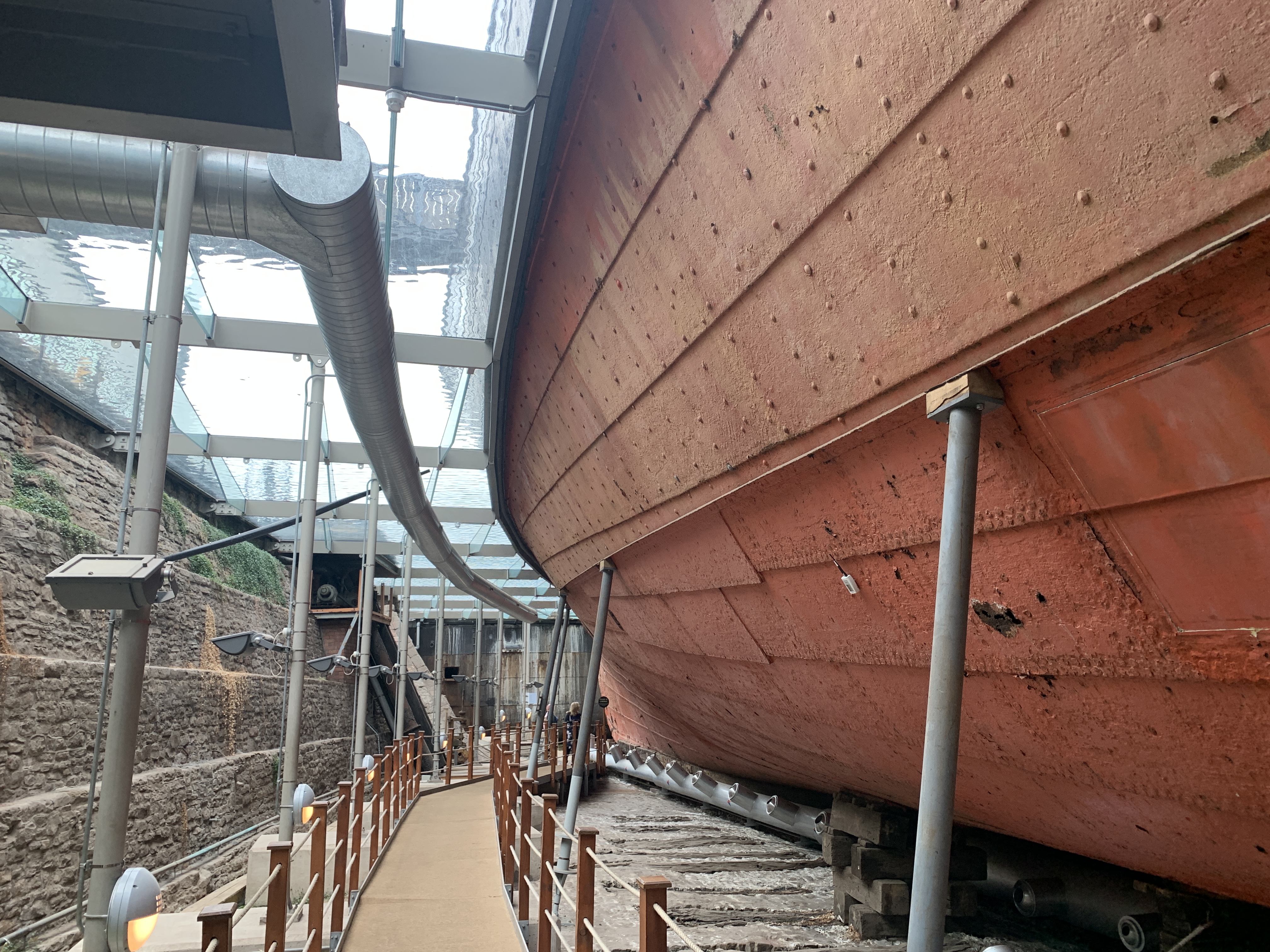
DAFF biosecurity officers are trained to look beyond the main hull panels. Antifouling paint does not reliably penetrate the recesses and cavities of a yacht's underwater gear, and those gaps are exactly where the highest-risk fouling survives even on otherwise well-maintained hulls.
The specific niche areas inspectors target:
- Sea chests and keel cooling pipe openings - internal intakes recessed into the hull where water flow is restricted and light never reaches. Calcareous tubeworms, barnacles, and bryozoans establish here with no antifouling protection at all.
- Bow thruster tunnels - the transverse tube through the bow almost never receives antifouling on its inner surfaces. The tunnel wall is a stable habitat for sessile invertebrates that survive long ocean passages without disturbance.
- Rudder gaps and pintles - the gap between the rudder blade and skeg, and the bearing hardware holding the rudder in place. Paint drags clear of these edges, and the recessed metal gives fouling organisms an unprotected foothold.
- Shaft brackets and P-brackets - the struts supporting the propeller shaft. Forward faces are exposed but trailing edges and the shaft housing rarely get adequate paint coverage during a normal antifouling application.
- Rope guards - the flanged fitting behind the propeller. Its inner recesses are nearly impossible to paint properly and are inspected closely.
- Waterline stripe - where hull paint meets antifouling, fouling concentrates as UV exposure and wave action wear the coating faster than on fully submerged surfaces.
- Anchor lockers - often splash-wet or partially submerged, with accumulated mud and debris that can carry viable organisms.
The practical approach for these areas before an Australian passage: apply antifouling paint specifically into each recess during your last haul-out, photograph the work, and record it in the BFRB. Have an underwater inspection in clear water shortly before departure. If a diver finds fouling in a sea chest or thruster tunnel, have it cleaned then and record the clean - not after you arrive in Queensland.
Hull Cleaning Before an Australian Passage: What Counts as Compliant
The professional-clean pathway requires the hull to be cleaned - professionally, with documentation - within DAFF's prescribed window before arrival. A diver with a brush at a Pacific anchorage does not satisfy this. The clean needs to come from a service that can issue a dated invoice or certificate showing the vessel name, scope of work, and cleaning method. A haul-out at a yard that records the lift date, cleans the hull including all niche areas, and issues a proper receipt is the most defensible version of this pathway.
Where to Get a Compliant Clean
Yards in Fiji, Vanuatu, New Caledonia, and Papua New Guinea are realistic options for sailors on the common Pacific routes to Cairns. Documentation is the critical factor. A yard invoice that states the haul-out date, vessel name, and scope of work - hull cleaned, antifouled, niche areas treated - gives DAFF the evidence they need. A verbal confirmation from a diver gives them nothing. National guidance also recommends that antifouling on the hull be reasonably current at arrival - check the current age recommendation at daff.gov.au, because a coating that is visibly depleted or heavily fouled at the waterline will draw questions regardless of what the BFRB shows.
In-Water Cleaning in Australian and GBR Waters
Once you are in Australian waters, the options for dealing with a fouled hull narrow sharply. In-water cleaning of a hull treated with biocidal antifouling paint is not permitted in Queensland waters without approval from the relevant state authority. That approval requires applications lodged with sufficient advance notice, and permission is granted only in exceptional circumstances - for recreational yachts the standard answer is no.
Discharge of antifouling paint residues from hull cleaning into Great Barrier Reef Marine Park waters is prohibited.Great Barrier Reef Marine Park Authority
The GBRMPA layer of regulation sits on top of the DAFF layer. A yacht that arrives in Cairns with unacceptable biofouling cannot simply hire a diver to clean the hull at the marina berth. Any cleaning significant enough to remove fouling from a biocide-coated hull requires a haul-out with containment. These two regulatory frameworks together make a full haul-out the only workable solution for vessels that arrive with a fouling problem.
What Happens If Your Vessel Fails the Cairns Biosecurity Inspection
If DAFF officers determine that biofouling exceeds acceptable levels, the response is not a fine and a wave through. The intervention sequence runs as follows:
- The vessel is directed to a holding area or its berth while the assessment continues.
- Officers may commission a formal underwater inspection by a contracted diver - the operator pays all costs associated with this. Check DAFF's current fee schedule for the figure, as it is substantial.
- If the inspection confirms unacceptable fouling, the operator receives a direction to haul out and clean within a set window - confirm the current timeframe with DAFF on arrival.
- If the operator cannot arrange a compliant haul-out within that window, DAFF may deny continued access to Australian ports.
- All costs - the underwater inspection, the haul-out, the cleaning, and any antifouling work - fall entirely to the vessel operator.
A failed inspection triggers an unplanned, time-pressured haul-out at the point of arrival. The Cairns marine precinct has the infrastructure to handle this - the Cairns Cruising Yacht Squadron hardstand and travel-lift facility, along with other operations in the broader marine precinct near Marlin Marina, can turn around a haul-out on short notice. But doing it under a regulatory direction costs more and burns more of your schedule than doing it on your own terms before departure or as a planned first step after arrival.
Using a Cairns Haul-Out to Set Up Onward Passages
For sailors with departures ahead - Indonesia, Papua New Guinea, Torres Strait, or back into the Pacific - a planned Cairns haul-out is the most efficient compliance tool available. It accomplishes several things at once:
- It resets the professional-clean clock, starting the compliance window for the next outbound passage from the date the vessel is relaunched.
- It delivers GBRMPA-compliant hull cleaning: yard facilities contain and manage all wash water and paint residue, satisfying the Great Barrier Reef rules that make in-water cleaning impractical.
- It creates fresh, current entries in the BFRB documenting exactly what was done, by whom, and on what date - the strongest possible record for the next destination's biosecurity authority.
- It allows a full inspection and treatment of niche areas - sea chests, thruster tunnels, shaft brackets - that cannot be properly examined or treated at a marina berth.
A vessel that checks into Cairns, hauls out, repaints, and treats its niche areas leaves with its compliance position fully reset and documented. The passage to Kupang, Jayapura, or Port Moresby starts from a known clean position rather than from a guessing game about what grew on the bottom during a long Pacific passage. The Cairns marine precinct exists for exactly this purpose - a full-service refit and compliance reset at the gateway to the western Pacific.
Frequently Asked Questions
Do I need a Biofouling Management Plan even if I had the hull cleaned professionally before arriving?
If you are relying on the professional-clean pathway, the BMP is not strictly required to satisfy that specific pathway. However, DAFF officers can request a BFRB at any Australian port, and a BMP alongside your clean certificate strengthens your overall compliance position. Sailors who carry both have a fallback if the clean documentation has any gaps - a complete record book can fill in the context that a single yard invoice cannot.
What is the difference between the Non-Commercial Vessel Web Portal and MARS?
MARS is the Maritime Arrivals Reporting System used by commercial ships, and it appears frequently in general biofouling searches. Non-commercial yachts and private vessels use a separate portal entirely - the Non-Commercial Vessel Web Portal accessible through the DAFF website. Submitting through MARS means your report will not be processed correctly and your vessel may be treated as non-compliant on arrival. Find the correct portal through daff.gov.au under biosecurity arrivals.
My antifouling is relatively fresh but I have not hauled out recently - am I compliant?
A fresh antifouling application is a positive indicator and is consistent with the national guidance that recommends the coating be reasonably current at arrival. But it does not satisfy the professional-clean pathway on its own. If you are relying on the BMP and Record Book pathway, your antifouling age contributes to the evidence of proactive management - it does not replace the need for a complete record book, a vessel-specific BMP, and documented niche-area management.
Can I arrange an in-water hull clean in Cairns if DAFF requires one?
No - not for a biocide-coated hull. In-water cleaning of an antifouled hull in Queensland waters requires state authority approval, which is rarely granted for recreational vessels. GBRMPA separately prohibits the discharge of antifouling paint residues into Great Barrier Reef Marine Park waters. If DAFF directs you to clean the hull after arrival, the only viable option is a haul-out at a facility with proper containment, which the Cairns marine precinct can provide.
How long does a biosecurity assessment take in Cairns if my PAR flags a problem?
Timelines vary with DAFF's workload and the extent of any fouling found, but a detailed assessment including a commissioned underwater inspection can take more than a day to resolve. Your vessel will typically remain at its assigned berth during this period at the applicable rate. Submitting a clean, complete PAR with supporting documents before arrival is the most reliable way to avoid being flagged for a detailed assessment in the first place.
Does a Cairns haul-out reset my compliance position for departure to Indonesia or PNG?
Yes - a professional haul-out, hull clean, and antifouling application in Cairns creates a clean-pathway-compliant start date for your onward passage. The yard invoice and a current BFRB entry documenting the work give you the paperwork to support the professional-clean pathway for biosecurity requirements at your next destination. Check the specific entry requirements for each port of call in advance, as Indonesia, Papua New Guinea, and other jurisdictions have their own rules that may differ from Australia's.