Here is the complete article:
Installing the right radios on your yacht is half the job. The other half is a legal obligation most hardware guides skip entirely: before you transmit on any marine frequency, you must hold the correct personal operator certificate, and before you leave Australian waters with an HF or DSC radio aboard, your vessel must be registered with the Australian Communications and Media Authority (ACMA) and your Maritime Mobile Service Identity (MMSI) must be lodged with the Australian Maritime Safety Authority (AMSA). These are two separate bureaucratic layers, neither of which substitutes for the other, and neither of which is handled automatically when the radios are installed. This guide works through both layers in the order a Cairns skipper needs to complete them.
Australian maritime communications law treats the radio operator and the radio installation as two separate regulated things. A person needs a qualification to operate the radio. The vessel needs a licence for certain equipment to be used legally. And the vessel's digital selective calling identity needs to be registered with a national authority so that distress signals carry real vessel information to rescue coordinators.
All three legs of this framework have changed in recent years. The 2025 class licence update simplified the vessel-side requirements for recreational boats using VHF. At the same time, the offshore passage requirements under AMSA's category system mean that boats heading beyond 200 nautical miles from the coast need HF/SSB or satellite communications, pulling those skippers into a more complex licensing stream.
Why This Matters and What It Covers
For Far North Queensland sailors specifically, the passages to the Torres Strait, Papua New Guinea, Vanuatu, New Caledonia, and the Pacific Islands all involve crossing Australian territorial waters, transiting foreign territorial seas, and calling at ports where radio operators are expected to hold internationally recognised credentials. A qualification that only works inside Australia is not adequate for that kind of sailing.
When AMSA audits a vessel departing on a Category 1 offshore passage, it does not physically inspect the radios. Compliance rests on the skipper presenting the correct personal certificate, and on the vessel holding its ACMA registration and MMSI independently. The two layers must both be in place before you transmit offshore, and they must be completed in a specific order because one depends on the other.
The Three Qualifications Compared
ACMA recognises three marine radio operator qualifications for recreational and commercial mariners. Each one authorises different equipment and carries different geographic scope. The choice matters most when you plan to sail internationally or when your vessel carries HF/SSB equipment.
| Qualification | Radio types covered | Territorial scope | International recognition |
|---|---|---|---|
| AWQ - Australian Waters Qualification | VHF marine radio, 27 MHz | Australian territorial waters only | Not recognised under ITU Radio Regulations |
| SROCP - Short Range Certificate of Proficiency | VHF marine radio | No distance restriction | Recognised under ITU Radio Regulations |
| LROCP - Long Range Certificate of Proficiency | VHF marine radio and MF/HF (SSB) | No distance restriction | Recognised under ITU Radio Regulations |
Why the AWQ Fails at the Boundary
The AWQ is a domestic qualification with no standing under the ITU Radio Regulations that govern international maritime communications. The moment a vessel crosses the outer edge of Australian territorial waters, the operator holding only an AWQ has no recognised authority to transmit on the international maritime frequencies. This is not a theoretical concern for FNQ sailors. The Torres Strait involves close proximity to PNG territorial waters, and many common passages involve calling PNG coast radio or Port Moresby harbour control.
Foreign port authorities routinely check crew credentials on arrival. An operator holding only an AWQ presenting to a port authority in Noumea or Port Vila would be presenting a certificate with no standing under the convention that port authority works within. The practical fix is straightforward: anyone planning offshore passages should hold at minimum the SROCP, and anyone operating SSB must hold the LROCP.
Legacy Certificates
Two older qualifications predate the current naming system. The MROVCP (Marine Radio Operator VHF Certificate of Proficiency) is treated as the direct equivalent of the SROCP. The MROCP (Marine Radio Operator Certificate of Proficiency) is treated as the direct equivalent of the LROCP. Both legacy certificates remain valid indefinitely. Holders do not need to sit new exams or apply for replacement documents.
If you hold an MROCP, you have LROCP-equivalent authority including the ability to operate HF/SSB internationally. If you hold an MROVCP, you have SROCP-equivalent authority for VHF internationally. Check acma.gov.au for confirmation of this equivalence if a port authority or insurer questions the credential. Carrying a printed copy of the ACMA equivalence statement alongside the original certificate removes ambiguity at a foreign customs dock.
Getting Trained and Examined in Cairns
Three providers in the Cairns region offer training for marine radio qualifications. Cairns Boat Safe Training at cairnsboatsafetraining.com.au runs courses for both AWQ and SROCP/LROCP. Boat and Jetski Licensing FNQ at boatjetskifnq.com.au offers similar training in the region. TAFE Cairns through the Great Barrier Reef International Marine College runs a two-day classroom course covering the content and practical components. Contact each provider directly for current scheduling and costs, as these change independently of this guide.
There is a minimum age requirement to sit the SROCP and LROCP exams. The AWQ has no age requirement. For current age rules, check acma.gov.au/marine-radio-qualifications rather than relying on secondhand information.
An alternative that many skippers find more flexible is the self-study path managed by the Australian Maritime College (AMC) Office of Maritime Communications at the University of Tasmania. AMC administers the national examination and certification process for both the SROCP and LROCP. Under this pathway, a candidate studies the official course material independently and then sits the examination with an ACMA-approved invigilator - which can be arranged locally in Cairns. The AMC website at utas.edu.au/amc/industry/omc has the current list of approved invigilators and the examination fee structure.
What the Examination Involves
The SROCP and LROCP assessments combine a written multiple-choice component with a practical test. The practical component tests the candidate's ability to actually operate marine radio equipment, make distress calls correctly, and use DSC functions. The specific question count and time allocation for current exams should be confirmed directly with AMC or a registered provider - these details are updated periodically. The LROCP adds HF/SSB operational knowledge to the SROCP content, covering MF/HF frequency management, propagation, and distress procedures on those bands.
The ACMA Ship Station Licence
VHF and the 2025 Class Licence
As of 1 October 2025, the Radiocommunications (Maritime Ship Station) Class Licence 2025 came into effect. Under this framework, recreational vessels operating VHF marine radio (and 27 MHz) do so under a class licence arrangement. No individual apparatus licence is required for the vessel itself when using those frequency bands. The class licence covers all eligible recreational vessels automatically, provided the operator holds the appropriate personal qualification - at minimum an AWQ for Australian waters, or SROCP/LROCP for international waters. Full details are at legislation.gov.au and acma.gov.au.
HF/SSB and the Individual Apparatus Licence
Vessels carrying HF/SSB radio are outside the class licence coverage. A vessel with an MF/HF installation requires an individual apparatus licence from ACMA - specifically a Ship Station Class B Non-Assigned Licence. This licence assigns an internationally unique callsign to the vessel. The callsign format is three letters followed by four numbers, or four letters - for example VZZ1234. This callsign is used in all HF communications and forms part of the vessel's identity in the international maritime mobile service.
The callsign is vessel-specific, not operator-specific. Apply directly through ACMA. Check the current application process and fee at acma.gov.au, as licence categories and fee schedules are subject to revision. The ACMA callsign is a prerequisite for completing the MMSI application for any HF-equipped vessel - the AMSA 89 form requires it, and the application cannot be completed without it.
MMSI Registration
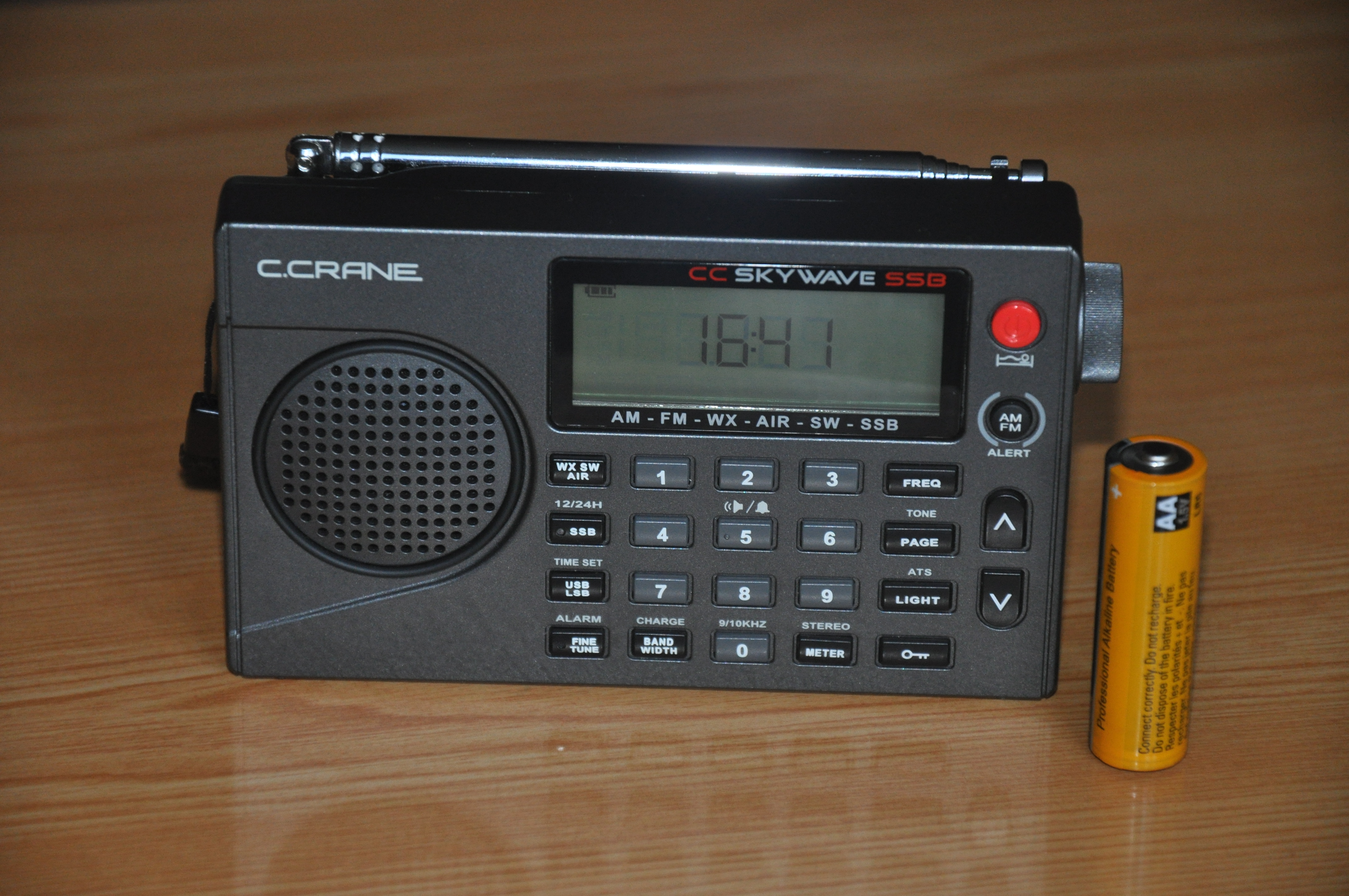
A Maritime Mobile Service Identity is a nine-digit number permanently programmed into DSC-capable radio equipment. When a skipper presses the distress button, the MMSI transmits the vessel's registered identity to rescue coordination centres. Without registration, the MMSI either defaults to a placeholder number that rescue services cannot trace to a vessel, or the equipment ships with a temporary number that carries no registered vessel information.
MMSI registration in Australia is free and is handled through AMSA via Form 89, available through AMSA Online Services at amsa.gov.au. The following types of equipment each require an MMSI to be programmed in:
- Fixed-mount DSC-capable VHF radios
- Handheld DSC-capable VHF radios
- AIS transponders
A vessel carrying a fixed VHF with DSC, a handheld DSC VHF, and an AIS transponder would need three separate MMSI numbers registered, one per device. This is a point that catches many skippers out when they add a second handheld without updating their AMSA registrations. An MMSI cannot be shared between vessels and cannot be transferred informally. If you buy a second-hand vessel and the previous owner's MMSI is programmed into the radios, that registration needs to be cancelled and a new one registered to you.
Prerequisites for MMSI Registration
To apply for an Australian MMSI, the skipper must already hold at least an AWQ. For vessels carrying MF/HF equipment, the ACMA callsign must be obtained before the MMSI application can be completed. This creates a dependency in the sequence: get the personal qualification first, then the vessel's HF apparatus licence and callsign, then register the MMSI. Attempting the MMSI registration before the callsign is in place will leave the application incomplete for HF-equipped vessels.
The Correct Sequence Before Departure
The order in which you complete these steps matters. Getting it wrong means blocking yourself at a later step. The correct sequence for a Cairns skipper carrying both VHF and SSB is:
- Sit and pass the LROCP examination - or confirm that your legacy MROCP is in hand. This gives you authority to operate both VHF and MF/HF marine radio anywhere in the world. Book with a Cairns provider or use AMC self-study at utas.edu.au/amc/industry/omc.
- Apply to ACMA for the Ship Station Class B Non-Assigned Licence for your vessel. This produces your internationally recognised callsign. If your vessel carries VHF only and no HF/SSB, the 2025 class licence covers you for VHF and you may skip this step - but you will still need at least the SROCP before transmitting internationally, and you will not receive a callsign.
- Wait for ACMA to issue the callsign. Record it on the vessel's official documents and in the radio log before proceeding to the next step.
- Complete the AMSA Form 89 for MMSI registration through AMSA Online Services at amsa.gov.au. Enter the ACMA callsign in the relevant field. AMSA will confirm the nine-digit MMSI number assigned to each device.
- Programme the confirmed MMSI into every fixed DSC VHF radio, every handheld DSC VHF, and your AIS transponder. Verify that the callsign is also entered into the SSB radio's station identification settings. Most radios require a specific reset procedure to change a previously programmed MMSI - check the manufacturer process.
- Confirm that your LROCP certificate, your ACMA licence document, and your MMSI registration confirmation are all in the vessel's ship's papers folder and accessible to any crew member who might need to operate the radio in an emergency.
International Passage Implications
The legal basis for offshore radio operation is stated clearly in the class licence instrument:
"A person must not operate a maritime ship station outside Australian territorial waters except in accordance with ITU Radio Regulations and, if in a foreign territorial sea, any additional requirement of that country." Radiocommunications (Maritime Ship Station) Class Licence 2025
This means the ITU Radio Regulations apply from the moment the vessel crosses into international waters. SROCP and LROCP are both issued under the GMDSS framework that underpins ITU Radio Regulations for maritime mobile communications. An AWQ is not issued under that framework and carries no standing once the vessel leaves Australian territorial waters. Foreign port authorities in countries including Papua New Guinea, Vanuatu, Fiji, and New Caledonia may inspect crew credentials on arrival. The specific requirements vary by country. Australia's Department of Foreign Affairs maintains country-specific entry information, and each destination's maritime authority can be contacted through their national port authority for current radio compliance expectations.
Your vessel callsign, obtained through the ACMA individual apparatus licence, is listed in the ITU's international ship station database. When you check in to a foreign port on SSB or transmit on an HF marine working frequency, your callsign is the identifier that foreign maritime authorities cross-reference against that database. A vessel that cannot produce a callsign, or whose callsign is not found in the ITU list, may face delays at customs radio checks or in obtaining clearance.
Standard HF Working Frequencies
Australian cruising vessels working the routes from Cairns toward the Pacific and South-East Asia commonly use the standard marine HF working frequencies of 4146 kHz, 6227 kHz, and 8294 kHz for routine radio schedules and weather. These are ITU-allocated international maritime mobile frequencies. Maritime Safety Queensland maintains a marine communications factsheet at msq.qld.gov.au with current guidance on frequency use and schedule times. Using these frequencies without an LROCP and a valid callsign is a breach of both Australian communications law and ITU Radio Regulations. LROCP holders operating HF/SSB should understand the propagation characteristics of each band - 4146 kHz for shorter range daytime use, 6227 kHz for medium range, and 8294 kHz for longer range and night-time propagation across the Coral Sea and Pacific.
What to Carry Aboard: Pre-Departure Checklist
Documentation checks happen at departure from Australian ports, on arrival in foreign ports, and sometimes at anchor in foreign territorial waters. The following should be in place before departing Cairns on any offshore passage:
- Original SROCP or LROCP certificate, or legacy MROVCP/MROCP - kept in the ship's papers folder, accessible to the skipper and any crew required to operate the radio in an emergency
- ACMA Ship Station Class B Non-Assigned Licence document showing the vessel callsign and licence reference number - this is distinct from the operator certificate
- AMSA MMSI registration confirmation for each registered device - printed or PDF copy showing the nine-digit MMSI matched to vessel name and callsign
- Radio log - a physical or digital record of date, time in UTC, frequency, callsign of the station contacted, and nature of communications for every transmission; many foreign port authorities and regional maritime authorities expect to inspect a contemporaneous log
- ACMA equivalence documentation for legacy certificates if you hold an MROVCP or MROCP, as a foreign official may not recognise the older name
At a Foreign Customs Radio Check
Indonesian, Papua New Guinean, and Pacific island port authorities vary in how thoroughly they check radio credentials. The most common scenario is a customs officer noting the vessel callsign on arrival, confirming it matches the registration paperwork, and verifying that the SSB frequency used for the inbound call schedule is consistent with what a licensed operator would use. Producing a tidy ship's papers folder with the ACMA licence, MMSI registration, and operator certificate immediately alongside the ship's registration and passports removes any ambiguity. Issues arise when a vessel is operating on SSB but cannot produce an operator certificate covering HF, or when the MMSI programmed into the radio does not match the callsign on the ACMA licence document. Before departure, verify that every MMSI and callsign programmed into the hardware matches the current registration documents exactly.
Frequently Asked Questions
Can someone with an AWQ legally operate a VHF radio on a passage to Papua New Guinea?
No. The AWQ does not carry recognition under ITU Radio Regulations, which govern radio operation outside Australian territorial waters. Operating a marine radio on a passage to PNG, in PNG territorial waters, or in international waters on that passage requires at minimum an SROCP. For any vessel also carrying HF/SSB, the LROCP is required for the operator to legally transmit on those bands.
Do legacy MROVCP and MROCP holders need to do anything to stay compliant?
No. The MROVCP is treated as equivalent to the SROCP and the MROCP as equivalent to the LROCP. Both remain valid indefinitely and no further exams or applications are required. If a port authority or insurer questions the credential, the ACMA equivalence statement at acma.gov.au provides the official confirmation.
What happens if the MMSI is not registered before a passage?
An unregistered MMSI means that any DSC distress call transmits a number that rescue coordination centres cannot link to a vessel name, description, or position history. AMSA and international rescue services depend on MMSI registration to identify the vessel and brief search assets. The registration process through AMSA Online Services is free and straightforward - there is no practical reason to delay it past the point where DSC equipment is installed.
Does the 2025 class licence mean I no longer need any ACMA registration for my VHF?
For recreational vessels operating VHF only, the Radiocommunications (Maritime Ship Station) Class Licence 2025 means no individual apparatus licence is required from ACMA for that VHF. However, you still need a personal operator certificate (at minimum SROCP for international waters), and you still need a separate individual apparatus licence if your vessel carries any MF/HF (SSB) radio. The class licence does not remove the HF apparatus licence requirement and does not assign a callsign.
How long does the ACMA callsign application take?
ACMA processing times vary and are not guaranteed. Because the callsign must be in hand before the MMSI application can be completed for an HF-equipped vessel, starting the ACMA application well ahead of the departure date - at minimum several weeks - is prudent. Departing without the callsign and MMSI in place means the SSB is unregistered and the DSC distress identification is either missing or incorrect. Check current ACMA processing times at acma.gov.au when applying.
Can a vessel with satellite comms as the primary offshore method skip the HF licensing if SSB is fitted as a backup?
No. AMSA's offshore category requirements allow satellite phone as an alternative to SSB for certain passage categories, but if the vessel carries an HF/SSB radio installation, the operator must hold an LROCP and the vessel must hold the Ship Station Class B Non-Assigned Licence regardless of whether satellite is the primary method. Carrying the equipment triggers the licensing requirement. If the HF licensing requirements are not desired, the simplest path is not to fit HF/SSB equipment and to use satellite communications as the offshore primary.