Most articles about sailing to Indonesia start in Darwin. That framing misses the point for anyone already in Far North Queensland. The Wonderful Sail 2 Indonesia Rally officially departs from Cairns Cruising Yacht Squadron - Darwin is a waypoint, not a starting line. By the time your yacht clears Australian waters, it has already completed roughly 1,400 nautical miles of passage through Torres Strait and across the top of the continent. The preparation work that determines whether that voyage is manageable or miserable happens in Cairns, and it needs to happen before you cast off.
Why Cairns Is the Right Place to Refit Before Indonesia
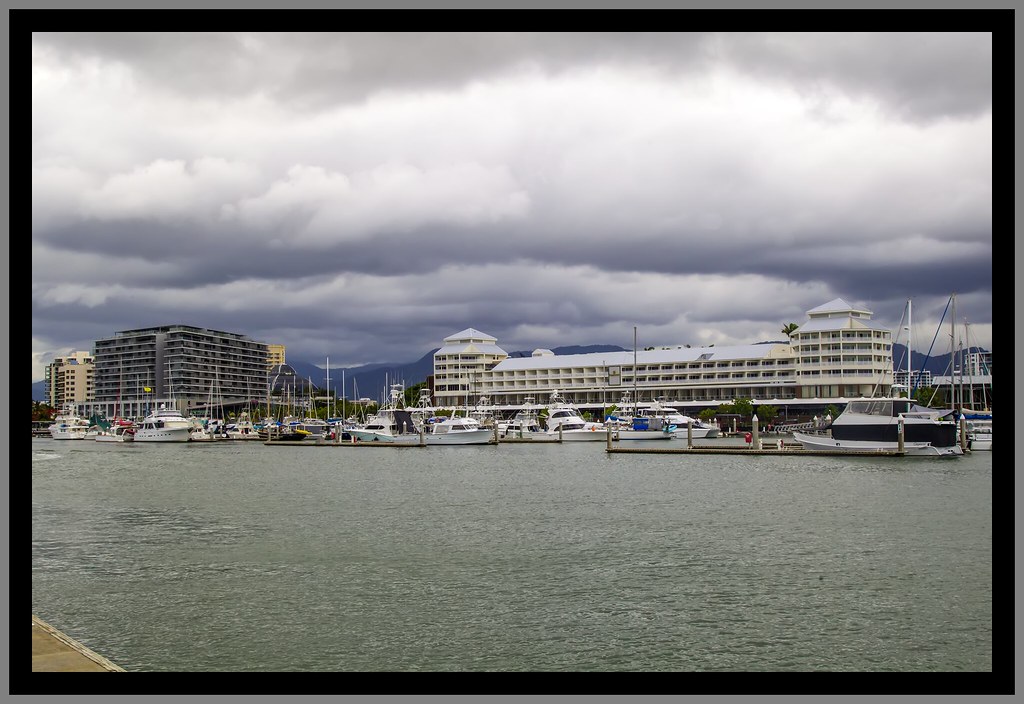
Cairns sits closer to Torres Strait than any other major east-coast port, and the Cairns Cruising Yacht Squadron serves as rally headquarters for the Wonderful Sail 2 Indonesia fleet. That proximity is not just a routing convenience - it means the marina community during preparation season includes other boats on the same voyage, making it straightforward to cross-check preparation lists, share agent contacts, and gather current intelligence on conditions ahead.
The practical case for doing refit work here rather than pushing straight to Darwin is direct. Cairns has full-service haul-out facilities capable of handling cruising yachts, access to marine trades, and sailmakers who understand tropical conditions. A yacht that leaves Cairns with a fresh antifoul, a surveyed rig, and all systems serviced arrives in Darwin with energy left for the Timor Sea crossing rather than a growing list of deferred work.
Darwin is useful. Top up fuel there, collect outstanding agent paperwork, clear Australian customs outbound. But it is not the place to discover your AIS transponder is receive-only, your watermaker membrane is failing, or your antifoul is months past due. The rally's preparation program reinforces this: an online course through partner C&OC (Coastal and Offshore Cruising), a WebApp covering vessel prep, Indonesian entry formalities, and routing, and a Cairns get-together at CCYS - all structured around a Cairns departure, not a Darwin scramble.

The Weather Window: Timing Your May-August Departure
The passage from Cairns to the Kei Islands is seasonal work. The window that works is May through August. During these months, the dry-season south-east trades are established across the Timor Sea - steady, predictable, and from a direction that suits the route. The trades provide reliable sailing from Torres Strait through the Arafura Sea and into the Banda Sea.
The boundaries on either side of this window are not soft. The Northwest Monsoon runs from approximately November through April and brings unsettled weather, variable winds, and genuine cyclone risk across the region. A yacht still at sea in October is running on thin margins. One that departs in March to get ahead of the fleet is sailing into the monsoon's tail - and doing so without the trade conditions that make the Timor Sea crossing manageable.
Leaving early in the window, in May, gives maximum time in eastern Indonesian waters before conditions deteriorate toward year's end. Leaving in August compresses that time considerably. Either end is viable; the months outside it are not.
Hull and Antifouling: What Cairns Tropical Waters Do to Your Bottom Paint
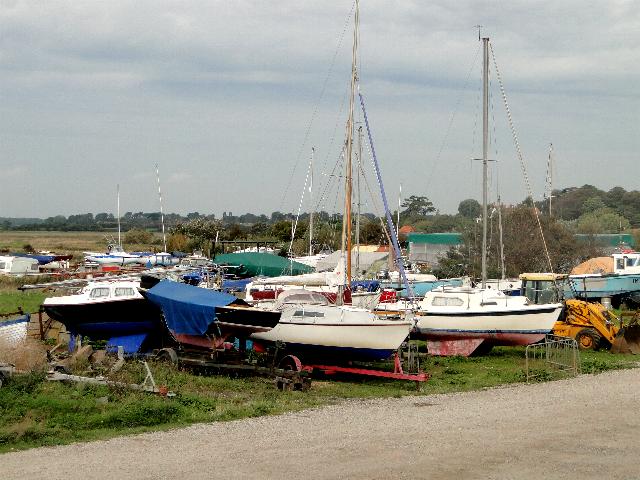
The sea temperature off Cairns sits between 26 and 29 degrees Celsius year-round. That warmth accelerates biological growth on a hull in ways that catch southern Australian sailors off guard. Barnacles can reach golf-ball size within weeks on an uncoated or poorly coated surface. The antifouling schedule that holds in temperate waters does not hold here - yachts based in Cairns and sitting on a mooring for any extended period often need a recoat well inside the interval that worked farther south.
Before any long offshore passage, haul out for inspection. This serves two purposes: checking the antifoul against actual condition rather than calendar date, and inspecting for osmotic blistering. An osmosis finding that is manageable in harbour becomes a structural concern under sustained load at sea. Deal with it before departure, not after.
For tropical antifouling, ablative (self-polishing) paints outperform hard paints over time because they erode slowly and release biocide consistently rather than building up dead layers that lose effectiveness. Products formulated specifically for warm-water use - International Micron 350 and Jotun SeaQuantum are among the options available through Cairns marine suppliers - are designed for this environment.
| Antifouling type | Tropical performance | Recoat frequency in FNQ | Best suited to |
|---|---|---|---|
| Ablative / self-polishing | Strong - consistent biocide release as layers erode | Shorter than temperate; inspect condition annually | Actively cruised yachts with regular haul-outs |
| Hard antifouling | Moderate - dead layers accumulate and lose effectiveness | Similar interval, but buildup degrades performance over time | Higher-speed hulls; less suited to tropical idle periods |
| Copper-oxide epoxy hybrid | Good initial protection, degrades faster in warm water | Often needs reapplication before 12 months in Cairns conditions | Heavy-fouling zones; requires close monitoring |
Anodes follow the same logic. Sacrificial anodes corrode roughly twice as fast in tropical Far North Queensland waters as they do in cooler southern waters. If your replacement schedule was calibrated for Brisbane or Sydney, halve the interval. A set that would last two years in temperate conditions may be fully depleted within a year based out of Cairns. The haul-out for antifoul is the natural time to inspect and replace them - do not complete one without the other.
Rig, Sails, and UV Damage: The Pre-Passage Inspection Checklist
Far North Queensland records a daily UV Index in the extreme range - among the highest in Australia, consistently reaching 10 to 12. Extended mooring in Cairns acts on running rigging, sails, and rubber components in ways that are invisible until the load comes on offshore. The items that fail mid-passage are almost always the ones that looked borderline before departure.
A full rig inspection before departure should cover:
- Standing rigging: check swage terminals closely for broken strands or cracking, and inspect chainplates for corrosion or movement at the deck
- Running rigging: look for glazing, stiffness, and surface cracking - UV degradation on polyester braid begins at the outer cover and works inward, and the core can be compromised before the damage is obvious
- In-mast or in-boom furling systems: check extrusion joints and bearing surfaces for corrosion, which is difficult to access or rectify once offshore
- Sail covers and sacrificial UV strips on roller-furling headsails: frayed or cracked UV cloth is a common Cairns-mooring problem that fails quickly under offshore use
- Blocks, sheaves, and clutches: UV-degraded plastic and rubber components crack under sustained passage loads that short coastal trips never produce
The judgment call is replace or repair. For load-bearing components - standing rigging more than five years old, running rigging showing core exposure, any swage with visible strand failure - replace before departure. The cost of doing it in Cairns is a fraction of the cost of a rig failure in the Arafura Sea.
Engine, Electrical, and Systems Overhaul for a Long Offshore Passage
A multi-thousand-mile voyage with limited access to marine services requires the engine and supporting systems to be genuinely reliable. Full service before departure: fresh oil and filters, impeller, coolant, belts, and a raw-water system inspection for corrosion. Check the heat exchanger for scale buildup - it becomes a real problem during sustained motoring through light-air sections of the passage.
Refrigeration works harder in tropical water temperatures. If your system was marginal in cooler southern waters, it will struggle at the ambient temperatures found across the Timor Sea. Service the compressor and check refrigerant levels before departure.
Autopilot load increases substantially in steep chop and beam seas - exactly the conditions the Gulf of Carpentaria produces for days at a stretch. Inspect drive belts, ram seals, and clutch engagement carefully. An autopilot failure in the Gulf means hand-steering for the remainder of the crossing.
The watermaker is not a convenience item for this route. Reliable drinking water in remote eastern Indonesian anchorages is not guaranteed. A cruising crew in tropical heat consumes more water than most passage plans account for, and relying on shore water in remote areas carries real health risk. If you do not already have a watermaker, fit one in Cairns. If you have one, replace the membrane and service the high-pressure pump now, not mid-passage.
Indonesia's New Documentation Rules: VDS, Mandatory AIS, and the Agent Requirement
The Cruising Permit (CAIT) system has been abolished. Indonesia's replacement is the Vessel Declaration (VD), submitted online through the official Vessel Declaration System (VDS) before you arrive at a Port of Entry. Many existing cruising guides still describe the CAIT as the current process - it is not, and arriving with the wrong documentation creates problems at the first port.
Required vessel documents to assemble before submitting the VDS include:
- Certificate of Registration
- Valid hull insurance certificate showing wreck removal coverage
- Complete crew and guest list with full passport details for each person aboard
- Last Port Clearance from the final Australian port of departure
The submission process runs in this sequence:
- Register on the official VDS portal and enter complete vessel details - name, registration number, equipment, and dimensions
- Upload all supporting documents: registration certificate, insurance certificate, and crew list
- Submit the Vessel Declaration within the required window before your planned Port of Entry arrival - check the current VDS portal for the specific timing requirement, as this is a regulatory detail subject to change
- Present VDS confirmation and Last Port Clearance to officials on arrival
- Allow officials to board and inspect your AIS unit - they check that it is a transmitting model and photograph the display as evidence of compliance
The licensed Indonesian agent requirement was not removed with the CAIT. You still need an agent to handle inward and outward clearance, the Customs Declaration, and - critically - the Sponsor Letter that crew require for the e-Visa application. This cannot be self-filed. Engage an agent early; the Sponsor Letter feeds directly into the visa timeline and is a hard dependency.
Visas, Crew, and Passport Logistics
Indonesian e-Visas (tourist visit category, initially valid for a set period and extendable - check current terms at the official Indonesian government portal) are applied for online before departure. The application requires the Sponsor Letter from your agent, which means the visa process cannot begin until the agent relationship is in place. Work backward from your planned departure date and allow realistic time for both the Letter and visa processing.
Crew passport validity is a common source of last-minute problems. Indonesian immigration expects passports to carry validity well beyond the intended stay - the standard expectation is six months beyond your planned departure from the country, but confirm current requirements with your agent, as this is a regulatory figure that can change. Check every crew member's passport before committing to departure dates.
For crew changes planned during the voyage, the logistics have to be arranged before you leave Australia. New crew need their own e-Visa in advance, and joining points should be chosen for reliable international transport and internet access to coordinate with the agent. A remote eastern Indonesian anchorage is not the place to discover a crew member's visa is missing or their passport is short on validity.
Provisioning and Fuel Strategy: From Cairns to the Kei Islands
Provision in Cairns as if the eastern Indonesian islands cannot supply much of what you need - because in most remote anchorages, they cannot. Cairns has full supermarket access and a marine supply chain that extends to most standard chandlery items. The Kei Islands do not. Load for the passage to Tual with Darwin as a top-up opportunity and selective larger Indonesian ports as supplements, not primary sources.
Fuel planning has changed with the closure of Gove (Nhulunbuy) as an Australian Port of Entry or Exit. The traditional staging stop on the Cairns-Darwin run is no longer available in that role. The effective distance between reliable fuel points on this route is now longer than most pre-closure passage guides show - check current information and extend your fuel capacity planning accordingly.
Passage makers through the Arafura Sea carry substantial diesel reserves well beyond what standard yacht tankage provides. The three main options for additional capacity are:
- Auxiliary tanks fitted below decks in dedicated lockers - better for stability and UV protection, and can be plumbed directly to the main fuel system
- Deck-mounted jerry cans in proper holders - accessible and flexible, but exposed to UV degradation and vulnerable to securing load failures in rough seas
- Collapsible deck bladders - high capacity, but require careful stowing and monitoring since they can shift in rolly conditions
Fuel quality at remote Indonesian island ports is often poor - water and sediment contamination are common. Filter every delivery before it enters your tank and carry substantially more filter elements than you think you will need. Water provisioning follows the same logic: a working watermaker reduces pressure on tankage but does not replace it. Leave each reliable port with full tanks.
The Australian Legs: Torres Strait, the Gulf, and Darwin
The Cairns-to-Darwin passage via Torres Strait covers roughly 1,400 nautical miles and takes several weeks at normal cruising speeds. Torres Strait is a technical transit in its own right: tidal currents run hard through the channels, reefs lie close on both sides, and the navigation demands constant attention. Plan the through-channel section for daylight, time it around neap tides where possible, and have waypoints loaded and cross-checked before you enter.
The Gulf of Carpentaria crossing - approximately 330 nautical miles, typically three days - earns its 'washing machine' label through physics rather than reputation. The Gulf floor averages around 60 metres across much of its bowl-shaped extent. South-east trade winds build short, steep, confused chop over that shallow seabed that has nothing in common with the long swell conditions outside. It is not dangerous in a properly prepared boat, but it is hard work. Fuel burn increases noticeably in short steep seas. Autopilot load spikes in following and beam conditions. A hull carrying excess drag from a marginal antifoul works harder than it should. Every item deferred from the Cairns refit makes itself felt in the Gulf.
A yacht that leaves Cairns properly prepared arrives in Darwin with energy left for the Timor Sea crossing. One that treats Darwin as the preparation point arrives already depleted.
In Darwin, collect the Last Port Clearance and do a final top-up of fuel, water, and provisions. The Timor Sea crossing itself - typically two to four days depending on conditions - is the shortest offshore section of the whole voyage, but the one that marks the transition into Indonesian waters. Cross it inside the weather window with the boat ready, and the passage from there to the Kei Islands is a largely downwind run through some of the most rewarding cruising grounds in the region.
Frequently Asked Questions
Do I still need a Cruising Permit (CAIT) to sail to Indonesia?
No - the CAIT system has been abolished. The current requirement is a Vessel Declaration submitted online through the official Vessel Declaration System before your arrival at an Indonesian Port of Entry. Check the official VDS portal for current submission timing and document requirements, as the procedural details are subject to regulatory change.
Is a receive-only AIS unit acceptable for sailing in Indonesian waters?
No. Indonesian regulations require a transmitting AIS transponder on all foreign yachts. Officials board vessels and physically check and photograph the AIS display as evidence of compliance. Many chartplotters and combination VHF-AIS units include receive capability only - if yours does, replace the unit before leaving Cairns rather than at the border.
Can I still use Gove as a fuel stop on the way to Darwin?
Gove (Nhulunbuy) no longer operates as an Australian Port of Entry or Exit, which removes its traditional function as a staging point on the Cairns-Darwin run. The usable legs between reliable fuel points along this route are now longer than pre-closure passage guides show. Recheck current information and plan additional fuel capacity before departure.
How far in advance should I engage an Indonesian agent?
As early as possible. The agent's Sponsor Letter is a required document for the crew e-Visa application, and that process cannot start without it. For a May or June departure, beginning the agent conversation in the first quarter of the year gives adequate time for the Letter, visa processing, and any corrections needed before departure.
When should I haul out in Cairns before the Indonesia passage?
Ideally three to four months before departure. For a May departure, that means a haul-out in January or February at the latest. Tropical growth rates in Cairns waters mean an antifoul applied in September may already be underperforming by May. Hauling early also leaves time to address any osmosis findings properly rather than against a weather window.
What is the process if I need to change crew mid-voyage in Indonesia?
Each crew member needs their own e-Visa, arranged in advance through the official Indonesian portal using the agent's Sponsor Letter. Crew changes in remote eastern Indonesian anchorages are logistically difficult - limited transport and unreliable internet make coordination hard. Plan joining and departing points around larger ports with known transport connections, and begin the visa process for incoming crew before you leave Australia.