For most cruisers working through a pre-departure checklist in Cairns, the dinghy gets a pump of air and a mental tick. The main engine gets a full service, the watermaker gets new filters, the rigging gets checked aloft - and then the rubber boat gets forgotten until the morning after you anchor in Madang. That sequence is backwards. From the moment you clear the outer reef heading for Torres Strait, the dinghy is simultaneously your shore transport, your emergency vessel, and your most theft-vulnerable piece of equipment. Cairns is the last port in Australia where you can walk into a specialist outboard workshop, order the correct adhesive for a seam repair over the counter, or have a trade-qualified technician arrive at your berth. Everything you skip here you will deal with somewhere considerably harder to fix it.
Why the dinghy deserves the same rigour as the main engine
Cairns sits at 16.9 degrees south. The UV index through summer regularly reaches 11-12 and can peak at 13, placing it among the highest sustained UV exposures a dinghy tube will face anywhere in its cruising range. Sea surface temperature in the wet season exceeds 28 degrees Celsius, which is the threshold at which tropical fouling goes from manageable to rapid. Addressing these conditions in Cairns, before departure, is passage preparation - not optional maintenance.
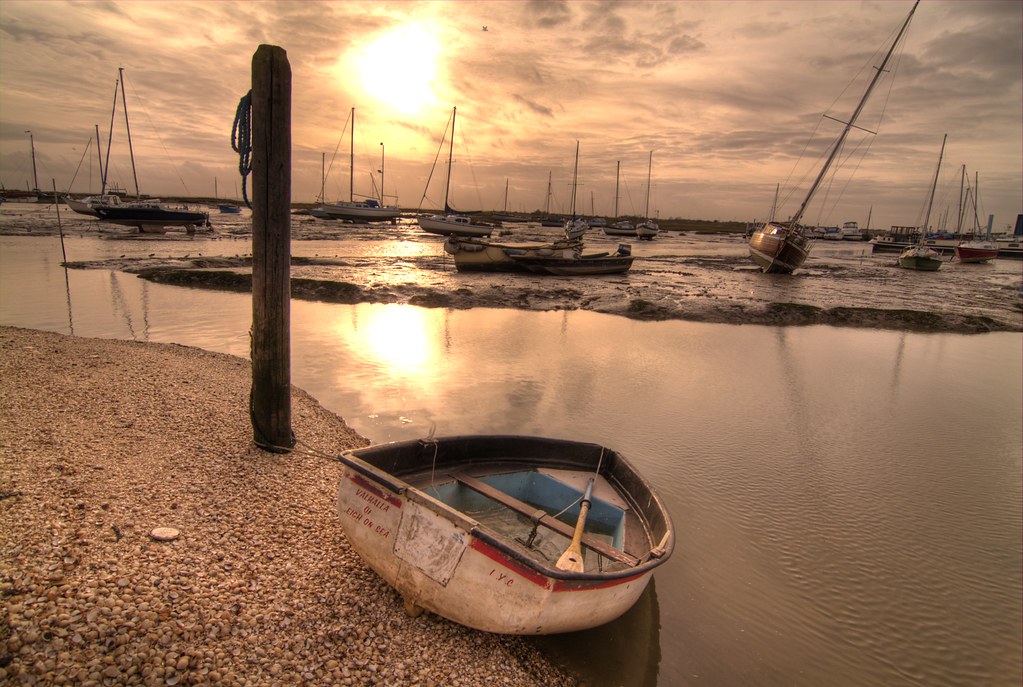
Inspecting the inflatable hull: what to look for on Hypalon and PVC
Knowing your tube material before you touch it
The material your tubes are made from determines what you are looking for during inspection and what products you can legally use for repair. Hypalon (chlorosulfonated polyethylene, CSM) and PVC behave very differently in tropical conditions and require entirely different adhesives. Hypalon seam repairs require a neoprene-based two-part adhesive; PVC seam repairs require PVC solvent cement. Using the wrong adhesive on either material produces a bond that fails within weeks in tropical heat - a seam that was apparently repaired and then opens in a Coral Sea swell.
| Factor | Hypalon (CSM) | PVC |
|---|---|---|
| Tropical lifespan | 15-20+ years | 5-10 years |
| UV and heat resistance | High - resists oxidation and heat-induced tackiness | Lower - plasticiser breakdown causes surface stickiness |
| Seam adhesive | Neoprene-based two-part adhesive | PVC solvent cement |
| UV failure signs | Surface chalking, seam edge lifting | Surface tackiness, crazing, tube softness |
| Antifouling solvent risk | Lower - check product spec | Higher - some solvents attack PVC |
The hands-on inspection sequence
Inflate the dinghy fully and work around the entire tube perimeter with your hands. Firm, even pressure throughout is the baseline. Soft spots that recover slowly, or sections noticeably lower in pressure than adjacent chambers after sitting overnight, indicate fabric porosity or early seam failure. On PVC boats that have spent five or more years in tropical service, run a palm along the tube surface and feel for tackiness - the heat-induced breakdown of PVC plasticisers produces a sticky surface layer that signals compound degradation. No external treatment reverses this; it means the tube is approaching the end of its practical life.
Seams are the highest-risk area on any inflatable. On both materials, look for seam edges that have lifted even fractionally. A gap you can push a fingernail under will open further under the flexing of an offshore passage. UV damage on Hypalon typically appears as whitish chalking or oxidation of the outer surface layer - cosmetic in early stages, and worth treating with a UV protectant before departure. On PVC, surface crazing - fine cracks across the fabric - indicates compound breakdown that has passed the treatable point.
The complete outboard service checklist for tropical saltwater use
What tropical conditions do to service intervals
A saltwater tropical outboard service is not the same as an annual service in a temperate climate. Heat accelerates rubber degradation, salt accelerates corrosion, and silt from tropical anchorages acts as fine abrasive inside the water pump housing. The combined effect compresses service intervals significantly compared to what the manual assumes. Work through this sequence before leaving Cairns:
- Water pump impeller: Replace it - do not inspect and refit. In saltwater tropical use, impeller vanes become brittle from heat and silt at a rate that makes visual inspection unreliable. In harsh tropical conditions some manufacturers advise replacement at 100-hour intervals regardless of apparent condition. A failed impeller destroys the powerhead in minutes and cannot be recovered offshore.
- Lower unit gear oil: Drain and refill, then look carefully at what comes out. Milky, grey or coffee-coloured oil has absorbed water through a failed prop shaft seal. A milky drain is not a problem to note and address after arriving in PNG - it is gearbox destruction in progress. Fix it before departure.
- Sacrificial anodes: Inspect at 50 hours and replace when 50 percent consumed. Boats on shore power in marinas see accelerated stray-current anode consumption - 40-60 percent gone by the first service interval is common. An anode at half-life heading into tropical saltwater passages has no practical service life remaining.
- Spark plugs: Replace the full set entirely. In salt air that never fully cools, electrode corrosion and deposit buildup make a used plug an unreliable spare. New plugs cost very little against what they prevent.
- Fuel filter: Replace the inline filter and inspect any bowl or strainer for water or debris, especially if ethanol-blended fuel has been used.
- Throttle and shift cables: Work each cable through its full range of travel. Stiffness or gritty resistance at the end fittings is much easier to address at the dock than at anchor in a swell. Flush with penetrating oil and confirm that cable ends seat correctly in their clevis fittings.
- Cooling passages: Flush thoroughly with fresh water after the new impeller is fitted and confirm that the tell-tale stream runs strong and clear. Any restriction in flow after a fresh impeller points to a blockage in the cooling jacket that needs clearing before departure.
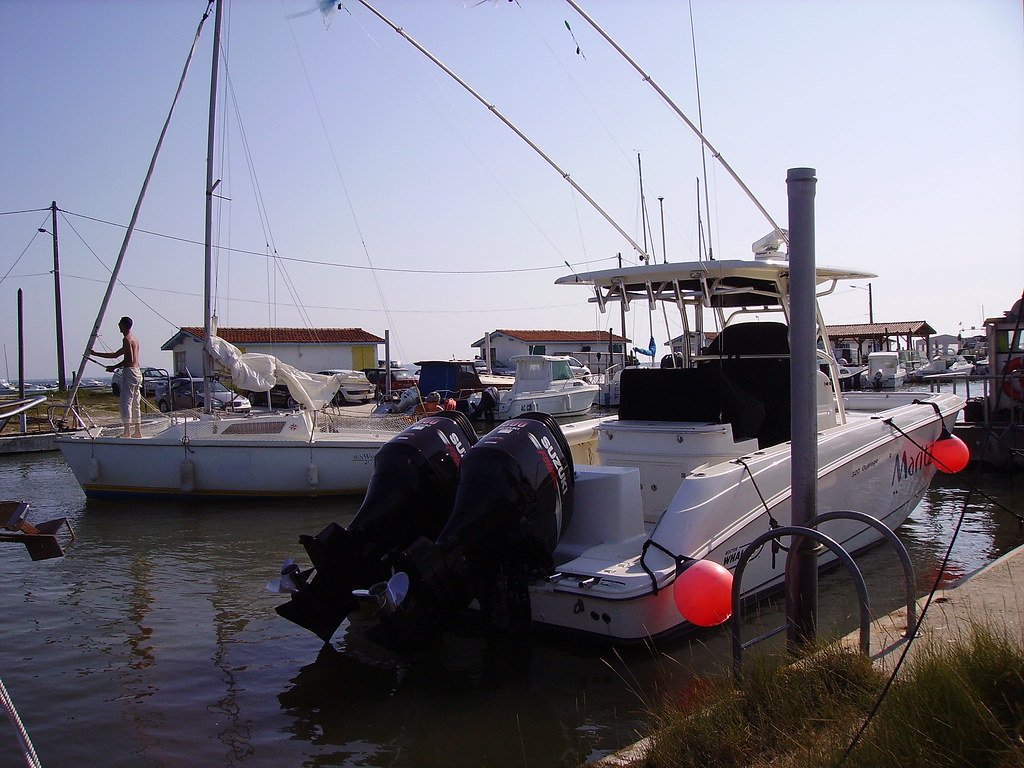
Flushing, anti-corrosion treatment, and the problem with davit storage
An outboard tilted up on davits between passages sits in open salt air continuously. The difference in degradation rate compared to stowage below decks is real, particularly at the electrical connectors, throttle cable end fittings, and the fuel quick-disconnect. Salt crystals form inside connector housings each time spray evaporates, and the accumulation across a multi-week passage in tropical waters is substantial.
Flush with fresh water after every use in saltwater. For extended periods where the outboard sits unused between passages, flush the cooling system, tilt the engine to drain the water pump housing, apply anti-corrosion spray, and fit the cowl. The fuel system needs separate attention: add fuel stabilizer to the tank before any lay-up longer than a few weeks. Ethanol-blended fuels absorb moisture from humid tropical air and can phase-separate in as little as a few weeks under high-humidity tropical conditions - the exact timeline varies widely depending on ethanol content, tank fill level, and ambient humidity, so treat any ethanol-blended fuel left standing in tropical heat with suspicion after a few weeks at rest. Stabilizer slows the process - it does not reverse degradation in fuel that has already separated.
Managing marine growth: tropical fouling timelines and the nightly lift habit
At Cairns latitudes during the wet season, an unprotected inflatable dinghy bottom can accumulate barnacles, bryozoans and biofilm within 2-4 weeks. The mechanical problem is real: heavy barnacle growth drags speed, loads the outboard, and creates abrasive surfaces that damage tube fabric when you haul the boat across a beach or over a boarding ladder.
Inflatable-compatible antifouling paints are specifically formulated to flex with tube fabric. Standard hard antifouling cracks and delaminates on inflatable surfaces because the substrate moves. Inflatable-specific products contain copper biocide at a concentration that inhibits fouling while remaining flexible. Solvent compatibility matters: some formulations attack PVC, so check the manufacturer's specification against your tube material before application. A product safe for Hypalon may not be safe for PVC.
The most effective low-cost fouling management in tropical anchorages is the nightly lift. Barnacle larvae typically need up to 24-48 hours of continuous contact with a surface before cementing in place - settlement timelines vary by species and water temperature, so check current antifouling product literature for guidance specific to your coating. Pulling the dinghy clear of the water each evening - even briefly, even just resting it on a boarding platform or tilting it on its transom - interrupts the settlement cycle and dramatically slows accumulation compared to a boat left floating continuously. This habit combined with inflatable antifouling before departure extends the time between bottom scrubs significantly on any northern circuit.
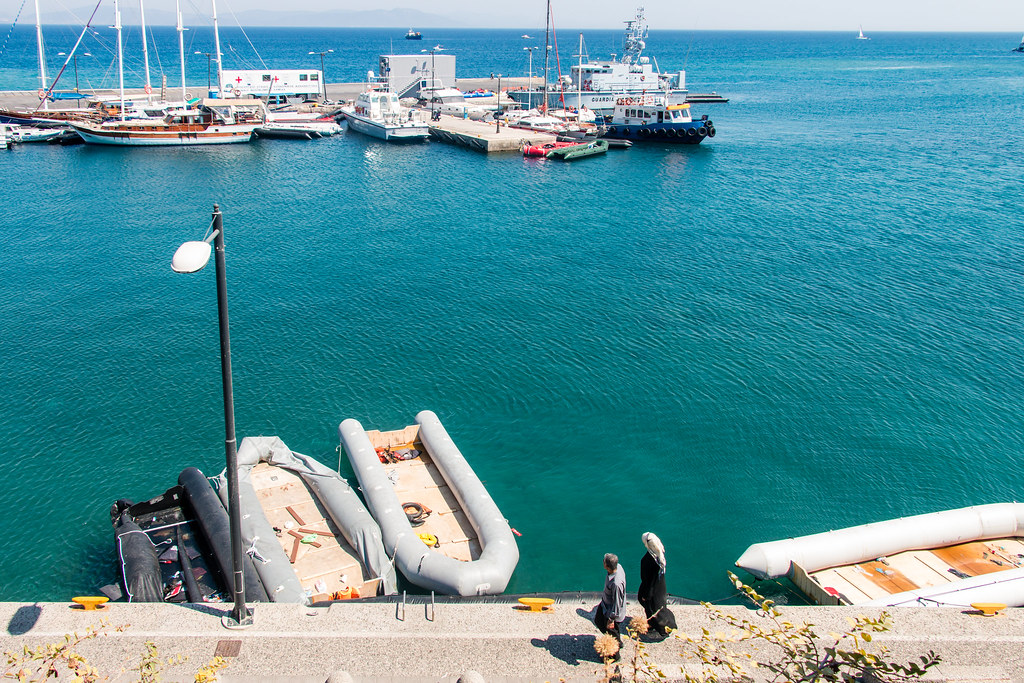
Offshore stowage: davits, deck lashing, and when to deflate
The stowage method that works in the Whitsundays becomes a liability on a Coral Sea passage. A breaking crest hitting a 3.5-metre RIB on davits can impose impulse loads four to six times the static weight of the boat - forces well beyond the capacity most davit systems are designed for, which assume controlled static loading rather than impact from breaking seas. The dinghy becomes a lever stressing the transom attachment points, which often share real estate with your steering gear and autopilot components.
For passages in the Coral Sea, through the Torres Strait, or on any crossing where significant swell and breaking crests are likely, the options in order of increasing security are:
- Davits with jacklines and backup lashing: Acceptable in settled conditions. Lash the dinghy to multiple strong points beyond the davit hooks, chafe-protect every lashing where it contacts the tube or hull, and run a safety line through a strong point on the dinghy that is independent of the davit connection. The outboard comes off the transom and is secured separately - a davit-mounted RIB with its outboard still fitted is a heavy pendulum in a seaway.
- Deck lashing: A rigid-hull RIB lashed across the foredeck or over the main hatch with webbing straps and chafe protection at every contact point. Secure it so it cannot shift in any axis. Inflatable tubes provide cushioning but also catch wind, so strap them down tight.
- Deflate and stow: A 3.4-metre inflatable deflated and rolled typically weighs in the range of 40-60 kilograms depending on construction - check the manufacturer's specification, but two crew with a block or small crane can generally manage it. The windage disappears, the weight sits low on deck, and there is nothing for a breaking sea to catch. For Coral Sea crossings and the longer legs of a PNG circuit, deflating and stowing removes the category of damage that can write off a dinghy entirely.
Security in PNG, Indonesian and Pacific anchorages
Lift it, lock it, or lose it.Common saying on the Pacific and PNG cruising circuit
This is not a cliche for the waters north of Cape York. It reflects a pattern of incidents documented by boats that have made these passages repeatedly. Outboard theft from unattended dinghies is the most consistently reported security incident in passage reports for PNG, Vanuatu and parts of eastern Indonesia. The methods that work are not complicated, though some require discipline:
- Outboard security lock: A dedicated motor lock threads through the clamp bracket and around a transom strong point. A cable through the tilt pin adds a secondary layer. Neither is defeat-proof, but both slow a theft attempt in a situation where speed and noise are the thief's vulnerabilities.
- Painter length and attachment: A long painter tied to a cleat gives a thief working room and time. A short, taut painter secured through a locking carabiner at deck level removes both. Some crews run a separate chain painter independent of the rope painter in high-risk anchorages.
- Lift it aboard at night: In genuinely high-risk anchorages this is the only reliable answer. Know your lifting procedure before you arrive - which line you use, where the strong points are, how two people manage it in the dark. Practising in daylight in Cairns marina before departure takes ten minutes and removes all the improvisation from a 2 a.m. situation.
- Kill cord lanyard: Attach the lanyard to the dinghy, not the outboard, before leaving it unattended. It disables the engine until reconnected and adds friction to any opportunistic theft attempt without requiring additional hardware.
Spares and repair kit to carry offshore
The repair kit question is which failures are recoverable underway and which require a workshop. Carry parts for the recoverable ones:
- One spare water pump impeller with its gaskets and housing screws - the correct specification for your engine model
- Full set of replacement spark plugs - same grade as fitted
- Tube repair material matched to your dinghy material: Hypalon patch with neoprene two-part adhesive, or PVC patch with PVC solvent cement - never substituted
- Fuel stabilizer in sufficient quantity for the full tank at the recommended concentration
- Spare sacrificial anode for your engine model
- Manual hand pump or foot pump rated for your tube pressure - electric pumps fail; the manual backup is not optional on an offshore passage
- Gear oil in a sealed container, enough for a full lower unit drain and refill
- Anti-corrosion spray and electrical contact cleaner
- Spare in-line fuel filter
Store adhesives below their temperature threshold. In a hot dinghy bag or deck locker in tropical conditions, PVC solvent cement can lose effectiveness before it is needed. A neoprene two-part adhesive has a working life once mixed, so the components must be kept separate and sealed. Label both kits clearly - other boats in the anchorage will ask to borrow them, and handing over the wrong adhesive for their tube material does them no favours.
Getting your dinghy and outboard serviced in Cairns before departure
Two outboard specialists in Cairns combine tropical experience with mobile capability - they come to your berth or to the boat on the hard, which is practically important for liveaboards who cannot easily transport an engine or move a yacht on the hard without additional cost and logistics.
HiTune Marine is an authorised Honda Marine dealer and operates a mobile service covering the Cairns region and surrounding areas including Port Douglas, Mossman, and south to Innisfail - a range that includes the Far North Queensland marinas and anchorages a departing cruiser will be using. Confirm their current service area when booking, as coverage can vary. Honda Marine dealer status means factory training and access to genuine Honda parts, which matters for warranty compliance and for knowing that an impeller replacement uses the specified rubber grade.
Cairns Outboard Service has 37 years of trade-qualified experience working on tropical outboards and runs a fully equipped mobile workshop. That duration in a harsh tropical marine environment produces a technician who understands the failure modes specific to sustained heat, salt and UV exposure - the patterns that appear in the field rather than the ones that dominate temperate-climate service manuals. For a pre-passage service where you need confidence that nothing has been missed, experienced judgment matters more than a quick checklist run.
For the inflatable dinghy itself, the chandleries in Cairns stock Hypalon and PVC repair materials, and specialist marine service operators can assist with seam repair or refer you to independent inflatable repair technicians working in the area. If a tube seam has lifted or a valve is weeping, address it now. The next port north is not equivalent.
Frequently Asked Questions
How do I tell whether my inflatable dinghy is Hypalon or PVC?
Dampen a clean cloth with acetone and rub a small hidden area of the tube fabric. PVC will soften or become tacky on contact; Hypalon will not soften or become sticky, though slight colour transfer onto the cloth is normal and does not indicate a PVC response. Work outdoors or in a well-ventilated space and keep the solvent away from any ignition source. If you bought the boat new, the specification sheet or model documentation will state the tube material - contact the manufacturer with the model number if the paperwork is gone. Getting this right before purchasing adhesives is critical: using PVC cement on Hypalon, or neoprene adhesive on PVC, produces a bond that fails in tropical heat within weeks.